
Overview
About this site
What the sources say
KV64 is the tomb of an unknown Eighteenth Dynasty individual in the Valley of the Kings, near Luxor, Egypt that was re-used in the Twenty-second Dynasty for the burial of the priestess Nehmes Bastet, who held the office of "chantress" at the temple of Karnak. The tomb is located on the pathway to KV34 (tomb of Thutmose III) in the main Valley of the Kings. KV64 was discovered in 2011 and excavated in 2012 by Susanne Bickel and Elina Paulin-Grothe of the University of Basel.
Read on Wikipedia6 min readCC BY-SA 4.0
Where it sits in time
The site's dated range, placed against world reference points.
The scale is logarithmic: each step to the left is about ten times older than the last.
The full article
KV64: the whole story
In briefSources for this section
- Wikipedia (English): KV64CC BY-SA 4.0
Sources for this section
- Wikipedia (English): KV64CC BY-SA 4.0
KV64 is the tomb of an unknown Eighteenth Dynasty individual in the Valley of the Kings, near Luxor, Egypt. It was re-used in the Twenty-second Dynasty for the burial of the priestess Nehmes Bastet, who held the office of chantress at the temple of Karnak. The tomb lies on the pathway to KV34, the tomb of Thutmose III, in the main Valley of the Kings. It was discovered in 2011 and excavated in 2012 by Susanne Bickel and Elina Paulin-Grothe of the University of Basel.
On 25 January 2011, work to install a protective iron cover over the shaft of KV40 uncovered the edges of a shaft cut into the rock 1.8 metres (5.9 ft) north of it. Because of its small size, approximately 1 by 2 metres (3.3 ft x 6.6 ft), it was first thought to be an embalming cache or an unfinished shaft. Excavation resumed in early January 2012, and the find was officially announced on 15 January 2012 and given the designation KV64.
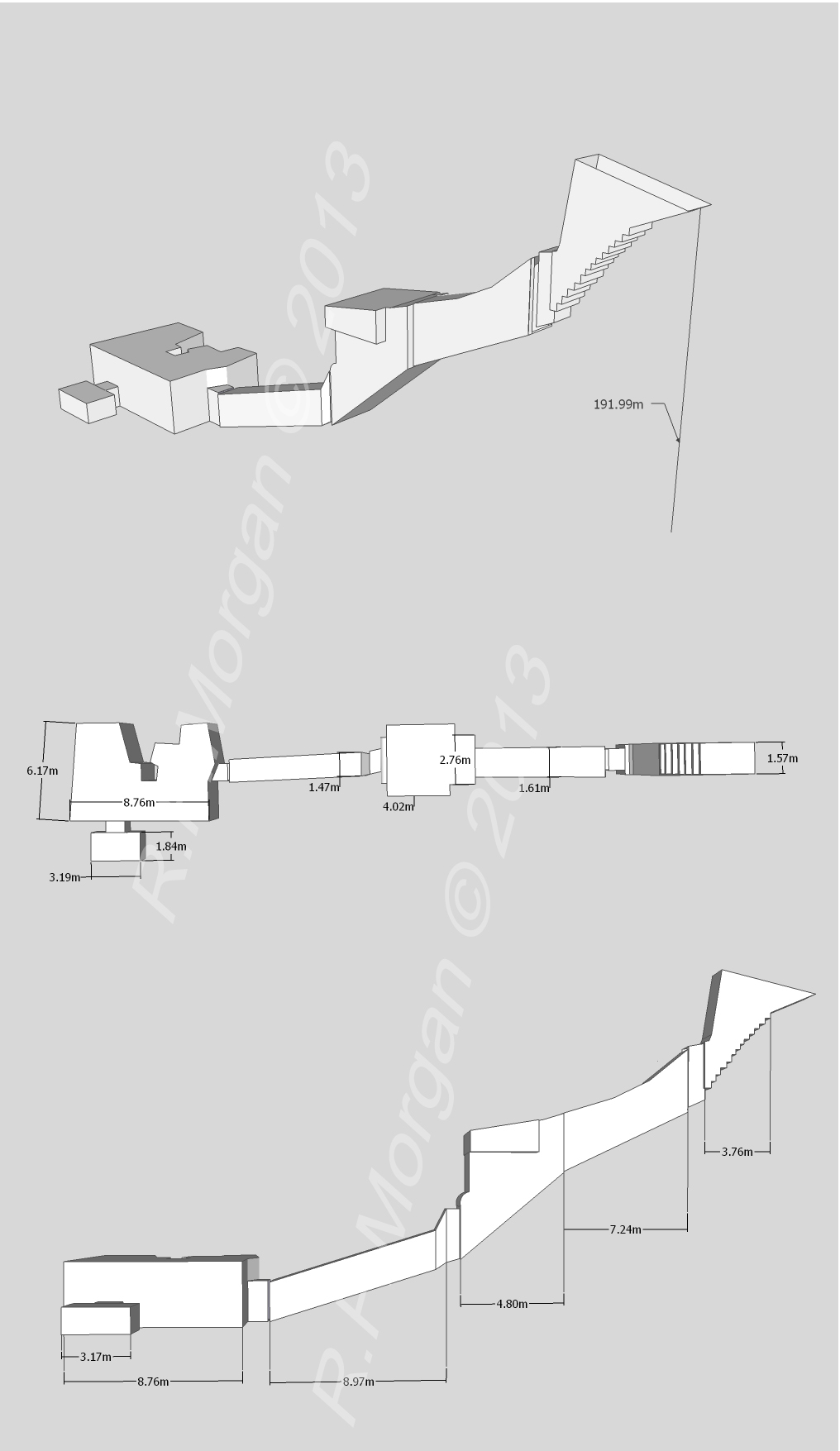
The tomb has a short, narrow shaft 3.5 metres (11 ft) deep that opens onto a single room measuring 4.1 by 2.35 metres (13.5 by 7.7 ft), about 2 metres (6.6 ft) high. The doorway was blocked with stacked stone but not sealed. The room held the intact burial of the Twenty-second Dynasty chantress Nehmes Bastet, with her painted wooden funerary stele propped against the wall at the foot of the coffin. Her father Nakhtef-Mut was a priest of Amun at Karnak, and the stele shows her worshipping a composite deity with attributes of a sun-god and Osiris.
Within the debris were remnants of the robbed Eighteenth Dynasty burial: fragmentary canopic jars, fragments of coffins and cartonnage, glass, faience, leather, furniture parts, and a broken, unwrapped mummy who was likely the original owner. X-ray analysis showed the body belonged to a middle aged woman. A partial wooden label bears the name of Princess Satiah, and if it and the furniture naming Amenhotep III belong to this burial, the original owner may have been a princess of that reign.
The name KV64 had earlier been used tentatively for other anomalies: one detected by ground-penetrating radar during the autumn of 2000, 50 feet (15 m) north of KV63, and a possible tomb entrance in 2008 between the tombs of Merenptah (KV8) and Ramesses II (KV7).
DescriptionSources for this section
- Wikipedia (English): KV64CC BY-SA 4.0
Sources for this section
- Wikipedia (English): KV64CC BY-SA 4.0
On 25 January 2011, during the University of Basel Kings' Valley Project's 2011 excavation season, work to install a protective iron cover over the shaft of KV40 uncovered the edges of a shaft cut into the rock 1.8 metres (5.9 ft) north of KV40. Given the small size of the cutting, approximately 1 by 2 metres (3.3 ft × 6.6 ft), and its proximity to the neighbouring tomb, it was initially suggested to be a possible embalming cache or an unfinished shaft. The feature was given the initial designation of 'KV40b.' Due to its discovery coinciding with the beginning of the 2011 Egyptian revolution, it was fitted with a metal cover to await clearance the following season. Excavation resumed in early January 2012 and it soon became apparent that the feature was a tomb; the find was officially announced on 15 January 2012 and given the designation KV64.
The tomb consists of a short, rather narrow shaft 3.5 metres (11 ft) deep which opens onto a single room measuring 4.1 by 2.35 metres (13.5 by 7.7 ft) long and wide; the chamber has a height of approximately 2 metres (6.6 ft). The doorway was blocked with stacked stone but was not sealed. This blocking was evidently not original, as it sat on top of an earlier plastered blocking; a bowl of Eighteenth Dynasty-date containing Nile mud used for plastering the original blocking was encountered at the base of the door.
ContentsSources for this section
- Wikipedia (English): KV64CC BY-SA 4.0
Sources for this section
- Wikipedia (English): KV64CC BY-SA 4.0
The chamber was filled with debris approximately 1 metre (3.3 ft) deep. The room contained the intact burial of the Twenty-second Dynasty chantress Nehmes Bastet, sitting on top of the fill at the far end of the chamber; her painted wooden funerary stele sat propped against the wall at the foot of the coffin. Within the debris was the remnants of the robbed Eighteenth Dynasty interment, represented by fragmentary canopic jars and two stoppers, fragments of coffins and cartonnage, glass, faience, leather, furniture parts, and the broken, unwrapped mummy who was likely the original owner. Also found was a partial wooden label bearing the name of Princess Satiah. It is not known whether the label belongs to the original woman for whom the tomb was created. Of dubious relevance to the tomb are finds of a Ramesside ostracon and fragments of furniture naming Amenhotep III as similar contents have been found elsewhere and are suggested to be the product of ancient robbery. The tomb had evidently stood open for some time prior to the burial of Nehmes-Bastet as indicated by the presence of several wasp nests and water-washed debris that partially filled the tomb.
OccupantsSources for this section
- Wikipedia (English): KV64CC BY-SA 4.0
Sources for this section
- Wikipedia (English): KV64CC BY-SA 4.0
Eighteenth Dynasty mummy
Little is known of the dismembered Eighteenth Dynasty mummy found in the tomb, although x-ray analysis revealed the body belonged to a middle aged woman. If the fragmentary furniture naming Amenhotep III and the tag naming a princess are original to this burial and not washed in during later flood action, then the original owner can be identified as a princess of the reign of Amenhotep III. The style of the two canopic jar heads also conform to this dating.
Nehmes Bastet
Upon entering the tomb in 2011, the excavators discovered a wooden coffin and a stela placed near the wall that was facing the head of the coffin. The mummy in the coffin belongs to a priestess, the "Chantress of Amun", Nehmes-Bastet. She was the daughter of Nakhtef-Mut, a priest of Amun who held the office of the "Opener of the Doors of Heaven" at Karnak, an important Ancient Egyptian temple during that dynasty. The wooden stela shows Nehmes Bastet worshipping before a composite deity with attributes of both a sun-god and the god Osiris.
Previous use of KV64 designationSources for this section
- Wikipedia (English): KV64CC BY-SA 4.0
Sources for this section
- Wikipedia (English): KV64CC BY-SA 4.0
"KV64" (with quotation marks) had been employed as a tentative designation in reference to an anomaly detected by the use of ground-penetrating radar by the Amarna Royal Tombs Project (ARTP), led by Nicholas Reeves, during the autumn of 2000. This anomaly was detected 50 feet (15 m) north of KV63, near the tomb of Tutankhamun, KV62.
The designation was used again in 2008 for a possible tomb entrance located near the center of the main valley between the tombs of Merenptah (KV8) and Ramesses II (KV7).
How this page was madeSources for this section
- Wikipedia (English): KV64CC BY-SA 4.0
Sources for this section
- Wikipedia (English): KV64CC BY-SA 4.0
The summary at the top of this page was written by Claude Sonnet 5.5 (2026-11-06) from the cited Wikipedia article “KV64”. The numbers in it were checked automatically against the source text. The rest of the page is the article itself, the structured records and computed distances.
Tradition and region
About this kind of monument
Rock-cut tombs of Egypt
Egypt has some of the best-known rock-cut tombs in the world. In the Valley of the Kings, on the west bank of the Nile opposite Thebes, tombs were excavated for pharaohs and powerful nobles of the New Kingdom, for a period of nearly 500 years from the Eighteenth to the Twentieth Dynasty. The valley has two main sections, the East Valley where most royal tombs lie and the West Valley, known as the Valley of the Monkeys, and it is known to contain 65 tombs and chambers. It gained great attention after the discovery of the tomb of Tutankhamun in 1922, and became a UNESCO World Heritage Site in 1979 with the rest of the Theban Necropolis.
Much earlier, Beni Hasan in Middle Egypt is an ancient funerary site cut into the limestone cliffs on the east bank of the Nile about 20 kilometres south of Minya. In the Middle Kingdom it was the principal cemetery of the sixteenth nome of Upper Egypt, the Oryx nome, and its monumental tombs were cut roughly halfway up the cliff, overlooking the valley. Rock-cut tombs are also found at Deir el-Medina, between the Valley of the Kings and the Valley of the Queens.
The mastaba is a different tradition: a flat-roofed rectangular tomb with sloping sides, built of mudbrick or limestone, which marked the burial sites of eminent Egyptians in the Early Dynastic Period and Old Kingdom. The mastaba was built above ground and the rock-cut tomb into the cliff.
Egyptian tombs are among the best dated monuments in the Atlas, because the dynasty or reign of the king or noble who owned them is known.
When visiting, remember that access to many tombs is limited.
Paraphrased from Wikipedia: Valley of the Kings, Wikipedia: Beni Hasan, Wikipedia: Rock-cut tomb, Wikipedia: Mastaba · CC BY-SA 4.0
From the article
Dated moments in the story
- 2011
KV64 was discovered in 2011 and excavated in 2012 by Susanne Bickel and Elina Paulin-Grothe of the University of Basel.
Source - 2011
The feature was given the initial designation of 'KV40b.' Due to its discovery coinciding with the beginning of the 2011 Egyptian revolution, it was fitted with a metal cover to await clearance the following season.
Source - 2011
The style of the two canopic jar heads also conform to this dating. Upon entering the tomb in 2011, the excavators discovered a wooden coffin and a stela placed near the wall that was facing the head of the coffin.
Source - 2012
Excavation resumed in early January 2012 and it soon became apparent that the feature was a tomb; the find was officially announced on 15 January 2012 and given the designation KV64. The tomb consists of a short, rather narrow shaft 3.5 metres (11 ft) deep which opens onto a single room measuring 4.1 by 2.35 metres...
Source
Photographs
1 photograph, each with its author and licence
Lore
Evidence & Lore
What the sources actually support — and, kept apart, what has been claimed.
What the evidence supports
Dates
Est. 3600–2500 BCEHow this date was established: Type comparisonTypological estimate, not a date for this site: a hypogeum in North Africa is normally dated between 3600 BCE and 2500 BCE (Atlas typological table).Source for this date
Measured facts
- Original occupant
- An unknown Eighteenth Dynasty individualSource: Original occupant
- Later occupant
- Nehmes Bastet, priestess and chantress at the temple of KarnakSource: Later occupant
- Location
- Valley of the Kings, near Luxor, EgyptSource: Location
- Discovery
- 2011Source: Discovery
- Excavation
- 2012, by Susanne Bickel and Elina Paulin-Grothe of the University of BaselSource: Excavation
- Nearby tomb
- KV34, the tomb of Thutmose IIISource: Nearby tomb
- Culture
- Ancient EgyptSource: Culture
Where it stands
Egypt
The pin marks the monument itself — its exact point.
- Coordinates
- 25°44′00″ N, 32°36′00″ EFor a GPS or map app: 25.73333, 32.60000
Access is as our sources describe it; we have not visited the site to check.
Nearby
The closest sites in the Atlas, by straight line.




Sources
Every record behind this page, with the link it came from.
2 sources behind this page
- 01Wikidata Q1061643wikidata.org
- 02Wikipedia (en)en.wikipedia.org
Image files
Report a correctionWrong date, name, photograph or source? Tell us and it will be put right.
Around this place
The ten nearest sites, by compass
Credit
Text, licence and sources
Text from the Wikipedia article "KV64" (English), licensed CC BY-SA 4.0; authors are listed in the page history. Reused under CC BY-SA 4.0. Read on Wikipedia · Edit history and authors
- Wikipedia (English): KV64CC BY-SA 4.0
- Wikidata Q1061643CC0