_-_2025-12-10_-_33.jpg/1920px-Vall%C3%A9e_Rois_-_Louxor_(EG)_-_2025-12-10_-_33.jpg 1920w)
Overview
About this site
What the sources say
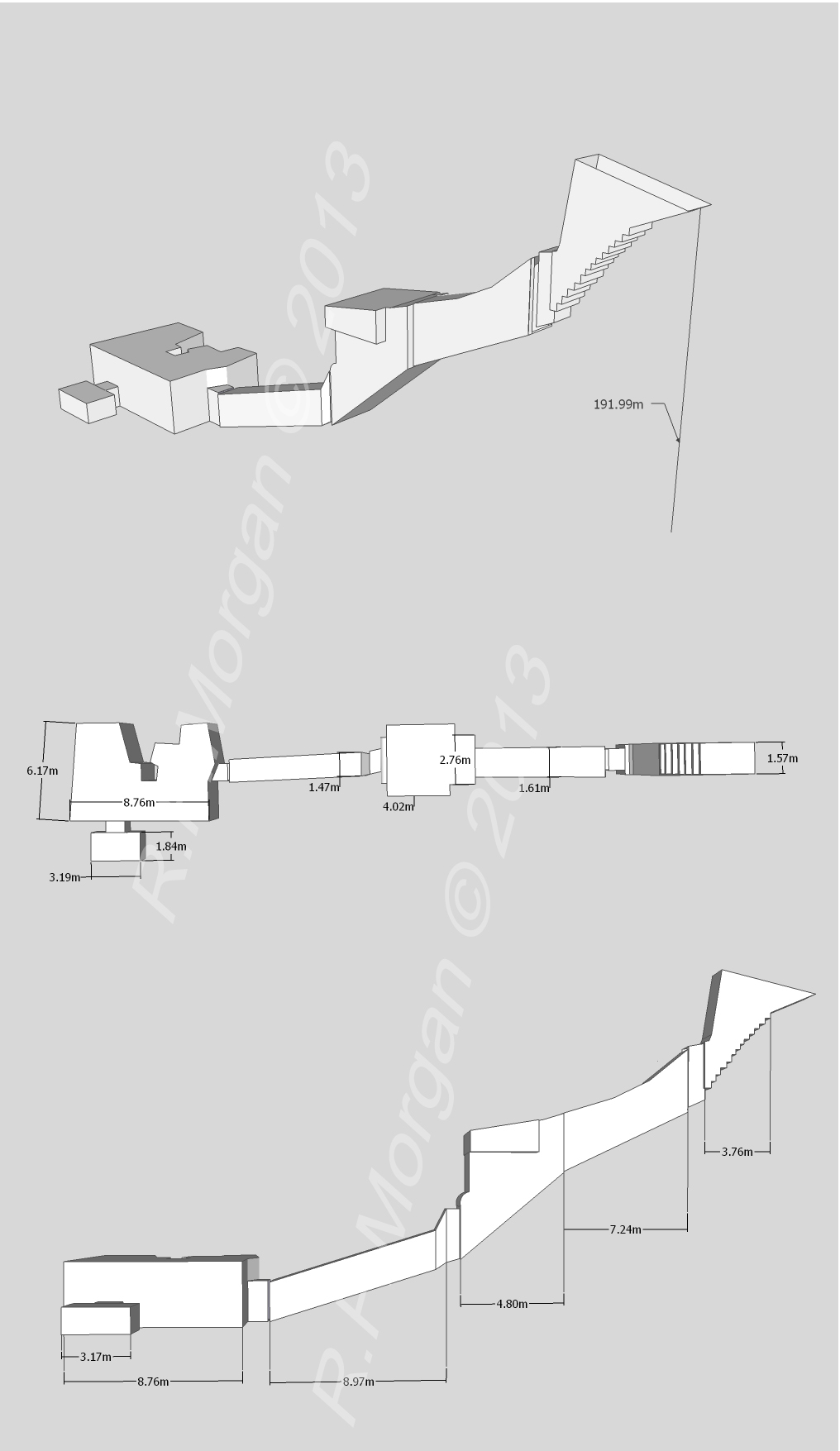
Tomb KV40 is located in the Valley of the Kings, in Egypt. Artifacts from the tomb attribute it to 18th Dynasty royal family members, though human remains from the later 22nd Dynasty were interred. Although the tomb was excavated by Victor Loret in 1899, no report was published.
Excavations in 2014 revealed the remains of at least 50 minor royalty in several chambers. While the tomb was looted several times in antiquity and at the end of the nineteenth century, it still contains many fragments of funerary equipment, such as wooden and cartonnage coffins and textiles.
Read on Wikipedia4 min readCC BY-SA 4.0
Where it sits in time
The site's dated range, placed against world reference points.
The scale is logarithmic: each step to the left is about ten times older than the last.
The full article
KV40: the whole story
In briefSources for this section
- Wikipedia (English): KV40CC BY-SA 4.0
Sources for this section
- Wikipedia (English): KV40CC BY-SA 4.0
Tomb KV40 is located in the Valley of the Kings, in Egypt. Artifacts from the tomb attribute it to 18th Dynasty royal family members, although human remains from the later 22nd Dynasty were also interred. Victor Loret excavated the tomb in 1899, but no report was published.
On 28 April 2014, the Egyptian Minister of State for Antiquities announced the discovery by an Egyptian–Swiss archaeological team of at least 50 mummies in the center chamber and in three side chambers of KV40. Based on inscriptions on storage jars, Egyptologists identified more than thirty people. The tomb was looted several times in antiquity and at the end of the nineteenth century, but it still contains many fragments of funerary equipment, such as wooden and cartonnage coffins and textiles.
The mummies come from both the 18th and the 22nd Dynasty. Royal titles on many jars indicated that the buried were members of the families of Thutmosis IV and Amenhotep III. The hieratic inscriptions point to hitherto unknown royal princesses, four princes, and several foreign women, mostly adults, and mummified children were also found. In a lecture at the Museo Egizio in 2015, Dr. Bickel indicated that so far twelve royal daughters had been identified, including the King's daughter Neferunebu and the King's daughter Nefertari, as well as the King's Son Meri-taui.
Some women have clear foreign names from the Near East and Nubia, and others are not obviously royal. One woman was identified as the King's Daughter Taemwadjes, then one of the royal son, which indicates she was a granddaughter of the King. The finds of 2014 also include a linen sock made to be worn in sandals. A volume of Swiss Egyptological Studies edited by Susanne Bickel, published in 2021, presents the inscribed objects of the 18th Dynasty and the pottery.
ArchaeologySources for this section
- Wikipedia (English): KV40CC BY-SA 4.0
Sources for this section
- Wikipedia (English): KV40CC BY-SA 4.0
On 28 April 2014, the Egyptian Minister of State for Antiquities announced the discovery by an Egyptian–Swiss archaeological team of at least 50 mummies in the center chamber and in three side chambers of KV40. Based on inscriptions on storage jars, Egyptologists identified more than thirty people.
The mummies in KV40 come from both the 18th and the 22nd Dynasty. The royal titles found on many jars indicated that the buried were members of the families of Thutmosis IV and Amenhotep III, both of whom also are interred in the Valley of the Kings. The analysis of the hieratic inscriptions points to hitherto unknown royal princesses, four princes, and several foreign women, mostly adults. Mummified children have also been found. The royal princes and princesses are said to be from the house of the royal children in the inscriptions.
In a lecture at the Museo Egizio (2015), Dr. Bickel indicated that so far twelve royal daughters had been identified. Names include the King's daughter Neferunebu and the King's daughter Nefertari, as well as the King's Son Meri-taui. One of the women was identified as the King's Daughter Taemwadjes, then one of the royal son, which indicates she was a granddaughter of the King. There are also women who are not obviously royal. Some women have clear foreign names from the Near East and Nubia.
The findings in the 2014 excavations include a linen sock which was made to be worn in sandals and fragments of funerary equipment.
How this page was madeSources for this section
- Wikipedia (English): KV40CC BY-SA 4.0
Sources for this section
- Wikipedia (English): KV40CC BY-SA 4.0
The summary at the top of this page was written by Claude Sonnet 5.5 (2026-11-06) from the cited Wikipedia article “KV40”. The numbers in it were checked automatically against the source text. The rest of the page is the article itself, the structured records and computed distances.
Tradition and region
About this kind of monument
Rock-cut tombs of Egypt
Egypt has some of the best-known rock-cut tombs in the world. In the Valley of the Kings, on the west bank of the Nile opposite Thebes, tombs were excavated for pharaohs and powerful nobles of the New Kingdom, for a period of nearly 500 years from the Eighteenth to the Twentieth Dynasty. The valley has two main sections, the East Valley where most royal tombs lie and the West Valley, known as the Valley of the Monkeys, and it is known to contain 65 tombs and chambers. It gained great attention after the discovery of the tomb of Tutankhamun in 1922, and became a UNESCO World Heritage Site in 1979 with the rest of the Theban Necropolis.
Much earlier, Beni Hasan in Middle Egypt is an ancient funerary site cut into the limestone cliffs on the east bank of the Nile about 20 kilometres south of Minya. In the Middle Kingdom it was the principal cemetery of the sixteenth nome of Upper Egypt, the Oryx nome, and its monumental tombs were cut roughly halfway up the cliff, overlooking the valley. Rock-cut tombs are also found at Deir el-Medina, between the Valley of the Kings and the Valley of the Queens.
The mastaba is a different tradition: a flat-roofed rectangular tomb with sloping sides, built of mudbrick or limestone, which marked the burial sites of eminent Egyptians in the Early Dynastic Period and Old Kingdom. The mastaba was built above ground and the rock-cut tomb into the cliff.
Egyptian tombs are among the best dated monuments in the Atlas, because the dynasty or reign of the king or noble who owned them is known.
When visiting, remember that access to many tombs is limited.
Paraphrased from Wikipedia: Valley of the Kings, Wikipedia: Beni Hasan, Wikipedia: Rock-cut tomb, Wikipedia: Mastaba · CC BY-SA 4.0
From the article
Dated moments in the story
- 1899
Although the tomb was excavated by Victor Loret in 1899, no report was published.
Source - 2014
Excavations in 2014 revealed the remains of at least 50 minor royalty in several chambers.
Source - 2014
On 28 April 2014, the Egyptian Minister of State for Antiquities announced the discovery by an Egyptian–Swiss archaeological team of at least 50 mummies in the center chamber and in three side chambers of KV40. Based on inscriptions on storage jars, Egyptologists identified more than thirty people.
Source - 2014
The findings in the 2014 excavations include a linen sock which was made to be worn in sandals and fragments of funerary equipment.
Source - 2015
In a lecture at the Museo Egizio (2015), Dr.
Source
Photographs
2 photographs, each with its author and licence
More photographs
Lore
Evidence & Lore
What the sources actually support — and, kept apart, what has been claimed.
What the evidence supports
Dates
Est. 3600–2500 BCEHow this date was established: Type comparisonTypological estimate, not a date for this site: a hypogeum in North Africa is normally dated between 3600 BCE and 2500 BCE (Atlas typological table).Source for this date
Measured facts
- Earliest excavation
- Excavated by Victor Loret in 1899Source: Earliest excavation
- 2014 discovery
- At least 50 mummies in the central chamber and three side chambersSource: 2014 discovery
- Identified individuals
- More than thirty, based on inscriptions on storage jarsSource: Identified individuals
- Royal connections
- Families of Thutmosis IV and Amenhotep IIISource: Royal connections
- Recovered items
- Wooden and cartonnage coffins, textiles, and a linen sandal sockSource: Recovered items
- Looting
- Plundered several times in antiquity and at the end of the nineteenth centurySource: Looting
- Culture
- Ancient EgyptSource: Culture
- Length
- 2.24 metreSource: Length
Where it stands
Egypt
The pin marks the monument itself — its exact point.
- Coordinates
- 25°44′00″ N, 32°36′00″ EFor a GPS or map app: 25.73333, 32.60000
Access is as our sources describe it; we have not visited the site to check.
Nearby
The closest sites in the Atlas, by straight line.




Sources
Every record behind this page, with the link it came from.
2 sources behind this page
- 01Wikidata Q1719150wikidata.org
- 02Wikipedia (en)en.wikipedia.org
Image files
Report a correctionWrong date, name, photograph or source? Tell us and it will be put right.
Around this place
The ten nearest sites, by compass
Credit
Text, licence and sources
Text from the Wikipedia article "KV40" (English), licensed CC BY-SA 4.0; authors are listed in the page history. Reused under CC BY-SA 4.0. Read on Wikipedia · Edit history and authors
- Wikipedia (English): KV40CC BY-SA 4.0
- Wikidata Q1719150CC0