
Overview
About this site
What the sources say
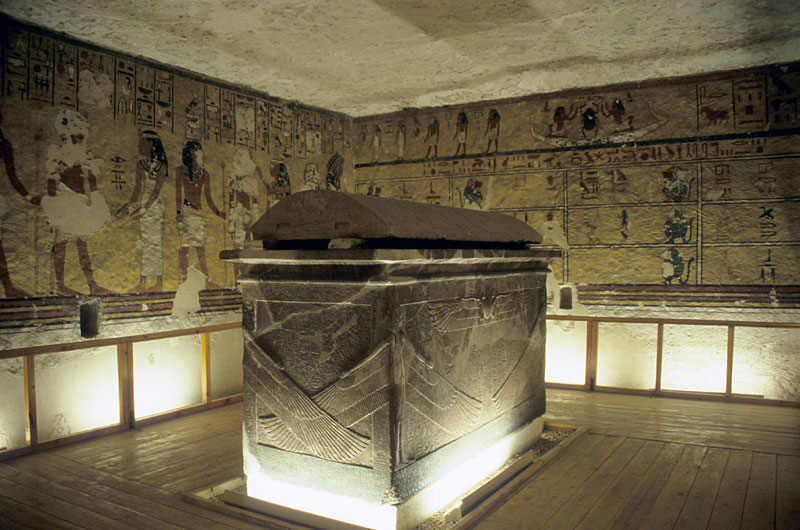
Tomb KV13, located in the Valley of the Kings in Egypt, was cut and decorated for the burial of the noble Bay of the Nineteenth Dynasty. An ostraca published in the French Egyptological journal BIFAO in 2000 records that Chancellor Bay was executed by pharaoh Siptah. Consequently, Bay was never buried in his tomb. Moreover, no funerary goods were found in the tomb belonging to Bay. It was later reused by two princes of the Twentieth Dynasty, Mentuherkhepsef, a son of Ramesses III, and his nephew, Amenherkhepshef, a son of Ramesses VI.
Read on Wikipedia2 min readCC BY-SA 4.0
Where it sits in time
The site's dated range, placed against world reference points.
The scale is logarithmic: each step to the left is about ten times older than the last.
The full article
KV13: the whole story
In briefSources for this section
- Wikipedia (English): KV13CC BY-SA 4.0
Sources for this section
- Wikipedia (English): KV13CC BY-SA 4.0
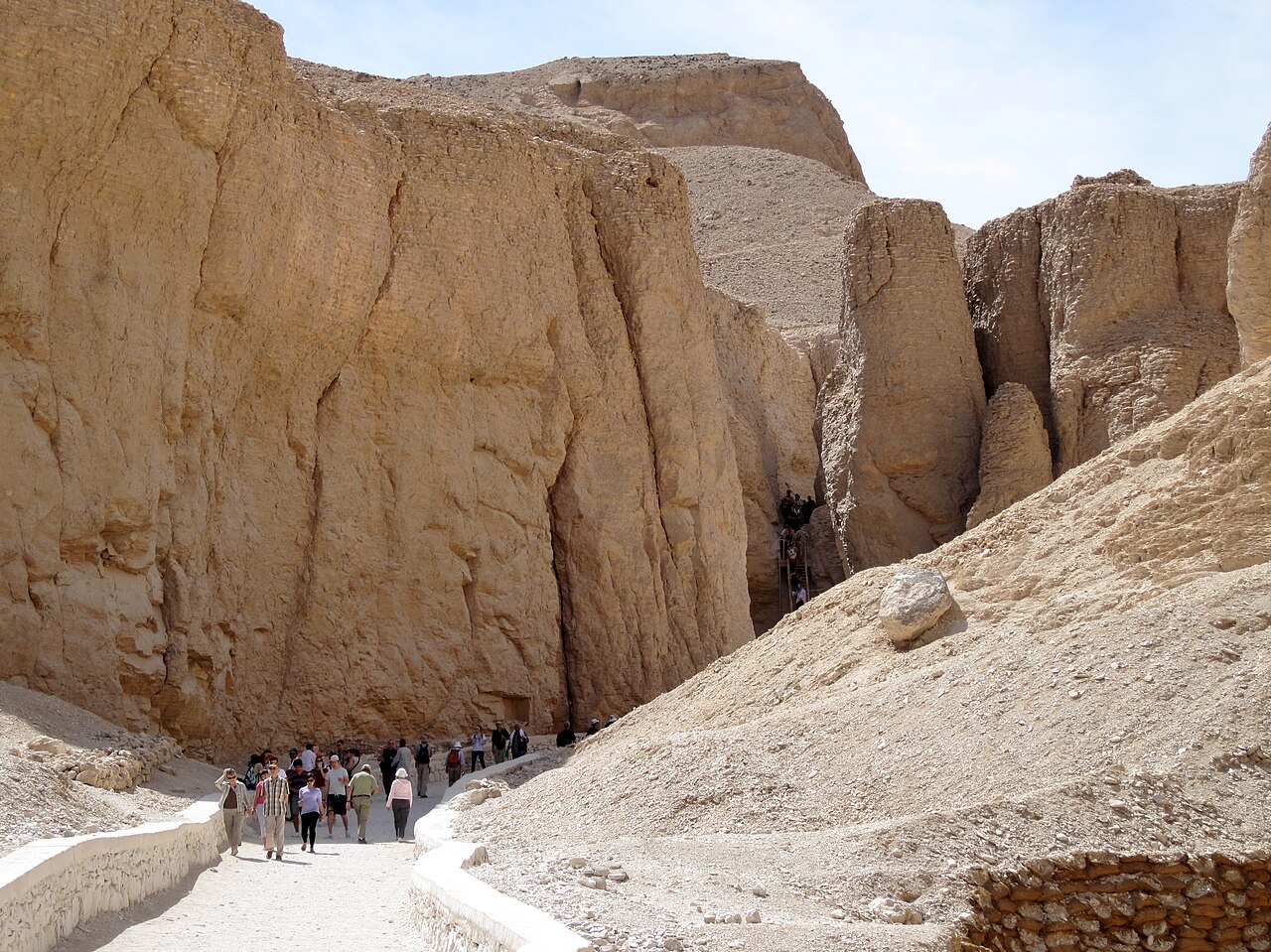
Tomb KV13 is located in the Valley of the Kings in Egypt. It was cut and decorated for the burial of the noble Bay of the Nineteenth Dynasty. The Valley of the Kings lies on the west bank of the Nile opposite Thebes, where tombs were excavated for pharaohs and powerful nobles of the New Kingdom for a period of nearly 500 years, from the Eighteenth to the Twentieth Dynasty.
An ostraca published in the French Egyptological journal BIFAO in 2000 records that Chancellor Bay was executed by pharaoh Siptah. As a result Bay was never buried in his tomb, and no funerary goods belonging to him were found there.
The tomb was later reused by two princes of the Twentieth Dynasty: Mentuherkhepsef, a son of Ramesses III, and his nephew Amenherkhepshef, a son of Ramesses VI. No further details of its layout or contents are given.
Monuments of this kind in the valley are usually grouped in two main sections, the East Valley where most royal tombs lie and the West Valley, known as the Valley of the Monkeys. The valley is known to contain 65 tombs and chambers. It gained great attention after the discovery of the tomb of Tutankhamun in 1922 and became a UNESCO World Heritage Site in 1979 with the rest of the Theban Necropolis.
How this page was madeSources for this section
- Wikipedia (English): KV13CC BY-SA 4.0
Sources for this section
- Wikipedia (English): KV13CC BY-SA 4.0
The summary at the top of this page was written by Claude Sonnet 5.5 (2026-11-06) from the cited Wikipedia article “KV13”. The numbers in it were checked automatically against the source text. The rest of the page is the article itself, the structured records and computed distances.
Tradition and region
About this kind of monument
Rock-cut tombs of Egypt
Egypt has some of the best-known rock-cut tombs in the world. In the Valley of the Kings, on the west bank of the Nile opposite Thebes, tombs were excavated for pharaohs and powerful nobles of the New Kingdom, for a period of nearly 500 years from the Eighteenth to the Twentieth Dynasty. The valley has two main sections, the East Valley where most royal tombs lie and the West Valley, known as the Valley of the Monkeys, and it is known to contain 65 tombs and chambers. It gained great attention after the discovery of the tomb of Tutankhamun in 1922, and became a UNESCO World Heritage Site in 1979 with the rest of the Theban Necropolis.
Much earlier, Beni Hasan in Middle Egypt is an ancient funerary site cut into the limestone cliffs on the east bank of the Nile about 20 kilometres south of Minya. In the Middle Kingdom it was the principal cemetery of the sixteenth nome of Upper Egypt, the Oryx nome, and its monumental tombs were cut roughly halfway up the cliff, overlooking the valley. Rock-cut tombs are also found at Deir el-Medina, between the Valley of the Kings and the Valley of the Queens.
The mastaba is a different tradition: a flat-roofed rectangular tomb with sloping sides, built of mudbrick or limestone, which marked the burial sites of eminent Egyptians in the Early Dynastic Period and Old Kingdom. The mastaba was built above ground and the rock-cut tomb into the cliff.
Egyptian tombs are among the best dated monuments in the Atlas, because the dynasty or reign of the king or noble who owned them is known.
When visiting, remember that access to many tombs is limited.
Paraphrased from Wikipedia: Valley of the Kings, Wikipedia: Beni Hasan, Wikipedia: Rock-cut tomb, Wikipedia: Mastaba · CC BY-SA 4.0
From the article
Dated moments in the story
- 2000
An ostraca published in the French Egyptological journal BIFAO in 2000 records that Chancellor Bay was executed by pharaoh Siptah.
Source
Photographs
5 photographs, each with its author and licence
More photographs
Lore
Evidence & Lore
What the sources actually support — and, kept apart, what has been claimed.
What the evidence supports
Dates
Est. 3600–2500 BCEHow this date was established: Type comparisonTypological estimate, not a date for this site: a hypogeum in North Africa is normally dated between 3600 BCE and 2500 BCE (Atlas typological table).Source for this date
Measured facts
- Location
- Valley of the KingsSource: Location
- Original intended occupant
- Bay of the Nineteenth DynastySource: Original intended occupant
- Recorded fate of Bay
- executed by pharaoh SiptahSource: Recorded fate of Bay
- Later occupant
- Mentuherkhepsef, son of Ramesses IIISource: Later occupant
- Later occupant
- Amenherkhepshef, son of Ramesses VISource: Later occupant
- Dynasties
- Nineteenth and TwentiethSource: Dynasties
- Culture
- Ancient EgyptSource: Culture
- Length
- 71.37 metreSource: Length
Where it stands
Egypt
The pin marks the monument itself — its exact point.
- Coordinates
- 25°45′00″ N, 32°36′51″ EFor a GPS or map app: 25.75000, 32.61430
Access is as our sources describe it; we have not visited the site to check.
Nearby
The closest sites in the Atlas, by straight line.





Sources
Every record behind this page, with the link it came from.
2 sources behind this page
- 01Wikidata Q1719116wikidata.org
- 02Wikipedia (en)en.wikipedia.org
Image files
- KV 13 Bay.jpgR.F.MorganCC BY-SA 3.0
- Valley of the Kings panorama (450021688).jpgEndlisnisCC BY 2.0
- Neues Reich. Dynastie XIX. a - c. Theben (Thebes). Bab el Meluk (Bîbân el-Mulûk)- (a.b.) Grab 15; (c.) Grab 13; d. Felsenstele hinter Medînet Hâbu; e. f. Abusimbel (Abû Sunbul); (e.) Felsenstele; f. (NYPL b14291191-38379).jpgScan by NYPLPublic domain
- Valle de los reyes-2007 (2).JPGAlberto-g-roviCC BY-SA 3.0
- Valle de los Reyes 1999 01.jpgLBM1948CC BY-SA 4.0
Report a correctionWrong date, name, photograph or source? Tell us and it will be put right.
Around this place
The ten nearest sites, by compass
Credit
Text, licence and sources
Text from the Wikipedia article "KV13" (English), licensed CC BY-SA 4.0; authors are listed in the page history. Reused under CC BY-SA 4.0. Read on Wikipedia · Edit history and authors
- Wikipedia (English): KV13CC BY-SA 4.0
- Wikidata Q1719116CC0