
Overview
About this site
What the sources say
Hunebed D24 is een van de vijf hunebedden gelegen bij de plaats Bronneger in de Nederlandse provincie Drenthe.
Het hunebed D24 vormt samen met het nog kleinere D23 en het wat grotere D25 een wat apart en meer in het bos gelegen groepje hunebedden aan de Steenakkersweg, een zandweg naar Bronneger.
De hunebedden D22 en D21 liggen iets meer naar het westen aan de rand van een akker. In de nabijheid van deze hunebedden liggen twee grafheuvels uit de bronstijd.
Article in DutchRead on Wikipedia4 min readCC BY-SA 4.0
Where it sits in time
The site's dated range, placed against world reference points.
The scale is logarithmic: each step to the left is about ten times older than the last.
The full article
D24: the whole story
In briefSources for this section
- Wikipedia (Dutch): D24 (hunebed)CC BY-SA 4.0
Sources for this section
- Wikipedia (Dutch): D24 (hunebed)CC BY-SA 4.0
D24 is a hunebed, or dolmen, near Bronneger in the Dutch province of Drenthe. It belongs to a group of five hunebedden along the Steenakkersweg, a sandy road leading to Bronneger. Together with the smaller D23 and the larger D25, it forms a more isolated group in the woods. The nearby D22 and D21 stand farther west at the edge of a field.
D24 is attributed to the Funnel Beaker culture and is dated by typological estimate to 3500 BCE to 2800 BCE. The monument is 6,7 meter long and 2,4 meter wide. It originally had eight supporting stones and four capstones. Very little of D24 and D23 survives, and they can now barely be recognized as hunebedden.
The first known written account came from Jacobus Craandijk in 1879. A.E. van Giffen described D24 as “zeer onvolledig en verkeert in een sterk gehavenden staat” and investigated it in 1925. At that time, two sunken and fallen capstones, two closing stones and six side stones remained. The five hunebedden near Bronneger are managed by Het Drentse Landschap.
William Collings Lukis and sir Henry Dryden recorded the monument in 1878 as hunebed IV on Plan XX. Their drawings and measurements documented two capstones, four supporting stones on the south side, one on the north side, two closing stones, a capstone in the burial chamber and a remnant of the burial mound. Their unpublished work was finally published by Wijnand van der Sanden in 2015.
Summary in EnglishSources for this section
- Wikipedia (Dutch): D24 (hunebed)CC BY-SA 4.0
Sources for this section
- Wikipedia (Dutch): D24 (hunebed)CC BY-SA 4.0
D24 is a dolmen in Borger-Odoorn, Germany. Wikidata describes it as: dolmen in the Netherlands. A typological estimate: 3500 BCE to 2800 BCE. No English Wikipedia article exists for it; the full text below is the Dutch article "D24 (hunebed)", shown in the original language.
BouwSources for this section
- Wikipedia (Dutch): D24 (hunebed)CC BY-SA 4.0
Sources for this section
- Wikipedia (Dutch): D24 (hunebed)CC BY-SA 4.0
Het hunebed wordt toegeschreven aan de trechterbekercultuur.
Het hunebed is 6,7 meter lang en 2,4 meter breed. Oorspronkelijk had het acht draagstenen en vier dekstenen.
Van D24 en D23 zijn maar weinig stenen bewaard gebleven, ze zijn nauwelijks te herkennen zijn als hunebed.
GeschiedenisSources for this section
- Wikipedia (Dutch): D24 (hunebed)CC BY-SA 4.0
Sources for this section
- Wikipedia (Dutch): D24 (hunebed)CC BY-SA 4.0
Jacobus Craandijk (1834-1912) schrijft in 1879 over de vijf hunebedden ten zuidoosten van Bronneger.
Bij D21 zijn veel archeologische vondsten gedaan door prof. A.E. van Giffen. Van Giffen beschreef D24 als "zeer onvolledig en verkeert in een sterk gehavenden staat". Er waren nog twee verzakte en afgevallen dekstenen, twee sluitstenen en zes zijstenen. D24 werd in 1925 onderzocht door Van Giffen.
De vijf hunebedden bij Bronneger worden beheerd door Het Drentse Landschap.
Society of AntiquariesSources for this section
- Wikipedia (Dutch): D24 (hunebed)CC BY-SA 4.0
Sources for this section
- Wikipedia (Dutch): D24 (hunebed)CC BY-SA 4.0
In Engeland ontstond in de jaren zeventig van de 19e eeuw bezorgdheid over de wijze waarop in Nederland hunebedden werden gerestaureerd. In die kringen was men vooral bezorgd dat met de restauraties het oorspronkelijk beeld van de situatie verloren zou gaan. De directeur van de Society of Antiquaries in Londen verzocht de oudheidkundigen William Collings Lukis en sir Henry Dryden om de staat waarin de hunebedden zich op dat moment bevonden nauwkeurig vast te leggen. Zij bezochten in juli 1878 Drenthe en brachten veertig hunebedden op de Hondsrug in kaart. Ze hebben opmetingen verricht en beschreven de aangetroffen situatie, die zij tevens vastlegden in een serie aquarellen. Hun rapportage aan de Society of Antiquaries verscheen echter niet in druk. Hun materiaal werd bewaard bij de Society of Antiquaries, het Guernsey Museum & Art Gallery en het Drents Museum. Het Ashmolean Museum in Oxford bezit kopieën van hun werk. In 2015 publiceerde de Drentse archeoloog dr. Wijnand van der Sanden alsnog hun werk. Hij voorzag hun materiaal van een uitgebreide inleiding. Ook schetste hij de ontwikkelingen met betrekking tot het archeologisch onderzoek van de hunebedden na hun onderzoek tot 2015. Hij gaf als oordeel dat het werk van Lukis en Dryden van hoge kwaliteit was. In het Drents Museum was in 2015 een tentoonstelling over het werk.
Hunebed D24 is weergegeven op Plan XX en werd door Lukis en Dryden als hunebed IV aangeduid: Er waren nog twee dekstenen aanwezig. Oorspronkelijk moeten er vier dekstenen zijn geweest. Er waren nog vier draagstenen aan de zuidkant en nog één aan de noordkant aanwezig. Ook waren er nog twee sluitstenen aanwezig. Een van de dekstenen lag in de grafkamer. Er was nog een overblijfsel van de dekheuvel te zien. Het hunebed was eigendom van de staat.
How this page was madeSources for this section
- Wikipedia (Dutch): D24 (hunebed)CC BY-SA 4.0
Sources for this section
- Wikipedia (Dutch): D24 (hunebed)CC BY-SA 4.0
The summary at the top of this page was written by MiniMax-M3 (2026-11-07) from the cited Wikipedia article “D24 (hunebed)”, translated from Dutch. The numbers in it were checked automatically against the source text. The rest of the page is the article itself, the structured records and computed distances.
Tradition and region
About this kind of monument
German and Dutch Hünengräber (hunebedden)
The megalithic tombs of northern Germany and the Netherlands were built by the Funnel Beaker culture (about 4100 to 2800 BCE), and the style, called Nordic megalith architecture, emerged between 3500 and 2800 BCE. In the Netherlands the tombs are the hunebedden, built between 3470 and 3250 BCE by the western group of the Funnel Beaker culture and used until about 2760 BCE. Of an estimated 100 original tombs, 54 are preserved, 52 of them in the province of Drenthe and two in Groningen. After the Funnel Beaker culture ended the sites were reused by the Single Grave and Bell Beaker cultures in the Early Bronze Age and, to a lesser extent, into the Middle Ages.
In Mecklenburg-Vorpommern up to 5,000 megalith tombs were erected, and more than 1,000 are preserved and protected by law; they belong to the youngest and easternmost part of the western European tradition. Most are dolmens, often lying inside a circular or trapezoid frame of standing stones. Locally they are known as Hünengräber, "giants' tombs", or Großsteingräber, "large stone tombs"; the trapezoid frame is a Hünenbett, "giants' bed", and the circular one a Bannkreis. Between 1964 and 1974 Ewald Schuldt excavated over a hundred sites there and sorted them into simple dolmens, extended dolmens, passage graves, great dolmens, unchambered long barrows and stone cists.
Folklore: the German and Dutch names, with Hüne meaning "giant", carry the old idea that giants were buried here. This is a tradition; the stones were placed by Neolithic farmers.
When visiting, look for the capstones on their supports and the frame of kerbstones around them.
Paraphrased from Wikipedia: Megaliths in the Netherlands, Wikipedia: Megaliths in Mecklenburg-Vorpommern, Wikipedia: Nordic megalith architecture, Wikipedia: Funnel beaker culture, Wikipedia: Dolmen · CC BY-SA 4.0
From the article
Dated moments in the story
- 1834
Jacobus Craandijk (1834-1912) schrijft in 1879 over de vijf hunebedden ten zuidoosten van Bronneger.
Source - 1878
Zij bezochten in juli 1878 Drenthe en brachten veertig hunebedden op de Hondsrug in kaart.
Source - 1925
D24 werd in 1925 onderzocht door Van Giffen.
Source - 2015
In 2015 publiceerde de Drentse archeoloog dr.
Source - 2015
Ook schetste hij de ontwikkelingen met betrekking tot het archeologisch onderzoek van de hunebedden na hun onderzoek tot 2015. Hij gaf als oordeel dat het werk van Lukis en Dryden van hoge kwaliteit was.
Source - 2015
In het Drents Museum was in 2015 een tentoonstelling over het werk.
Source
See it in 3D
An interpretive reconstruction of the monument, standing on the real ground at its exact point, under the sun for that place and season. Drag to look around it.
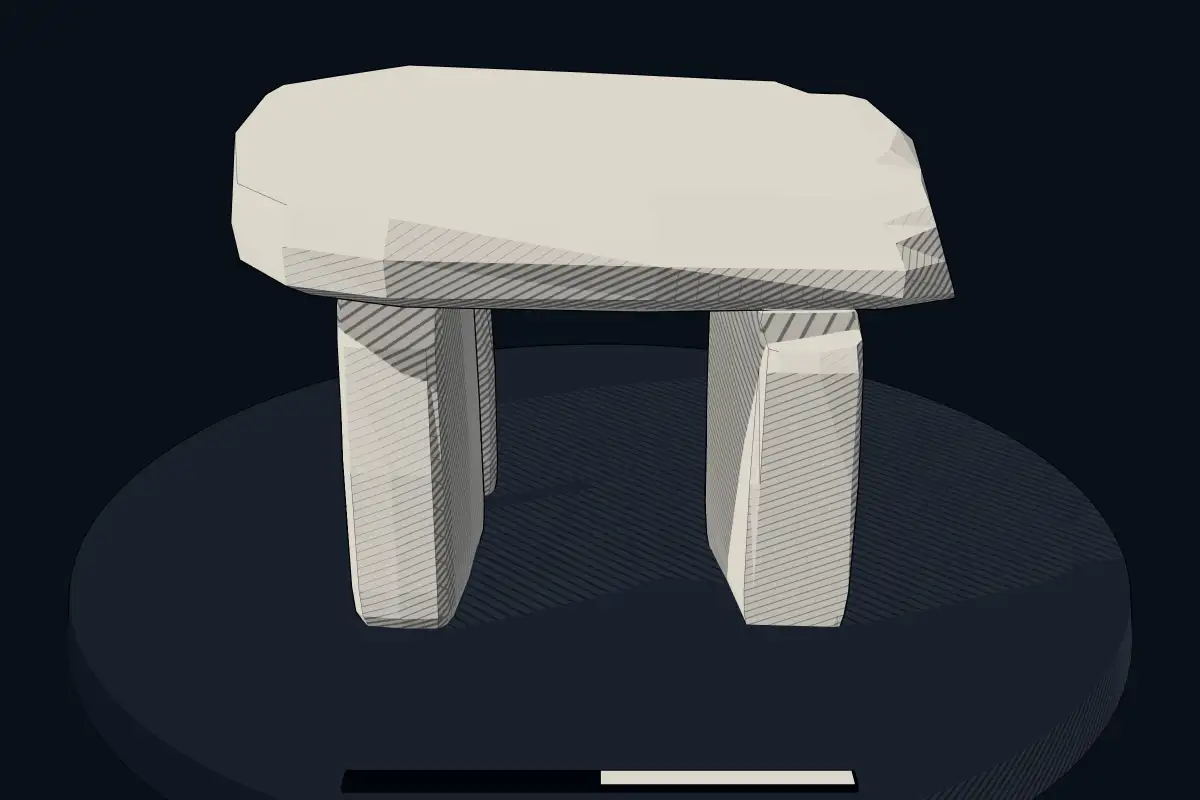
The reconstruction is ours, not a survey: it shows what a monument of this type looks like, at the size the record gives for this one.
Photographs
8 photographs, each with its author and licence
More photographs
Lore
Evidence & Lore
What the sources actually support — and, kept apart, what has been claimed.
What the evidence supports
Dates
Est. 3500–2800 BCEHow this date was established: Type comparisonTypical range for dolmens in Germany; this site has not been dated itself. German dolmens (Huengrab) belong to the Nordic megalith tradition which emerged predominantly between 3500 and 2800 BC.Source for this date
Where it stands
Germany
The pin marks the monument itself — its exact point.
- Coordinates
- 52°56′40″ N, 6°48′08″ EFor a GPS or map app: 52.94456, 6.80229
Access is as our sources describe it; we have not visited the site to check.
Nearby
The closest sites in the Atlas, by straight line.


Sources
Every record behind this page, with the link it came from.
2 sources behind this page
- 01Wikidata Q2520170wikidata.org
- 02Source for this dateen.wikipedia.org
Image files
- Hunebed D24 bij Bronneger.jpgGouwenaarPublic domain
- 20191218 drie hunebedden Bronneger.jpgGouwenaarCC BY-SA 4.0
- De stenen van een hunnebed zijn heel zwaar Drenthe.JPGPeter van der SluijsCC BY-SA 4.0
- Hunebed graves of the first farmers in Holland.JPGPeter van der SluijsCC BY-SA 4.0
- In het hunnebed begroeven de eerste boeren hun doden Drenthe.JPGPeter van der SluijsCC BY-SA 4.0
- 20190408 Hunebedden D25 D24 en D23 Bronneger.jpgGouwenaarCC BY-SA 4.0
- 20160509 Hunebedden D25 D24 D23 (panoramafoto).jpgGouwenaarCC0
- D23, D24 en D25.JPGEncyachtCC BY-SA 4.0
Report a correctionWrong date, name, photograph or source? Tell us and it will be put right.
Around this place
The ten nearest sites, by compass
Credit
Text, licence and sources
Text from the Wikipedia article "D24 (hunebed)" (Dutch), licensed CC BY-SA 4.0; authors are listed in the page history. Reused under CC BY-SA 4.0. Read on Wikipedia · Edit history and authors
- Wikipedia (Dutch): D24 (hunebed)CC BY-SA 4.0
- Wikidata Q2520170CC0