Temple 20
Datedc. 430–600 CE
No licensed photograph yetWe have no photograph we may publish for this site, so the interpretive 3D view leads instead.
Overview
About this site
What the sources say
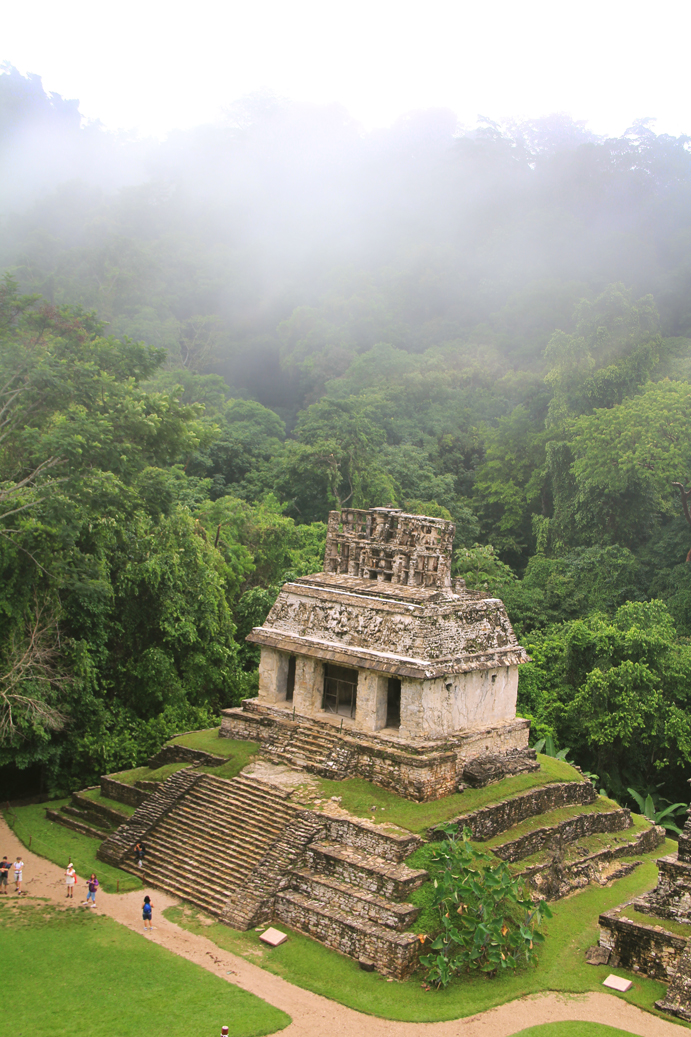
Temple 20 (or Temple XX) is a pyramidal building, dated to between AD 430 and 600 (Early Classic period), located at the Maya city of Palenque in the state of Chiapas in southern Mexico with a funerary chamber that contains remains of a high ranking character. Archaeologist Merle Greene Robertson has suggested that the vaulted tomb under Temple 20 is that of Queen Ix Yohl Ik'nal.
Read on Wikipedia3 min readCC BY-SA 4.0
The full article
Temple 20: the whole story
In briefSources for this section
- Wikipedia (English): Temple 20CC BY-SA 4.0
Sources for this section
- Wikipedia (English): Temple 20CC BY-SA 4.0
Temple 20, also called Temple XX, is a pyramidal building at the Maya city of Palenque in the state of Chiapas in southern Mexico. It dates to between AD 430 and 600, during the Early Classic period, and has a funerary chamber containing the remains of a high ranking character.
Archaeologist Merle Greene Robertson suggested that the vaulted tomb beneath Temple 20 belonged to Queen Ix Yohl Ik'nal. A tomb was discovered inside the pyramid in 1999, but its uncertain structural condition made further entry risky because any attempt could damage the pyramid built above it.
In April 2011, a small camcorder measuring 4 by 6 centimetres (1.6 by 2.4 in) was lowered 5 metres (16 ft) through a hole 15 centimetres (5.9 in) wide in an upper floor. It revealed murals of nine human figures outlined in black against a blood-red background. No sarcophagus was found, and the skeleton probably lies on the floor slabs.
The INAH Council of Archaeology determined that the pyramidal base had to be stabilized before exploration continued. Specialists from the National Institute of Anthropology and History (INAH) restored Temple 20 in 2010. Across Mesoamerica, Maya communities raised carved stone monuments during the Classic Period, including stelae, often paired with low circular stones called altars whose function remains uncertain.
ExplorationSources for this section
- Wikipedia (English): Temple 20CC BY-SA 4.0
Sources for this section
- Wikipedia (English): Temple 20CC BY-SA 4.0
In 1999 archeologists discovered a tomb inside Temple 20, but any attempt of penetration could lead to damage, due to the uncertain structural state of the pyramid built on top of it.
A small camcorder (4 by 6 centimetres (1.6 by 2.4 in)), lowered to the depth of 5 metres (16 ft) through a 15 centimetres (5.9 in) wide hole in an upper floor of the pyramid in April 2011, revealed murals of nine human figures outlined in black against the blood-red background. There was no sarcophagus, it is probable that the skeleton lies on the slabs of the floor.
The INAH Council of Archaeology determined that the pyramidal base must be stabilized before exploration.
Conservation and modern historySources for this section
- Wikipedia (English): Temple 20CC BY-SA 4.0
Sources for this section
- Wikipedia (English): Temple 20CC BY-SA 4.0
Temple 20 was restored by specialists from the National Institute of Anthropology and History (INAH) in 2010.
How this page was madeSources for this section
- Wikipedia (English): Temple 20CC BY-SA 4.0
Sources for this section
- Wikipedia (English): Temple 20CC BY-SA 4.0
The summary at the top of this page was written by MiniMax-M3 (2026-11-08) from the cited Wikipedia article “Temple 20”. The numbers in it were checked automatically against the source text. The rest of the page is the article itself, the structured records and computed distances.
Tradition and region
About this kind of monument
Mesoamerican stelae and carved stone
Mesoamerica's civilisations raised carved stone monuments. Maya stelae are tall sculpted stone shafts, often paired with low circular stones called altars, though their actual function is uncertain. Many stelae are carved in low relief, though plain ones are found throughout the Maya region. The sculpting of these monuments spread across the Maya area in the Classic Period (about 250 to 900 CE), and the pairing of sculpted stela and altar is a hallmark of Classic Maya civilisation. The earliest dated stela found in place in the Maya lowlands comes from Tikal in Guatemala, and during the Classic Period almost every Maya kingdom in the southern lowlands raised stelae in its ceremonial centre.
The Olmec colossal heads, much older, are stone representations of heads carved from large basalt boulders, from 1.17 to 3.4 metres high. They date from at least 900 BCE and are a distinctive feature of Olmec civilisation. All portray individuals with distinctive features of the people who still live in Tabasco and Veracruz, and the backs are often flat. The boulders came from the Sierra de los Tuxtlas mountains in Veracruz, and given the weight of the stone, which was moved over 150 kilometres, much labour was needed.
Many Maya stelae carry inscriptions in hieroglyphs with dates in the Long Count calendar, and so can be dated to the day. This makes them among the most precisely dated monuments in the Atlas. They commemorate rulers and events, not the dead in general.
The Atlas's records in Mexico, Guatemala and Belize are mostly Maya sites with stelae, altars and carved monuments.
When visiting, look at the carved figure on the front, which is usually a ruler, and at the glyphs on the sides and back. Many stelae are now protected by roofs.
Paraphrased from Wikipedia: Maya stelae, Wikipedia: Olmec colossal heads, Wikipedia: Stele · CC BY-SA 4.0
From the article
Dated moments in the story
- 600 CE
Temple 20 (or Temple XX) is a pyramidal building, dated to between AD 430 and 600 (Early Classic period), located at the Maya city of Palenque in the state of Chiapas in southern Mexico with a funerary chamber that contains remains of a high ranking character.
Source - 1999
In 1999 archeologists discovered a tomb inside Temple 20, but any attempt of penetration could lead to damage, due to the uncertain structural state of the pyramid built on top of it.
Source - 2010
Temple 20 was restored by specialists from the National Institute of Anthropology and History (INAH) in 2010.
Source - 2011
A small camcorder (4 by 6 centimetres (1.6 by 2.4 in)), lowered to the depth of 5 metres (16 ft) through a 15 centimetres (5.9 in) wide hole in an upper floor of the pyramid in April 2011, revealed murals of nine human figures outlined in black against the blood-red background.
Source
Where it stands
Mexico
The pin marks the monument itself — its exact point.
- Coordinates
- 17°28′56″ N, 92°02′47″ WFor a GPS or map app: 17.48211, -92.04642
Access is as our sources describe it; we have not visited the site to check.
Nearby
The closest sites in the Atlas, by straight line.


Sources
Every record behind this page, with the link it came from.
2 sources behind this page
- 01Wikidata Q7698418wikidata.org
- 02Wikipedia: Temple 20en.wikipedia.org
Report a correctionWrong date, name, photograph or source? Tell us and it will be put right.
Around this place
The ten nearest sites, by compass
Credit
Text, licence and sources
Text from the Wikipedia article "Temple 20" (English), licensed CC BY-SA 4.0; authors are listed in the page history. Reused under CC BY-SA 4.0. Read on Wikipedia · Edit history and authors
- Wikipedia (English): Temple 20CC BY-SA 4.0
- Wikidata Q7698418CC0