
MegalithFringe site
Chinkultic
Datedc. 201–897 CE
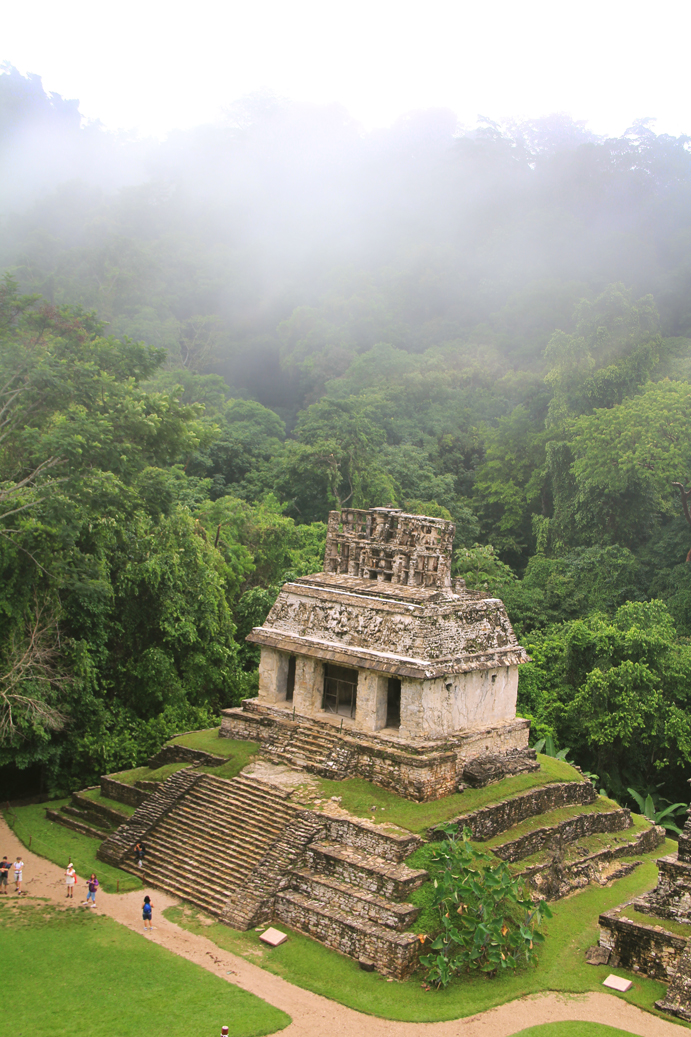
Photo Strongilocentrotus · CC BY-SA 4.0Source file on Wikimedia Commons
Overview
About this site
What the sources say
Chinkultic, sometimes Chincultic, is a moderate-size archeological ruin in the state of Chiapas, Mexico. It is part of the Lagunas de Montebello National Park.
This pre-Columbian city belongs to the ancient Maya civilization. The city flourished in the Maya Classic Era, from about the 3rd through the 9th century. Most of the sculptures were produced in the last 300 years of this era, with hieroglyphic inscriptions dating from 591 to 897. Post-Classic-Era occupation of the site continued until the 13th century, after which it was abandoned.
The site has some step-pyramids and some 200 smaller buildings, most in undisturbed ruin. Chinkultic has carved stone stelae depicting the site's rulers. The stelae are thought to depict the accession of the rulers as warriors, shown through the shields and spears they carry. Other sites have depictions like this, however they usually focus more on cosmology. In the case of Chinkultic, the focus is all on the rulers as warriors. The site contains a court for playing the Mesoamerican ballgame, which a marker tells us was dedicated on 21 May 591.
Other stelae present at Chinkultic display rulers authority, showing a ruler and then a figure who is clearly subordinate. These stelae depict scattering rituals which are very similar to ones depicted at the sites of Bonampak and Yaxchilan. What makes the figures at Chinkultic different is that they are dressed in long robes with a War Serpent headdress and a necklace of severed heads. This emphasizes the focus on warfare found throughout Chinkultic.
The similarities listed above suggest some sort of artistic communication between Chinkultic and Yaxchilan, however it was not as though Chinkultic copied everything about Yaxchilan stelae. Chinkultic artists mixed the borrowed artistic traditions with their own to create stelae that had similarities but also differences, as is mentioned earlier.
The first published account of the site was made by Edward Seler in the late 19th century. A detailed description of the site was made by Enrique Juan Palacios in 1926.
The first archeological investigations of the site were conducted in 1966 under the direction of Stephan F. de Borhegyi of the Public Museum of Milwaukee, Wisconsin.
Starting in 1970, some further excavations and restorations of a few buildings was conducted by Mexican government archeologists, who also dredged some artifacts from the site's cenote or natural well known as Agua Azul ("Blue Water"). The cenote gives the site its Maya language name; Chinkultic meaning "stepped-cenote".
The site is open for tourism visits, although it is not one of the more commonly visited Maya sites.
Read on Wikipedia5 min readCC BY-SA 4.0
Age sources
How old this site is, and who says so.
Range across all claimsc. 201–897 CE
EstimatedWhat this badge means
A reading of this site: what its style says, or a statement published about it.
- 591–897 CEPublished sourceThe range uses the years explicitly given for the site's hieroglyphic inscriptions.Source: en.wikipedia.org
- 201–300 CEWikipedia: Chinkultic (infobox)Source: en.wikipedia.org
Where it sits in time
The site's dated range, placed against world reference points.
The scale is logarithmic: each step to the left is about ten times older than the last.
The full article
Chinkultic: the whole story
In briefSources for this section
- Wikipedia (English): ChinkulticCC BY-SA 4.0
Sources for this section
- Wikipedia (English): ChinkulticCC BY-SA 4.0
Chinkultic, sometimes Chincultic, is a moderate-size archeological ruin in the state of Chiapas, Mexico, within the Lagunas de Montebello National Park. This pre-Columbian city belonged to the ancient Maya civilization and flourished in the Classic Era, from about the 3rd through the 9th century. Post-Classic occupation continued until the 13th century, after which the site was abandoned.
The site has some step-pyramids and some 200 smaller buildings, most in undisturbed ruin. It also has a court for the Mesoamerican ballgame, and a marker records that it was dedicated on 21 May 591. The name comes from the natural well or cenote known as Agua Azul ('Blue Water'), as Chinkultic means 'stepped-cenote'.
Most of the sculptures were produced in the last 300 years of the Classic Era, with hieroglyphic inscriptions dating from 591 to 897. The carved stone stelae depict the site's rulers, thought to show their accession as warriors through the shields and spears they carry. Where other sites usually focus more on cosmology, at Chinkultic the focus is all on the rulers as warriors.
Other stelae show a ruler beside a clearly subordinate figure, in scattering rituals very similar to ones depicted at Bonampak and Yaxchilan. The figures at Chinkultic are dressed in long robes with a War Serpent headdress and a necklace of severed heads. This suggests artistic communication with Yaxchilan, though Chinkultic artists mixed borrowed traditions with their own.
Caitlin C. Earley hypothesizes that the warfare focus indicates a history of conflict with other Maya polities, though which ones is hard to say, since Chinkultic is never mentioned in hieroglyphs in the Usumacinta. This may instead point to a network of art independent from political conflict. Edward Seler gave the first published account in the late 19th century, and Enrique Juan Palacios a detailed description in 1926. Stephan F. de Borhegyi led the first archeological investigations in 1966, and Mexican archeologists excavated and restored some buildings from 1970. The site is open to visitors but is not among the most visited Maya sites.
History and datingSources for this section
- Wikipedia (English): ChinkulticCC BY-SA 4.0
Sources for this section
- Wikipedia (English): ChinkulticCC BY-SA 4.0
The stelae found in Chinkultic seem to be focused on warfare and on political control, which Caitlin C. Earley hypothosizes indicates a history of conflict with other Maya polities. Who these polities might have been is hard to say, but because Chinkultic is never mentioned in hieroglyphs in Usumacinta, it is likely they were never directly involved there. What this suggests is that instead of conflict, there might have been a network of art and artistic communication that was independent from political communication and conflict.
How this page was madeSources for this section
- Wikipedia (English): ChinkulticCC BY-SA 4.0
Sources for this section
- Wikipedia (English): ChinkulticCC BY-SA 4.0
The summary at the top of this page was written by Claude Sonnet 5.5 (2026-11-06) from the cited Wikipedia article “Chinkultic”. The numbers in it were checked automatically against the source text. The rest of the page is the article itself, the structured records and computed distances.
Tradition and region
About this kind of monument
Mesoamerican stelae and carved stone
Mesoamerica's civilisations raised carved stone monuments. Maya stelae are tall sculpted stone shafts, often paired with low circular stones called altars, though their actual function is uncertain. Many stelae are carved in low relief, though plain ones are found throughout the Maya region. The sculpting of these monuments spread across the Maya area in the Classic Period (about 250 to 900 CE), and the pairing of sculpted stela and altar is a hallmark of Classic Maya civilisation. The earliest dated stela found in place in the Maya lowlands comes from Tikal in Guatemala, and during the Classic Period almost every Maya kingdom in the southern lowlands raised stelae in its ceremonial centre.
The Olmec colossal heads, much older, are stone representations of heads carved from large basalt boulders, from 1.17 to 3.4 metres high. They date from at least 900 BCE and are a distinctive feature of Olmec civilisation. All portray individuals with distinctive features of the people who still live in Tabasco and Veracruz, and the backs are often flat. The boulders came from the Sierra de los Tuxtlas mountains in Veracruz, and given the weight of the stone, which was moved over 150 kilometres, much labour was needed.
Many Maya stelae carry inscriptions in hieroglyphs with dates in the Long Count calendar, and so can be dated to the day. This makes them among the most precisely dated monuments in the Atlas. They commemorate rulers and events, not the dead in general.
The Atlas's records in Mexico, Guatemala and Belize are mostly Maya sites with stelae, altars and carved monuments.
When visiting, look at the carved figure on the front, which is usually a ruler, and at the glyphs on the sides and back. Many stelae are now protected by roofs.
Paraphrased from Wikipedia: Maya stelae, Wikipedia: Olmec colossal heads, Wikipedia: Stele · CC BY-SA 4.0
From the article
Dated moments in the story
- 591 CE
The site contains a court for playing the Mesoamerican ballgame, which a marker tells us was dedicated on 21 May 591. Other stelae present at Chinkultic display rulers authority, showing a ruler and then a figure who is clearly subordinate.
Source - 1926
A detailed description of the site was made by Enrique Juan Palacios in 1926. The first archeological investigations of the site were conducted in 1966 under the direction of Stephan F. de Borhegyi of the Public Museum of Milwaukee, Wisconsin.
Source - 1970
Starting in 1970, some further excavations and restorations of a few buildings was conducted by Mexican government archeologists, who also dredged some artifacts from the site's cenote or natural well known as Agua Azul ("Blue Water").
Source
Photographs
8 photographs, each with its author and licence
More photographs
Lore
Evidence & Lore
What the sources actually support — and, kept apart, what has been claimed.
What the evidence supports
Dates
591–897 CEHow this date was established: Stated by the sourceThe range uses the years explicitly given for the site's hieroglyphic inscriptions.Source for this date
Measured facts
- Mainstream position
- The source also suggests that artistic communication independent of political conflict and warfare may explain the similarities between Chinkultic and Yaxchilan.Source: Mainstream position
- Location
- Chiapas, MexicoSource: Location
- Park
- Lagunas de Montebello National ParkSource: Park
- Smaller buildings
- Around 200Source: Smaller buildings
- Inscription dates
- 591 to 897Source: Inscription dates
- Ballgame court dedication
- 21 May 591Source: Ballgame court dedication
- Maya name
- Agua Azul, meaning Blue WaterSource: Maya name
- Culture
- Maya civilizationSource: Culture
Alternative claims
Alternative claims about this site, kept in their own block and labelled with where they stand.
Chinkultic's warfare-focused stelae may indicate a history of conflict with other Maya polities.
Where it stands
Mexico
The pin marks the monument itself — its exact point.
- Coordinates
- 16°07′44″ N, 91°47′06″ WFor a GPS or map app: 16.12900, -91.78500
Access is as our sources describe it; we have not visited the site to check.
Nearby
The closest sites in the Atlas, by straight line.




Sources
Every record behind this page, with the link it came from.
2 sources behind this page
- 01Wikidata Q655127wikidata.org
- 02Fringe claim sourceen.wikipedia.org
Image files
- Estructura 1 Chinkultic.JPEGStrongilocentrotusCC BY-SA 4.0
- Chinkultic , Chiapas.jpgJazhaelCC BY-SA 3.0
- Chinkultic 0267.JPGNoche de la penaCC BY-SA 3.0
- Chinkultic 0268.JPGNoche de la penaCC BY-SA 3.0
- Chinkultic 0311.JPGNoche de la penaCC BY-SA 3.0
- Chinkultic1.jpgHJPDCC BY-SA 3.0
- Chinkultic Panorama 1.jpgJoeldesalvatierraCC BY-SA 3.0
- Chinkultic Panorama2.jpgJoeldesalvatierraCC BY-SA 3.0
Report a correctionWrong date, name, photograph or source? Tell us and it will be put right.
Lore, kept apart
Legends and claims
These are stories and claims reported by the sources. They are not evidence, and they never stand in for the dating above.
- Tested: not supported
Chinkultic's warfare-focused stelae may indicate a history of conflict with other Maya polities.
Source
Around this place
The ten nearest sites, by compass
Credit
Text, licence and sources
Text from the Wikipedia article "Chinkultic" (English), licensed CC BY-SA 4.0; authors are listed in the page history. Reused under CC BY-SA 4.0. Read on Wikipedia · Edit history and authors
- Wikipedia (English): ChinkulticCC BY-SA 4.0
- Wikidata Q655127CC0