
TT320
Also known asDB320 · The Royal Cache
DatedEst. 1539–1075 BCE
Photo Keith Hazell · CC BY 3.0Source file on Wikimedia Commons
Overview
About this site
Overview
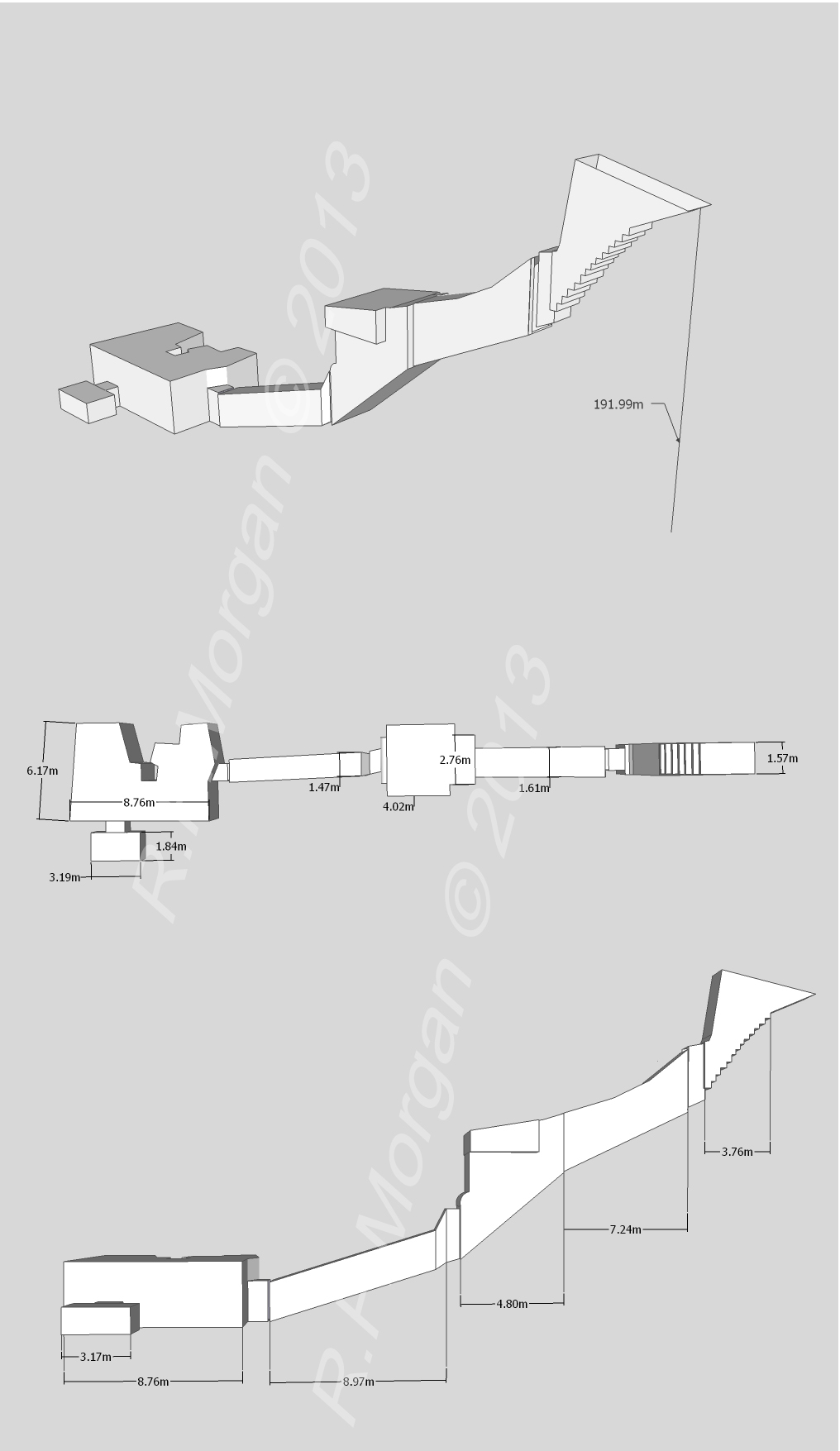
The Royal Cache, technically known as TT320 (previously DB320), is an ancient Egyptian tomb next to Deir el-Bahari, in the Theban Necropolis, opposite the modern city of Luxor. It contained the mummified remains and funeral equipment of more than 50 kings, queens and other royal family members of the New Kingdom, as it was used as a cache for royal mummies during the Twenty-first Dynasty.
The eleven pharaohs found there include one of the nine pharaohs of the 17th dynasty, five of the fifteen of the 18th dynasty, three of the eight of the 19th dynasty and two of the ten of the 20th dynasty. The tomb was originally used as the last resting place of the High Priest of Amun Pinedjem II, his wife Neskhons and other close family members.
Read on Wikipedia5 min readCC BY-SA 4.0
Where it sits in time
The site's dated range, placed against world reference points.
The scale is logarithmic: each step to the left is about ten times older than the last.
Article
TT320
The tomb is thought to have been first the burial place of Pinedjem II, his wife Nesikhons and other close family members.
HistorySources for this section
- Wikipedia (English): Royal CacheCC BY-SA 4.0
Sources for this section
- Wikipedia (English): Royal CacheCC BY-SA 4.0
The tomb is thought to have been first the burial place of Pinedjem II, his wife Nesikhons and other close family members. Pinedjem II died around 969 BCE, in a time of decline of the Egyptian kingdom, when mummies of former dynasties were vulnerable to grave robbery. In the reign of Herihor some tombs and mummies were found to need what was called "renewing the burial places". The tombs of Ramesses I, Seti I and Ramesses II required renewing after pillaging, and the royal mummies were moved to this tomb to protect them. Each coffin was given dockets stating when it was moved and where it was reburied, and some of the mummies had been moved multiple times before they were placed here. Mummies in need of renewal were re-wrapped in linen and a linen docket was added to keep accurate records.
It was initially believed that the tomb had originally belonged to an Eighteenth Dynasty queen found buried there. She was found at or near the entrance, however, which suggests that she was placed in it last and that it was not her tomb. When the last mummies were placed in TT320, the opening seems to have been naturally covered with sand and possibly other debris, making it difficult to find, and the hidden character of the tomb is thought to have been the reason for choosing it.
ExcavationsSources for this section
- Wikipedia (English): Royal CacheCC BY-SA 4.0
Sources for this section
- Wikipedia (English): Royal CacheCC BY-SA 4.0
In 1881 the location of TT320 became publicly known. Research by Gaston Maspero concluded that members of the local Abd el-Rassul family had discovered it as early as 1871, because items such as canopic jars and funeral papyri from the tomb appeared on the antiquities market in Luxor as early as 1874. The reidentification and repatriation of the mummy of Ramesses I in 2003 shows that the family may have discovered it as early as 1860. The Book of the Dead of Pinedjem II was purchased in 1876 for £400. According to the story told by Ahmed Abd el-Rassul, one of his goats fell down a shaft, and when he went down to retrieve it he found the tomb and recognised the mummies as royal from the royal cobra head dress on some of the coffins. Local authorities traced the items on the market back to the family, and in 1881, after a family quarrel, one of the brothers gave up the location of the tomb.
On July 6, 1881, authorities arrived at TT320 without the head of the Egyptian Service of Antiquities, who was on vacation. Émile Brugsch and Ahmed Kamal, one of the first Egyptian Egyptologists, were sent to examine it. Brugsch had all of the contents, including the mummies, removed within 48 hours of their entering the tomb. Neither documented the tomb beforehand, so the locations of the coffins were not recorded and the items were not catalogued, which made later study difficult. Upon arrival in Cairo several coffins were found damaged, probably during the initial extraction, and some mummies were found in the wrong coffins and in different stages of preservation. Approximately ten coffins were found with their foot ends missing; this is believed to have happened before they were placed in TT320, as Brugsch did not mention foot ends and a research team that entered in 1998 found no evidence of them either.
Research historySources for this section
- Wikipedia (English): Royal CacheCC BY-SA 4.0
Sources for this section
- Wikipedia (English): Royal CacheCC BY-SA 4.0
The chamber is reached by a nearly vertical chimney, which was left open in 1881 and has since filled with rocks and other debris. The tomb was reinvestigated in 1938. Since 1998 a Russian-German team led by Erhart Graefe has been reinvestigating and preserving it. The team that entered in 1998 cleared the passageways of fallen debris, found fragments of coffins and other small items, and saw some paintings on the walls. These led it to conclude that the tomb was originally owned by a family of the Twenty-first Dynasty as a family tomb.
In 2017 the Complutense University of Madrid and the Center for the Study and Documentation of Ancient Egypt of the Ministry for Tourism and Antiquities ran a campaign for the "Royal Cache Wadi C2 Project", which has had six field campaigns in total. Its team is studying the wadi as a place and believes that the tomb was potentially a religious site rather than only a hiding place for mummies. The high amount of ancient graffiti in the area aroused suspicion about its purpose.
Later historySources for this section
- Wikipedia (English): Royal CacheCC BY-SA 4.0
Sources for this section
- Wikipedia (English): Royal CacheCC BY-SA 4.0
The discovery in 1881 caused a sensation, and the mummies quickly became a highlight of the new Egyptian Museum, then in Giza. In 1969 the discovery was dramatised in the film The Night of Counting the Years. In 2021 the mummies were moved from the Egyptian Museum to a modern display area in the new National Museum of Egyptian Civilization, as the Pharaohs' Golden Parade.
Tradition and region
About this kind of monument
Rock-cut tombs of Egypt
Egypt has some of the best-known rock-cut tombs in the world. In the Valley of the Kings, on the west bank of the Nile opposite Thebes, tombs were excavated for pharaohs and powerful nobles of the New Kingdom, for a period of nearly 500 years from the Eighteenth to the Twentieth Dynasty. The valley has two main sections, the East Valley where most royal tombs lie and the West Valley, known as the Valley of the Monkeys, and it is known to contain 65 tombs and chambers. It gained great attention after the discovery of the tomb of Tutankhamun in 1922, and became a UNESCO World Heritage Site in 1979 with the rest of the Theban Necropolis.
Much earlier, Beni Hasan in Middle Egypt is an ancient funerary site cut into the limestone cliffs on the east bank of the Nile about 20 kilometres south of Minya. In the Middle Kingdom it was the principal cemetery of the sixteenth nome of Upper Egypt, the Oryx nome, and its monumental tombs were cut roughly halfway up the cliff, overlooking the valley. Rock-cut tombs are also found at Deir el-Medina, between the Valley of the Kings and the Valley of the Queens.
The mastaba is a different tradition: a flat-roofed rectangular tomb with sloping sides, built of mudbrick or limestone, which marked the burial sites of eminent Egyptians in the Early Dynastic Period and Old Kingdom. The mastaba was built above ground and the rock-cut tomb into the cliff.
Egyptian tombs are among the best dated monuments in the Atlas, because the dynasty or reign of the king or noble who owned them is known.
When visiting, remember that access to many tombs is limited.
Paraphrased from Wikipedia: Valley of the Kings, Wikipedia: Beni Hasan, Wikipedia: Rock-cut tomb, Wikipedia: Mastaba · CC BY-SA 4.0
From the article
Dated moments in the story
- 969 BCE
Pinedjem II died around 969 BCE, in a time of decline of the Egyptian kingdom, during which mummies from former dynasties were vulnerable to grave robbery.
Source - 1860
Its discovery by locals between 1860 and 1871, and by Egyptologists in 1881, caused a sensation.
Source - 1876
For example, the Book of the Dead of Pinedjem II was purchased in 1876 for £400. The story that Ahmed Abd el-Rassul told was that one of his goats fell down a shaft and when he went down the shaft to retrieve the goat, he stumbled across this tomb.
Source - 1881
In 1881, the location of TT320 became publicly known.
Source - 1881
Finally, in 1881 after a family quarrel, one of the brothers eventually gave up the location of the tomb where the items were plundered from.
Source - 1881
On July 6, 1881, authorities arrived at TT320 without the head of the Egyptian Service of Antiquities, because he was on vacation.
Source - 1881
The chamber is reached by a nearly vertical chimney, which was left open in 1881, and has since filled with rocks and other debris (in fact every object that was left in the tomb has now been damaged in some way).
Source - 1938
It was reinvestigated in 1938. Since 1998 a Russian-German team led by Erhart Graefe has been working on reinvestigating and preserving the tomb.
Source - 1969
In 1969, the discovery was dramatized in The Night of Counting the Years, which became one of Egypt's most widely respected films.
Source - 1998
A research team entered TT320 in 1998 for research and that team did not find any evidence of foot ends either.
Source - 1998
Research teams have entered TT320 a number of times since its discovery, but the most successful research team entered TT320 in 1998. They cleared the passageways of fallen debris such as stones and fallen walls.
Source - 2017
In 2017 there was a campaign by the Complutense University of Madrid and the Center for the Study and Documentation of Ancient Egypt of the Ministry for Tourism and Antiquities, done for a project titled the "Royal Cache Wadi C2 Project".
Source - 2021
In 2021 the mummies were moved from the Egyptian Museum to a modern display area in the new National Museum of Egyptian Civilization, as the high-profile Pharaohs' Golden Parade.
Source
Photographs
4 photographs, each with its author and licence
More photographs
Lore
Evidence & Lore
What the sources actually support — and, kept apart, what has been claimed.
What the evidence supports
Dates
Est. 1539–1075 BCEHow this date was established: Type comparisonTypical range for hypogeums in Egypt; this site has not been dated itself. The Valley was used for primary burials from approximately 1539 BC to 1075 BC.Source for this date
Where it stands
Egypt
The pin marks the monument itself — its exact point.
- Coordinates
- 25°44′12″ N, 32°36′18″ EFor a GPS or map app: 25.73680, 32.60504
Access is as our sources describe it; we have not visited the site to check.
Nearby
The closest sites in the Atlas, by straight line.




Sources
Every record behind this page, with the link it came from.
3 sources behind this page
- 01Wikidata Q537577wikidata.org
- 02Source for this dateen.wikipedia.org
- 03Wikipedia: TT320en.wikipedia.org
Image files
- DB320 Tomb.jpgKeith HazellCC BY 3.0
- Professor Maspero, Emil Brugsch Bey, and Mohammed Abd-er-Rasoul. Photographed at the mouth of the shaft, Deir-el-Bahari.pngEdward Livingston WilsonPublic domain
- TT320 - localització.jpgLuna92CC BY-SA 3.0
- TT320.jpgHotepibreCC BY-SA 4.0
Report a correctionWrong date, name, photograph or source? Tell us and it will be put right.
Around this place
The ten nearest sites, by compass
Credit
Text, licence and sources
Adapted from the Wikipedia article "Royal Cache" (English), licensed CC BY-SA 4.0; authors are listed in the page history. Reused under CC BY-SA 4.0. Read on Wikipedia · Edit history and authors
- Wikipedia (English): Royal CacheCC BY-SA 4.0
- Wikidata Q537577CC0