
Stone Wedding
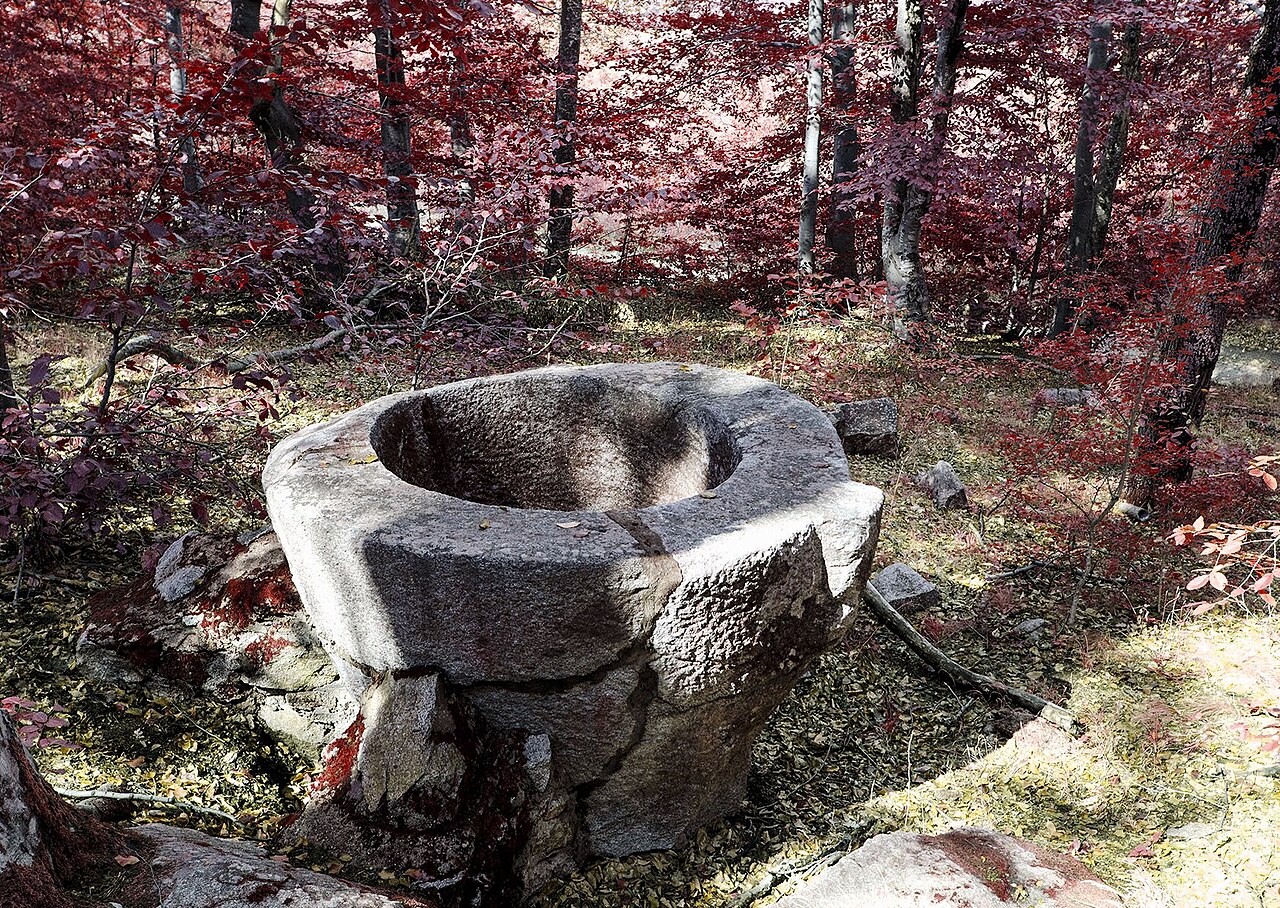
Photo Filipov Ivo · CC BY-SA 4.0Source file on Wikimedia Commons
Overview
About this site
What the sources say
Скалното светилище Вкаменена сватба се намира на север от село Медово, (Община Братя Даскалови) на разстояние 2 km от центъра на населеното място.
Article in BulgarianRead on Wikipedia4 min readCC BY-SA 4.0
The full article
Stone Wedding: the whole story
In briefSources for this section
Sources for this section
Stone Wedding, also called Медово, is a rock sanctuary in Bulgaria. It lies 2 km north of the village of Medovo in the municipality of Братя Даскалови. Its central feature is a rock arch facing south, with numerous secondary cuttings worked into the surrounding rock mass.
The surviving traces include carvings around the arch, signs of melted wax from candles burned nearby, and a small tree on the right-hand side of the megalithic arch. Visitors have also left small coins and rings at the site. On the left and west are further traces connected with ritual activity.
The place entered scholarly discussion in 2006, when проф. Васил Марков carried out field research. He published the results the following year. Local memory preserves an ancient ritual in which visitors passed upward through the rock arch toward a high rock platform beyond it.
The ritual practices were linked by проф. Васил Марков chiefly with the Great Goddess-Mother and with rites dedicated to Слънцебог in Orphic magical practice. Later healing customs included leaving strips of clothing or thread at the tree and washing in a sacred spring, mainly for women’s infertility. These practices are interpreted as survivals of an ancient ceremonial tradition, although strongly secularized and folklore-shaped in Bulgarian popular culture.
Summary in EnglishSources for this section
Sources for this section
Stone Wedding is a megalith (abstract root) in Medovo, Bulgaria. Wikidata describes it as: megalithic sanctuary in Bulgaria. No English Wikipedia article exists for it; the full text below is the Bulgarian article "Вкаменената сватба (Медово)", shown in the original language.
ОткритиеSources for this section
Sources for this section
Обектът влиза в научно обръщение през 2006 г., когато проф. Васил Марков провежда теренно проучване на място и го публикува година по-късно.
Васил Марков може да се свържат най-вече с Великата богиня – майка, на която в древността е било посветено мегалитното съоръжение.
Описание и особеностиSources for this section
Sources for this section
Скалната арка при Вкаменената сватба е ориентирана на юг. Около нея вторично обработени в скалния масив са разположени множество скални изсичания, които свидетелстват че местността е служила като светилище на древните тракийски племена обитавали района. Местното население е запазило спомена за древен целебен ритуал, който включва провиране от долу в посока горе, върху висока скална площадка разположена „отвъд“ скалната арка, явяваща се врата, вход към нея. На това място идващите поклонници все още дребни монети или пръстени. Следите от обредност при арката според проф.Васил Марков може да се свържат най-вече с Великата богиня – майка, на която в древността е било посветено мегалитното съоръжение. Оставяните в дар пръстени обаче свидетелстват и за ритуали посветени на Слънцебога при орфическите магически практики, които са засвидетелствани в текст от Аполоновия орфически химн.
На място от ляво и запад личат следите от разтопен восък на палени на това място свещи и според проф. Марков подобно на светилището от Камен рид, край Демир баба теке, може да се смята, че огънят от свещите е заменил през късната християнска епоха небесният огън от древнотракийските свети места. Небесният огън, следите от който личат в най-автентичен вид в култово-обредните практики от светилището Скрибина, както и в огнените арки за традиционно народно лекуване с жив небесен огън от Средните и Западните Родопи.
От дясната страна край мегалитната арка расте малко дърво, където болните идващи за изцеление оставят парцалче от дрехата си или конец от нея. Изпълняваният тук здравоносен ритуал завършва с измиване на свещения извор. Там също се оставя част от дрехата или дребни монети във водата. Обредите извършвани тук са главно за лекуване на женско безплодие. Самото провиране през скалните арки, според проф. Марков са свързани най-вече със символичното влизане в лоното на Великата богиня-майка, за да се преродят отново инициираните за нов живот, след повторното им раждане. Марков посочва че Вкаменената сватба и изпълняваният древен ритуал на това място е поредното доказателство за съхранение на древна обредна практика, макар и силно профанизирана и фолклоризирана в българската народна култура.
Вижте същоSources for this section
Sources for this section
Говедар камен
Марков камък (Долно Ябълково)
Маркова скала
Мегалитно светилище Градището
Скрибина
Цареви порти
Таш капи
Прав каминь
How this page was madeSources for this section
Sources for this section
The summary at the top of this page was written by MiniMax-M3 (2026-11-07) from the cited Wikipedia article “Вкаменената сватба (Медово)”, translated from Bulgarian. The numbers in it were checked automatically against the source text. The rest of the page is the article itself, the structured records and computed distances.
Tradition and region
About this kind of monument
Thracian rock sanctuaries of Bulgaria
In the Eastern Rhodope and Strandzha mountains of Bulgaria, rocks have been cut, carved and used as sanctuaries for thousands of years, and the Atlas lists many of them as "megaliths". The Thracians were an Indo-European-speaking people who inhabited large parts of south-eastern Europe in ancient times, including modern Bulgaria, Romania, North Macedonia, northern Greece and European Turkey, and they reused many of the sites. Strandzha has a large concentration of ruins of Thracian sanctuaries, sacrificial altars and dolmens.
Perperikon, in the Eastern Rhodope Mountains 15 kilometres north-east of Kardzhali, is an ancient Thracian city on a rocky hill 470 metres high, thought to have been a sacred place; it is described as the largest megalith ensemble site in the Balkans. In the Middle Ages it served as a fortress. Beglik Tash, a prehistoric rock sanctuary on the southern Black Sea coast north of Primorsko, was reused by Thracian tribes in the Iron Age.
Many of the places listed as megaliths here are natural rock formations. Beglik Tash is a natural rock formation of megaliths of hardened magma, from a volcano of the Mesozoic era; most of the megaliths have traces of carving for Thracian rituals, and there are the remains of a labyrinth and a "Thracian sun-clock" formed of huge stones, as well as a 150-ton rock. It is often hard to tell where nature ends and human work begins.
Dating depends on the finds in the few excavated parts, and most sites are listed with a broad range.
When visiting, look for traces of carving on the rock, and for steps and niches.
Paraphrased from Wikipedia: Thracians, Wikipedia: Perperikon, Wikipedia: Beglik Tash, Wikipedia: Strandzha · CC BY-SA 4.0
From the article
Dated moments in the story
- 2006
Обектът влиза в научно обръщение през 2006 г., когато проф. Васил Марков провежда теренно проучване на място и го публикува година по-късно.
Source
Photographs
1 photograph, each with its author and licence
Where it stands
Bulgaria
The pin marks the monument itself — its exact point.
- Coordinates
- 42°24′41″ N, 25°12′41″ EFor a GPS or map app: 42.41130, 25.21130
Access is as our sources describe it; we have not visited the site to check.
Nearby
The closest sites in the Atlas, by straight line.


Sources
Every record behind this page, with the link it came from.
1 source behind this page
- 01Wikidata Q25487445wikidata.org
Image files
- Stone Wedding Medovo BG.jpgFilipov IvoCC BY-SA 4.0
Report a correctionWrong date, name, photograph or source? Tell us and it will be put right.
Lore, kept apart
Legends and claims
These are stories and claims reported by the sources. They are not evidence, and they never stand in for the dating above.
- Tradition
The ritual practices were linked by проф.
The ritual practices were linked by проф. Васил Марков chiefly with the Great Goddess-Mother and with rites dedicated to Слънцебог in Orphic magical practice. Later healing customs included leaving strips of clothing or thread at the tree and washing in a sacred spring, mainly for women’s infertility. These practices are interpreted as survivals of an ancient ceremonial tradition, although strongly secularized and folklore-shaped in Bulgarian popular culture.
Source
Around this place
The ten nearest sites, by compass
Credit
Text, licence and sources
Text from the Wikipedia article "Вкаменената сватба (Медово)" (Bulgarian), licensed CC BY-SA 4.0; authors are listed in the page history. Reused under CC BY-SA 4.0. Read on Wikipedia · Edit history and authors