
Krali Marko's step, Stalevo
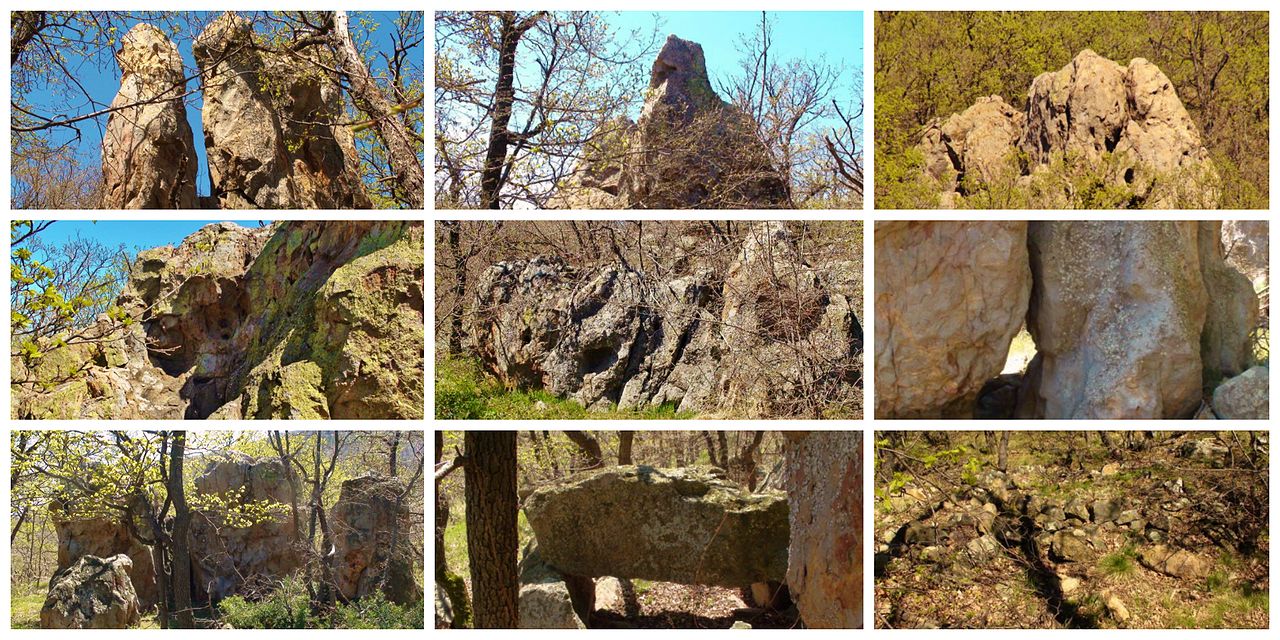
Photo Filipov Ivo · CC BY-SA 4.0Source file on Wikimedia Commons
Overview
About this site
What the sources say
Кралимаркова стъпка или Скала на Крали Марко, също Казанчето, е култово скално съоръжение, вероятно жертвеник, част от древнотракийско светилище, край димитровградското село Сталево.
Article in BulgarianRead on Wikipedia5 min readCC BY-SA 4.0
The full article
Krali Marko's step, Stalevo: the whole story
In briefSources for this section
Sources for this section
Кралимаркова стъпка, also known as Скала на Крали Марко and Казанчето, is a cult rock structure probably used as a sacrificial altar. It is part of an ancient Thracian sanctuary on Голям Хасар hill, southwest of Сталево in Bulgaria. The sanctuary lies 500 метра east of the ruins of the ancient fortress Милеона and 50 м from the medieval church „Св. св. Четиридесет мъченици“.
The structure stands on a low hill 287,5 метра high. At the top of a tall trachyte rock is the carved footprint known as Кралимарковата стъпка. Three more ritual hollows nearby remain filled with water even during summer heat. Local tradition says that shepherds running out of water in the fields always found fresh water in these „кралимарковите стъпки“, and that water sprinkled on an ill person was believed to bring recovery.
Nearby is another cult structure, Провиралото, where local people passed through for health. Tradition held that a sinner trying to crawl through would be crushed by the stone. At an annual gathering on 22 март, a person was expected to pass through Провиралото 3 пъти, tear a thread from their clothing at each passage, hang it on a nearby tree, and throw a stone south while reciting local ritual expressions.
The area has long been associated with King Krali Marko, whose footprint was said to have been left in the stone when he passed through. According to local tradition, Tsar Ivan Asen II led the battle at Klokotnitsa from this hill. The Хасара area near Сталево was declared an immovable cultural-historical heritage site in 1968. Plans announced in March 2013 called for the expanded protected area, including the ancient sanctuary Беш/Бей бунар and Кралимарковата стъпка, to become a tourist attraction.
Summary in EnglishSources for this section
Sources for this section
Krali Marko's step, Stalevo is a megalith (abstract root) in Bulgaria. Wikidata describes it as: Ancient Thracian megalith sanctuary in Stalevo, Bulgaria. No English Wikipedia article exists for it; the full text below is the Bulgarian article "Кралимаркова стъпка (Сталево)", shown in the original language.
МестоположениеSources for this section
Sources for this section
Светилището е разположено на върха на хълма Голям Хасар, югозападно от Сталево, на 500 метра източно от развалините на античната крепост Милеона и 50 м от средновековната черква „Св. св. Четиридесет мъченици“.
ОписаниеSources for this section
Sources for this section
Култовото съоръжение се намира на невисок хълм, висок 287,5 метра. Кралимарковата стъпка е издълбана на върха на висок трахитен скален къс, а до нея се наблюдават още 3 ритуални издълбавания в скалата, които остават пълни с вода, дори и по време на летните жеги. Местни хора казват, че когато пастири оставали без вода в полето, под безпощадното слънце, винаги намирали прясна вода именно на това място, в „кралимарковите стъпки“. Съществува поверие, че ако с водата от стъпките се напръска болно място, човек оздравява.
В непосредствена близост до Кралимарковата стъпка на върха се намира другото култово съоръжение Провиралото, където местните хора се „провират за здраве“. Съществува поверие, че ако грешник опита да се провре, камъкът ще го затисне. Според съществуващото местно предание на традиционния събор, провеждан ежегодно на 22 март, човек трябва да се промуши през Провиралото 3 пъти и при всяко минаване да откъсне конец от дрехата си, който трябва да бъде окачен на близкото дърво, след което хвърлят камък на юг, изричайки думите „Анатема на Дявола-кир Тодор“ (все още се използват и вариантите „Мътните ги взели гърците/византийците“, „Мътните те вели, Тодоре“, както и „Трижди Анатема, кире Тодоре“).
ОпазванеSources for this section
Sources for this section
През март 2013 г. на пресконференция кметът на община Димитровград Иво Димов обявява, че фортификационното съоръжение в местността Хасара, античното светилище Беш/Бей бунар и Кралимарковата стъпка вече са с разширени граници и ще бъдат превърнати в туристическа атракция. Това действие е утвърдено с решение на Министерството на културата, разписано от тогавашния министър Вежди Рашидов.
През 2005 г. компанията „АС Стоунс“ прави постъпки за получаване на концесия за разкриване на кариера за добив на латити. РИОСВ Хасково излиза с решение за извършване на оценка на въздействието върху околната среда с мотивите, че „в непосредствена близост до площта, предмет на инвестиционното предложение, е регистрирана висока концентрация на археологически обекти от различни епохи с висока степен на значимост“. Хасара до село Сталево е обявен в „Държавен вестник“ за обект на недвижимото културно-историческо наследство през 1968 г.
Според преданията от този хълм цар Иван Асен II ръководи битката при Клокотница. До ден днешен Сталево чества своя празник в деня на светите 40 мъченици.
На върха на Малкия Хасар, свързан с Големия Хасар, се намира местността Църковището, наричана още Хорището, където са останките от някогашната крепостна църква, наречена на светците воини от град Севастия. Стар каменен оброчен кръст бележи мястото на средновековния храм.
Според народното поверие, когато Крали Марко минавал през местността, стъпил на камък, където останал отпечатък от стъпката му.
Вижте същоSources for this section
Sources for this section
Кралимарковите следи
Марков камък (Долно Ябълково)
Маркова скала
Маркова стъпка (Кралев дол)
Маркова трапеза
Говедар камен
Мегалитно светилище под Царев връх
Мегалитно светилище под Маркови кули
Белата скала
Стъпката на Крали Марко (Габрене)
How this page was madeSources for this section
Sources for this section
The summary at the top of this page was written by MiniMax-M3 (2026-11-07) from the cited Wikipedia article “Кралимаркова стъпка (Сталево)”, translated from Bulgarian. The numbers in it were checked automatically against the source text. The rest of the page is the article itself, the structured records and computed distances.
Tradition and region
About this kind of monument
Thracian rock sanctuaries of Bulgaria
In the Eastern Rhodope and Strandzha mountains of Bulgaria, rocks have been cut, carved and used as sanctuaries for thousands of years, and the Atlas lists many of them as "megaliths". The Thracians were an Indo-European-speaking people who inhabited large parts of south-eastern Europe in ancient times, including modern Bulgaria, Romania, North Macedonia, northern Greece and European Turkey, and they reused many of the sites. Strandzha has a large concentration of ruins of Thracian sanctuaries, sacrificial altars and dolmens.
Perperikon, in the Eastern Rhodope Mountains 15 kilometres north-east of Kardzhali, is an ancient Thracian city on a rocky hill 470 metres high, thought to have been a sacred place; it is described as the largest megalith ensemble site in the Balkans. In the Middle Ages it served as a fortress. Beglik Tash, a prehistoric rock sanctuary on the southern Black Sea coast north of Primorsko, was reused by Thracian tribes in the Iron Age.
Many of the places listed as megaliths here are natural rock formations. Beglik Tash is a natural rock formation of megaliths of hardened magma, from a volcano of the Mesozoic era; most of the megaliths have traces of carving for Thracian rituals, and there are the remains of a labyrinth and a "Thracian sun-clock" formed of huge stones, as well as a 150-ton rock. It is often hard to tell where nature ends and human work begins.
Dating depends on the finds in the few excavated parts, and most sites are listed with a broad range.
When visiting, look for traces of carving on the rock, and for steps and niches.
Paraphrased from Wikipedia: Thracians, Wikipedia: Perperikon, Wikipedia: Beglik Tash, Wikipedia: Strandzha · CC BY-SA 4.0
From the article
Dated moments in the story
- 500 CE
Светилището е разположено на върха на хълма Голям Хасар, югозападно от Сталево, на 500 метра източно от развалините на античната крепост Милеона и 50 м от средновековната черква „Св. св. Четиридесет мъченици“.
Source
Photographs
4 photographs, each with its author and licence
More photographs
Where it stands
Bulgaria
The pin marks the monument itself — its exact point.
- Coordinates
- 42°04′32″ N, 25°24′18″ EFor a GPS or map app: 42.07550, 25.40500
Access is as our sources describe it; we have not visited the site to check.
Nearby
The closest sites in the Atlas, by straight line.




Sources
Every record behind this page, with the link it came from.
1 source behind this page
- 01Wikidata Q24573286wikidata.org
Image files
Report a correctionWrong date, name, photograph or source? Tell us and it will be put right.
Lore, kept apart
Legends and claims
These are stories and claims reported by the sources. They are not evidence, and they never stand in for the dating above.
- Tradition
The structure stands on a low hill 287,5 метра high.
The structure stands on a low hill 287,5 метра high. At the top of a tall trachyte rock is the carved footprint known as Кралимарковата стъпка. Three more ritual hollows nearby remain filled with water even during summer heat. Local tradition says that shepherds running out of water in the fields always found fresh water in these „кралимарковите стъпки“, and that water sprinkled on an ill person was believed to bring recovery.
Source - Tradition
The area has long been associated with King Krali Marko, whose footprint was said to have been left in the stone when he passed through.
The area has long been associated with King Krali Marko, whose footprint was said to have been left in the stone when he passed through. According to local tradition, Tsar Ivan Asen II led the battle at Klokotnitsa from this hill. The Хасара area near Сталево was declared an immovable cultural-historical heritage site in 1968. Plans announced in March 2013 called for the expanded protected area, including the ancient sanctuary Беш/Бей бунар and Кралимарковата стъпка, to become a tourist attraction.
Source
Around this place
The ten nearest sites, by compass
Credit
Text, licence and sources
Text from the Wikipedia article "Кралимаркова стъпка (Сталево)" (Bulgarian), licensed CC BY-SA 4.0; authors are listed in the page history. Reused under CC BY-SA 4.0. Read on Wikipedia · Edit history and authors