D33
DatedEst. 3500–2800 BCE
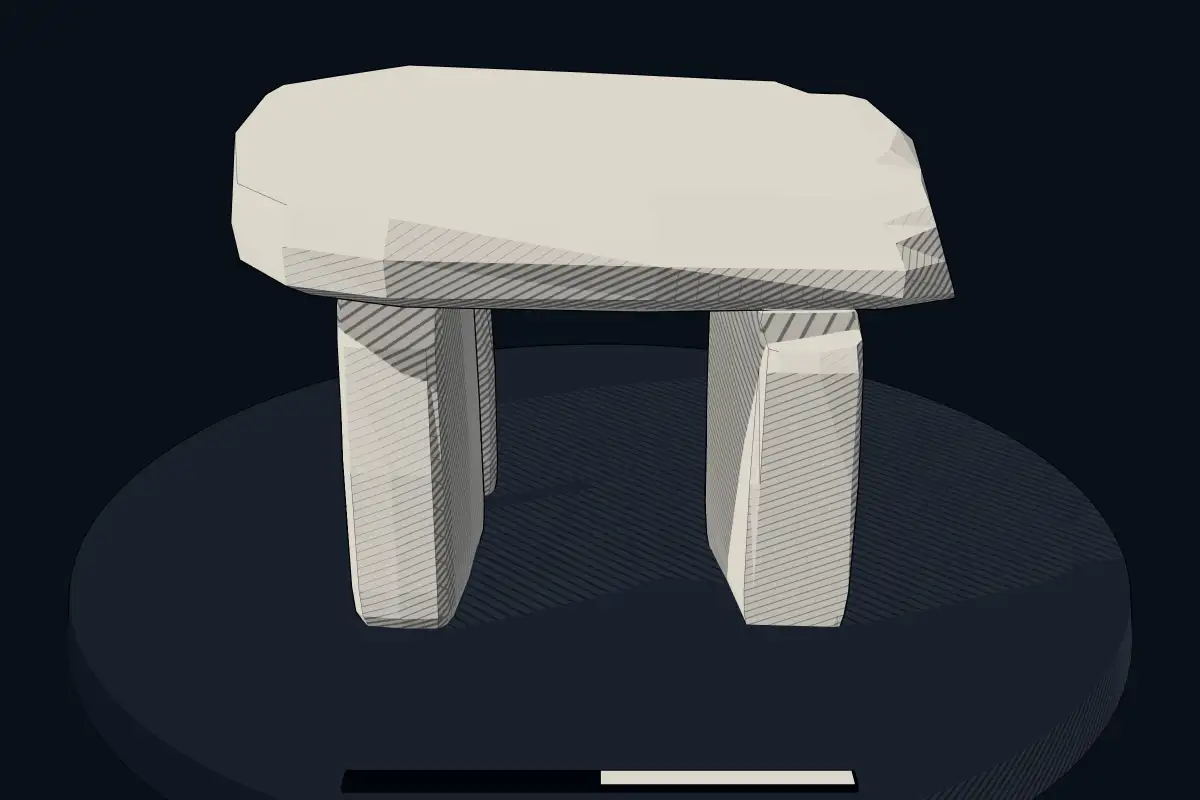
No licensed photograph yetWe have no photograph we may publish for this site, so the interpretive 3D view leads instead.
Overview
About this site
What the sources say
Das Großsteingrab Valthe-Valtherveld war eine megalithische Grabanlage der jungsteinzeitlichen Westgruppe der Trichterbecherkultur bei Valthe, einem Ortsteil von Borger-Odoorn in der niederländischen Provinz Drenthe. Das bereits weitgehend zerstörte Grab wurde 1954 abgetragen und seine Steine zur Rekonstruktion des Großsteingrabes „De Papeloze Kerk“ (D49) in Schoonoord verwendet. Das Grab trägt die van-Giffen-Nummer D33.
Article in GermanRead on Wikipedia5 min readCC BY-SA 4.0
Where it sits in time
The site's dated range, placed against world reference points.
The scale is logarithmic: each step to the left is about ten times older than the last.
The full article
D33: the whole story
In briefSources for this section
Sources for this section
Großsteingrab Valthe-Valtherveld was a megalithic tomb of the western group of the Funnel Beaker culture, located near Valthe, a district of Borger-Odoorn in the Dutch province of Drenthe. It stood directly on the border with Odoorn beside the Hunebedweg, 150 m north of the surviving Großsteingrab Valthe-West (D34). The tomb is also known by the van Giffen number D33.
The monument was already largely destroyed when Albert Egges van Giffen cleared its stones aside in December 1954 and excavated the remains of the burial chamber. The few finds were limited. Van Giffen had recorded nine stones in 1918, although his ground plan showed only eight, but he noted eleven stones in 1954. Because of the extensive damage, the original appearance could not be reconstructed.
The tomb was probably a passage grave aligned southeast to northwest. Its burial chamber measured between 7 m and 7.5 m in length, but its precise form remains unknown. In March 1956, the Dutch army transported the stones to Schoonoord, where they were used in the restoration of the Großsteingrab “De Papeloze Kerk” (D49). The site was documented by several scholars and photographers during the 19th century, and Willem Johannes de Wilde recorded surviving tombs between 1904 and 1906, although his notes on D33 were later lost.
Dolmens of this kind belong to the Nordic megalith tradition, whose style emerged between 3500 and 2800 BCE. In the Netherlands, the hunebedden were built between 3470 and 3250 BCE by the western group of the Funnel Beaker culture and used until about 2760 BCE. Of an estimated 100 original tombs, 54 are preserved, 52 in Drenthe and two in Groningen. This dating for D33, 3500 BCE to 2800 BCE, is based on typological estimate.
No English Wikipedia article exists for it; the full text below is the German article "Großsteingrab Valthe-Valtherveld", shown in the original language.
Summary in EnglishSources for this section
Sources for this section
D33 is a dolmen in Borger-Odoorn, Germany. Wikidata describes it as: dolmen in the Netherlands. A typological estimate: 3500 BCE to 2800 BCE. No English Wikipedia article exists for it; the full text below is the German article "Großsteingrab Valthe-Valtherveld", shown in the original language.
LageSources for this section
Sources for this section
Das Grab befand sich westlich von Valthe, direkt an der Grenze zu Odoorn am Hunebedweg und nur 150 m nördlich des noch erhaltenen Großsteingrabes Valthe-West (D34). In der näheren Umgebung gibt es zahlreiche weitere Großsteingräber. 880 m südsüdöstlich befindet sich das Großsteingrab Valthe-Zuidwest (D35), 1,9 km östlich die beiden Großsteingräber bei Valthe-Oost (D36 und D37), 2,4 km nordwestlich das Großsteingrab Odoorn (D32) und 2,8 km nördlich das Großsteingrab Exloo-Zuid (D31). Auch mehrere zerstörte Gräber sind aus dieser Gegend bekannt. 900 m nordnordwestlich lag das Großsteingrab Odoorn-Noorderveld 2 (D32d), 2,1 km nordnordwestlich das Großsteingrab Odoorn-Noorderveld 1 (D32c), 2,4 km westnordwestlich das Großsteingrab Odoorn-Westeres (D32a) und 2,8 km südsüdöstlich das Großsteingrab Weerdinge (D37a). 550 m nordnordwestlich befindet sich zudem der größte Grabhügel in Drenthe, der Eppiesbergje.
ForschungsgeschichteSources for this section
Sources for this section
19. Jahrhundert
Leonhardt Johannes Friedrich Janssen, Kurator der Sammlung niederländischer Altertümer im Rijksmuseum van Oudheden in Leiden, besuchte 1847 einen Großteil der noch erhaltenen Großsteingräber der Niederlande, darunter auch das Grab von Valthe-Valtherveld, und publizierte im folgenden Jahr das erste Überblickswerk mit Baubeschreibungen und schematischen Plänen der Gräber. Janssens Nachfolger Willem Pleyte unternahm 1874 zusammen mit dem Fotografen Jan Goedeljee eine Reise durch Drenthe und ließ dort erstmals alle Großsteingräber systematisch fotografieren. Auf Grundlage dieser Fotos fertigte er Lithografien an. Conrad Leemans, Direktor des Rijksmuseums, unternahm 1877 unabhängig von Pleyte eine Reise nach Drenthe. Jan Ernst Henric Hooft van Iddekinge, der zuvor schon mit Pleyte dort gewesen war, fertigte für Leemans Pläne der Großsteingräber an. Leemans’ Bericht blieb allerdings unpubliziert. 1878 erfolgte eine Untersuchung durch William Collings Lukis und Henry Dryden, die auf Anregung von Augustus Wollaston Franks die Provinz Drenthe bereisten und dabei sehr genaue Grundriss- und Schnittzeichnungen von 40 Großsteingräbern anfertigten. Die dabei gemachten Funde befinden sich heute im British Museum.
20. und 21. Jahrhundert
Zwischen 1904 und 1906 dokumentierte der Mediziner und Amateurarchäologe Willem Johannes de Wilde alle noch erhaltenen Großsteingräber der Niederlande durch genaue Pläne, Fotografien und ausführliche Baubeschreibungen. Seine Aufzeichnungen zum Grab von Valthe-Valtherveld sind allerdings verloren gegangen. 1918 dokumentierte Albert Egges van Giffen die Anlage für seinen Atlas der niederländischen Großsteingräber. Im Dezember 1954 räumte van Giffen die Steine des Grabes beiseite und führte an den Resten der Grabkammer eine archäologische Grabung durch. Anschließend wurden die Steine im März 1956 vom Pionierbataillon der Niederländischen Armee nach Schoonoord transportiert, um bei der Restaurierung des dortigen Großsteingrabes „De Papeloze Kerk“ Verwendung zu finden.
BeschreibungSources for this section
Sources for this section
Bei der Anlage handelte es sich vermutlich um ein südost-nordwestlich orientiertes Ganggrab. Die Grabkammer hatte eine Länge zwischen 7 m und 7,5 m. Ihr genaues Aussehen ließ sich aufgrund der starken Zerstörung nicht mehr rekonstruieren. Van Giffen konnte 1918 neun Steine feststellen (auf der Grundrisszeichnung sind allerdings nur acht angegeben). 1954 verzeichnete er hingegen elf Steine. Seine Grabung erbrachte nur wenige Funde.
How this page was madeSources for this section
Sources for this section
The summary at the top of this page was written by MiniMax-M3 (2026-11-08) from the cited Wikipedia article “Großsteingrab Valthe-Valtherveld”, translated from German. The numbers in it were checked automatically against the source text. The rest of the page is the article itself, the structured records and computed distances.
Tradition and region
About this kind of monument
German and Dutch Hünengräber (hunebedden)
The megalithic tombs of northern Germany and the Netherlands were built by the Funnel Beaker culture (about 4100 to 2800 BCE), and the style, called Nordic megalith architecture, emerged between 3500 and 2800 BCE. In the Netherlands the tombs are the hunebedden, built between 3470 and 3250 BCE by the western group of the Funnel Beaker culture and used until about 2760 BCE. Of an estimated 100 original tombs, 54 are preserved, 52 of them in the province of Drenthe and two in Groningen. After the Funnel Beaker culture ended the sites were reused by the Single Grave and Bell Beaker cultures in the Early Bronze Age and, to a lesser extent, into the Middle Ages.
In Mecklenburg-Vorpommern up to 5,000 megalith tombs were erected, and more than 1,000 are preserved and protected by law; they belong to the youngest and easternmost part of the western European tradition. Most are dolmens, often lying inside a circular or trapezoid frame of standing stones. Locally they are known as Hünengräber, "giants' tombs", or Großsteingräber, "large stone tombs"; the trapezoid frame is a Hünenbett, "giants' bed", and the circular one a Bannkreis. Between 1964 and 1974 Ewald Schuldt excavated over a hundred sites there and sorted them into simple dolmens, extended dolmens, passage graves, great dolmens, unchambered long barrows and stone cists.
Folklore: the German and Dutch names, with Hüne meaning "giant", carry the old idea that giants were buried here. This is a tradition; the stones were placed by Neolithic farmers.
When visiting, look for the capstones on their supports and the frame of kerbstones around them.
Paraphrased from Wikipedia: Megaliths in the Netherlands, Wikipedia: Megaliths in Mecklenburg-Vorpommern, Wikipedia: Nordic megalith architecture, Wikipedia: Funnel beaker culture, Wikipedia: Dolmen · CC BY-SA 4.0
From the article
Dated moments in the story
- 1874
Janssens Nachfolger Willem Pleyte unternahm 1874 zusammen mit dem Fotografen Jan Goedeljee eine Reise durch Drenthe und ließ dort erstmals alle Großsteingräber systematisch fotografieren.
Source - 1877
Conrad Leemans, Direktor des Rijksmuseums, unternahm 1877 unabhängig von Pleyte eine Reise nach Drenthe.
Source - 1878
1878 erfolgte eine Untersuchung durch William Collings Lukis und Henry Dryden, die auf Anregung von Augustus Wollaston Franks die Provinz Drenthe bereisten und dabei sehr genaue Grundriss- und Schnittzeichnungen von 40 Großsteingräbern anfertigten.
Source - 1918
1918 dokumentierte Albert Egges van Giffen die Anlage für seinen Atlas der niederländischen Großsteingräber.
Source - 1918
Van Giffen konnte 1918 neun Steine feststellen (auf der Grundrisszeichnung sind allerdings nur acht angegeben).
Source - 1954
Das bereits weitgehend zerstörte Grab wurde 1954 abgetragen und seine Steine zur Rekonstruktion des Großsteingrabes „De Papeloze Kerk“ (D49) in Schoonoord verwendet.
Source - 1954
Im Dezember 1954 räumte van Giffen die Steine des Grabes beiseite und führte an den Resten der Grabkammer eine archäologische Grabung durch.
Source - 1954
1954 verzeichnete er hingegen elf Steine.
Source - 1956
Anschließend wurden die Steine im März 1956 vom Pionierbataillon der Niederländischen Armee nach Schoonoord transportiert, um bei der Restaurierung des dortigen Großsteingrabes „De Papeloze Kerk“ Verwendung zu finden.
Source
See it in 3D
An interpretive reconstruction of the monument, standing on the real ground at its exact point, under the sun for that place and season. Drag to look around it.
The reconstruction is ours, not a survey: it shows what a monument of this type looks like, at the size the record gives for this one.
Lore
Evidence & Lore
What the sources actually support — and, kept apart, what has been claimed.
What the evidence supports
Dates
Est. 3500–2800 BCEHow this date was established: Type comparisonTypical range for dolmens in Germany; this site has not been dated itself. German dolmens (Huengrab) belong to the Nordic megalith tradition which emerged predominantly between 3500 and 2800 BC.Source for this date
Where it stands
Germany
The pin marks the monument itself — its exact point.
- Coordinates
- 52°50′33″ N, 6°52′01″ EFor a GPS or map app: 52.84252, 6.86697
Access is as our sources describe it; we have not visited the site to check.
Nearby
The closest sites in the Atlas, by straight line.


Sources
Every record behind this page, with the link it came from.
2 sources behind this page
- 01Wikidata Q1876853wikidata.org
- 02Source for this dateen.wikipedia.org
Report a correctionWrong date, name, photograph or source? Tell us and it will be put right.
Around this place
The ten nearest sites, by compass
Credit
Text, licence and sources
Text from the Wikipedia article "Großsteingrab Valthe-Valtherveld" (German), licensed CC BY-SA 4.0; authors are listed in the page history. Reused under CC BY-SA 4.0. Read on Wikipedia · Edit history and authors