
Stone 10
Also known asAvebury Stone 10 · ST10 · Stone no. 10
DatedEst. 3470–2760 BCE
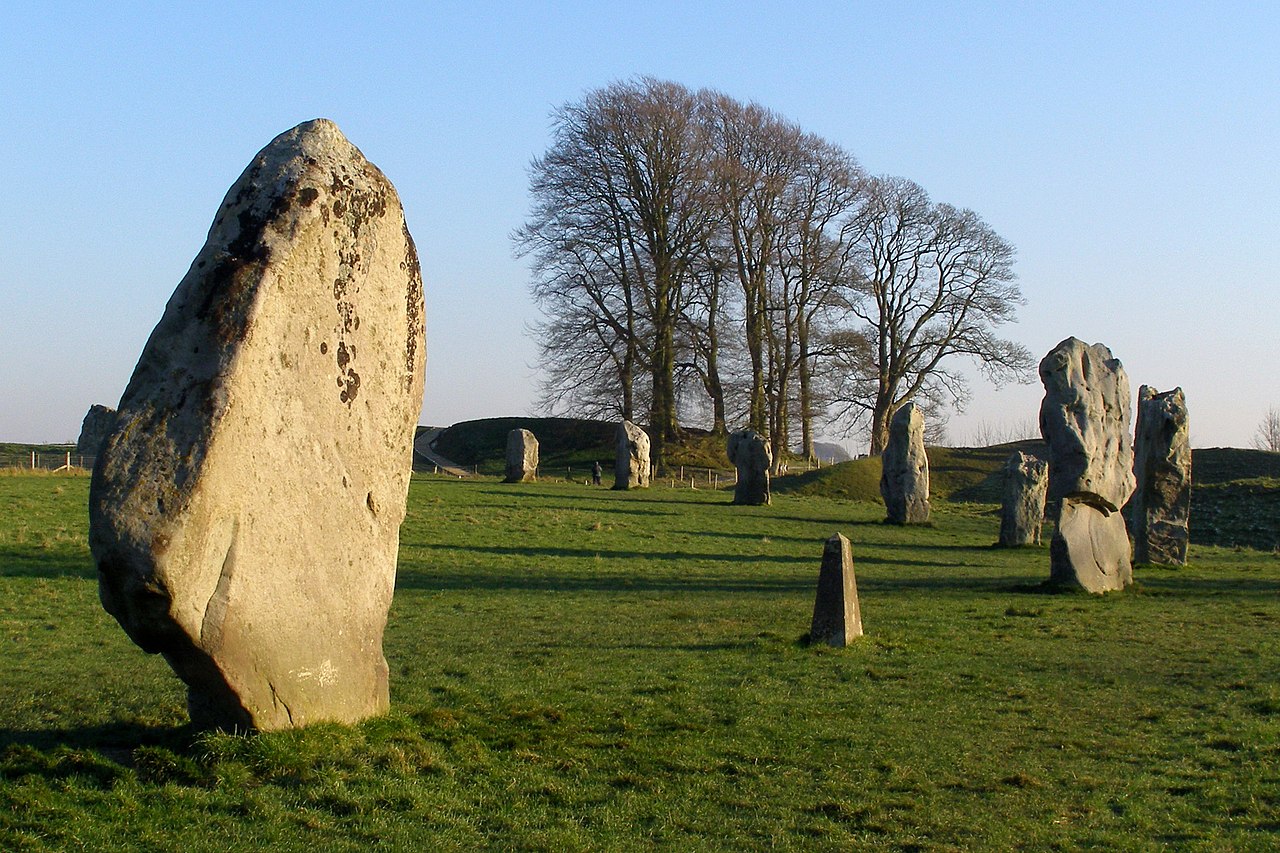
Photo JimChampion · CC BY-SA 3.0Source file on Wikimedia Commons
Overview
About this site
What the sources say
Stone 10 is a megalith recorded in Kingdom of the Netherlands. Other recorded names are Avebury Stone 10, ST10, Stone no. 10. In open records it appears as Wikidata item Q131296625, mapped at 51.4272° N, 1.8547° W.
Built from structured records, not from an articleSources and licences
Where it sits in time
The site's dated range, placed against world reference points.
The scale is logarithmic: each step to the left is about ten times older than the last.
The full article
About Stone 10
This kind of monument hereSources for this section
- en.wikipedia.orgCC BY-SA 4.0
- en.wikipedia.orgCC BY-SA 4.0
- en.wikipedia.orgCC BY-SA 4.0
- en.wikipedia.orgCC BY-SA 4.0
Sources for this section
- en.wikipedia.orgCC BY-SA 4.0
- en.wikipedia.orgCC BY-SA 4.0
- en.wikipedia.orgCC BY-SA 4.0
- en.wikipedia.orgCC BY-SA 4.0
A megalith is a large stone used to build a prehistoric structure or monument, either alone or with other stones. More than 35,000 megalithic structures have been identified in Europe, from Sweden in the north to the Mediterranean in the south, and megaliths are found worldwide. The word was first used in 1849 by the British antiquarian Algernon Herbert for Stonehenge, and comes from the Greek for "great stone". Most extant megaliths were erected between the Neolithic, with some earlier Mesolithic examples, and the Bronze Age. The oldest known ceremonial structures in the world, Göbekli Tepe and Nevalı Çori in Turkey, are dated to about 9000 BCE. Further down this page, About this kind of monument gives the whole of “Megalith (type not specified)”.
DatingSources for this section
- en.wikipedia.orgCC BY-SA 4.0
Sources for this section
- en.wikipedia.orgCC BY-SA 4.0
The Atlas shows 3470 BCE to 2760 BCE for this site, but that is a regional estimate for this kind of monument, not a date for this particular megalith. No excavation, radiocarbon sample or other measurement is recorded for it, so the real age could fall anywhere within the range, or outside it.
The range rests on this regional background (source: the Wikipedia article “Megaliths in the Netherlands”): Dutch hunebedden were built between 3470 and 3250 BC and were used until about 2760 BC.
Landscape and neighbours
The catalogue lists 79 other sites within 1 km, 172 within 5 km and 249 within 10 km; 77 of them are also classed as megalith. That puts it inside a dense cluster of monuments. In Kingdom of the Netherlands, 87 of the 93 catalogued sites are classed as megalith.
Nearest to it are Stone 9 (0.0 km south-east, megalith); Stone 8 (0.0 km south-east, megalith); Stone 12 (0.0 km north-west, megalith); Stone 7 (0.0 km east, megalith). The catalogue is assembled from open records and is not complete, so unrecorded monuments may lie closer.
Records and protectionSources for this section
Sources for this section
No heritage register entry is attached to this site in the records the Atlas uses; that does not show whether national law covers it. The open records for it are Wikidata (Q131296625), where corrections and further identifiers can be added. Many such sites stand on private land; check local access rules and respect the monument and its surroundings.
How this page was madeSources for this section
Sources for this section
This page was built automatically from Wikidata (CC0) and the regional article “Megalith (type not specified)”, written for the Atlas from the Wikipedia articles it cites (CC BY-SA 4.0), plus distances and counts computed from the catalogue coordinates. It contains no AI-written text.
Tradition and region
About this kind of monument
Megalith (type not specified)
A megalith is a large stone used to build a prehistoric structure or monument, either alone or with other stones. More than 35,000 megalithic structures have been identified in Europe, from Sweden in the north to the Mediterranean in the south, and megaliths are found worldwide. The word was first used in 1849 by the British antiquarian Algernon Herbert for Stonehenge, and comes from the Greek for "great stone". Most extant megaliths were erected between the Neolithic, with some earlier Mesolithic examples, and the Bronze Age. The oldest known ceremonial structures in the world, Göbekli Tepe and Nevalı Çori in Turkey, are dated to about 9000 BCE.
The most widely known megaliths are not tombs. The main kinds are single stones, such as menhirs and monoliths; multiple stones, such as stone circles (cromlechs) and alignments; dolmens; cists; and megalithic walls, also called cyclopean walls. Megalithic art, painted or carved on kerbstones, orthostats or capstones, is found in many parts of Western Europe, with the main concentrations in England, Malta, Ireland, Brittany and Iberia, and it is highly abstract.
Megaliths were used for a variety of purposes, from boundary markers of territory to reminders of past events, to being part of the religion of a society. Contemporary megalith-building cultures exist in Indonesia, among the Toraja and in the Marapu tradition. In the Atlas, a record marked only "megalith" lacks a more specific type, usually because the source did not say, and it receives a broad date range.
Dating relies on associated finds when a monument is excavated; otherwise it depends on shape and comparison.
When visiting, look first at the setting, and at whether the stone looks worked or natural.
Paraphrased from Wikipedia: Megalith, Wikipedia: Menhir, Wikipedia: Dolmen, Wikipedia: Megalithic art · CC BY-SA 4.0
Photographs
1 photograph, each with its author and licence
Lore
Evidence & Lore
What the sources actually support — and, kept apart, what has been claimed.
What the evidence supports
Dates
Est. 3470–2760 BCEHow this date was established: Type comparisonTypical range for megaliths in Kingdom of the Netherlands; this site has not been dated itself. Dutch hunebedden were built between 3470 and 3250 BC and were used until about 2760 BC.Source for this date
Where it stands
Kingdom of the Netherlands
The pin marks the monument itself — its exact point.
- Coordinates
- 51°25′38″ N, 1°51′17″ WFor a GPS or map app: 51.42719, -1.85473
Access is as our sources describe it; we have not visited the site to check.
Nearby
The closest sites in the Atlas, by straight line.




Sources
Every record behind this page, with the link it came from.
2 sources behind this page
- 01Wikidata Q131296625wikidata.org
- 02Source for this dateen.wikipedia.org
Image files
Report a correctionWrong date, name, photograph or source? Tell us and it will be put right.
Around this place
The ten nearest sites, by compass
Credit
Text, licence and sources
This page is assembled from open records (Wikidata, CC0; OpenStreetMap, ODbL) and a tradition article paraphrasing Wikipedia (CC BY-SA 4.0). No article exists for this site, and nothing here is written by a model.
- Wikidata Q131296625CC0
- en.wikipedia.orgCC BY-SA 4.0
- en.wikipedia.orgCC BY-SA 4.0
- en.wikipedia.orgCC BY-SA 4.0
- en.wikipedia.orgCC BY-SA 4.0
- en.wikipedia.orgCC BY-SA 4.0