
MegalithFringe site
Tell Arqa
Also known asArka · Arca Caesarea · Caesarea ad Libanum
Datedc. 1400–1300 BCE
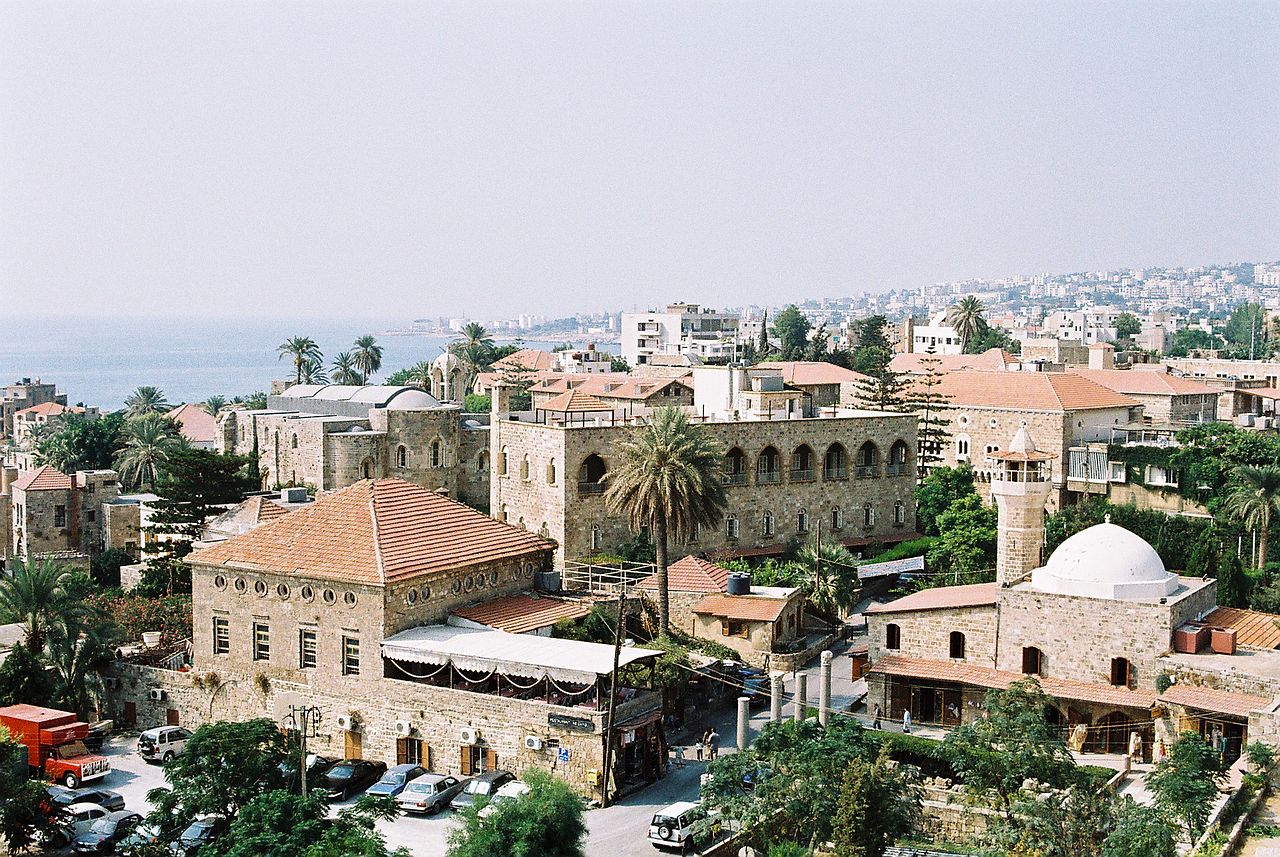
Photo io · CC BY-SA 3.0Source file on Wikimedia Commons
Overview
About this site
What the sources say
Tell Arqa, `Arqa ou Arka est un site archéologique situé près du village de Minyara au Liban à 12 km au nord-est de Tripoli.
Article in FrenchRead on Wikipedia7 min readCC BY-SA 4.0
Where it sits in time
The site's dated range, placed against world reference points.
The scale is logarithmic: each step to the left is about ten times older than the last.
The full article
Tell Arqa: the whole story
In briefSources for this section
- Wikipedia (French): Tell ArqaCC BY-SA 4.0
Sources for this section
- Wikipedia (French): Tell ArqaCC BY-SA 4.0
Tell Arqa, also known as Arka, Arca Caesarea or Caesarea ad Libanum, is an archaeological site near the village of Minyara in Lebanon, 12 km north-east of Tripoli. Its position is strategic, because it controls the roads leading from Tripoli towards Tartous and Homs. The region is well watered, a coastal alluvial plain probably favourable to human settlement for a long time, and a river runs at the foot of the hill, which holds remains going back to the Neolithic.
The oldest artefacts, found in survey of the surrounding plain, seem to date from the Natufian and the Pre-Pottery Neolithic. The oldest levels reached by excavation in Area 1 go back to Early Bronze Age II (2800-2650 BC), when the settlement can already be seen as a small, organised urban centre. Level 16 (Early Bronze IV) was burned around 2300 BC, which preserved its houses exceptionally well, to more than three metres in height, with burnt brick walls and burnt cedar and palm wood beams and floors. The ground floor held small square storage compartments full of burnt wheat, and the first floor was living and working space. The Middle Bronze Age is known from a potter's workshop, many silos and a cemetery used for almost half a millennium, whose most remarkable tomb held a warrior or chief with a set of bronze weapons.
In the Late Bronze Age the site seems to lose regional importance, and the town was destroyed by Thutmose III around 1450 BC. It was deserted throughout the early Iron Age and reoccupied only in Iron Age II, as a shrine shows. In antiquity the city was called Irqata. The elders of the city-state wrote to the pharaoh Akhenaten asking for help against the Apiru, in a letter that belongs to the Amarna letters. Pliny the Elder cites Arca alongside the cities of the Decapolis without making it one of them, and the Roman emperor Severus Alexander was born at Arca Caesarea in 208.
During the First Crusade the Frankish army reached Arqa on 12 February 1099 and was blocked there by the Muslims in the fortress. Raymond de Saint-Gilles lost Anselme de Ribemont and Pons de Balazuc there, and after three months he lifted the siege and went on to Jerusalem. In 1108 Guillaume Jourdain took the town after three weeks of siege. In 1167 Nur ad-Din tried to take Arqa, and King Amalric I gave it to the Hospitallers. In 1266, as the county of Tripoli collapsed, Baybars took the citadel from them.
No English Wikipedia article exists for it; the full text below is the French article "Tell Arqa", shown in the original language.
Summary in EnglishSources for this section
- Wikipedia (French): Tell ArqaCC BY-SA 4.0
Sources for this section
- Wikipedia (French): Tell ArqaCC BY-SA 4.0
Tell Arqa is a other / unclassified in Phoenicia, Lebanon. Wikidata describes it as: archaeological site in Akkar District, Lebanon. Dating: 1400 BCE to 1300 BCE. No English Wikipedia article exists for it; the full text below is the French article "Tell Arqa", shown in the original language.
GégraphieSources for this section
- Wikipedia (French): Tell ArqaCC BY-SA 4.0
Sources for this section
- Wikipedia (French): Tell ArqaCC BY-SA 4.0
La place est stratégique car elle permet de contrôler les routes menant de Tripoli vers Tartous et Homs.
La région est bien arrosée, c'est une plaine alluviale côtière, sans doute favorable à la colonisation humaine depuis longtemps. La rivière passe au pied de la colline de Tell Arqa qui comporte des vestiges remontant au Néolithique.
HistoireSources for this section
- Wikipedia (French): Tell ArqaCC BY-SA 4.0
Sources for this section
- Wikipedia (French): Tell ArqaCC BY-SA 4.0
Préhistoire
Les plus anciens artéfacts, trouvés en prospection dans la plaine avoisinante, semblent dater du Natoufien et du Néolithique précéramique. Cependant, les niveaux les plus anciens atteints par la fouille du Chantier 1 remontent à l’âge du Bronze ancien II (2800-2650 av. J.-C.). Dès cette période, l’habitat peut être considéré comme un petit centre urbain structuré et organisé. Jusqu’à la fin du IIIe millénaire av. J.-C., le site continue d’évoluer. Plusieurs états de destructions dus à des incendies ont entraîné une conservation exceptionnelle des maisons de cette période, en particulier pour le niveau 16 (Bronze ancien IV), incendié vers 2300 av. J.-C.
L’habitat de ce niveau est conservé sur plus de trois mètres d’élévation, les murs en briques étant brûlés, de même que de nombreux éléments de charpente et de planchers en bois de cèdre et de palmier. Le mobilier céramique, constitué de plusieurs dizaines de jarres, marmites, tasses et cruches, fut trouvé écrasé en place ou en position de chute. Il a été possible de reconstituer avec précision l’organisation du quartier et de chaque unité d’habitation. Une rue périphérique circulaire menait à plusieurs maisons adjacentes de structure identique. Le niveau inférieur, composé de petits casiers carrés, était destiné au stockage des denrées, essentiellement alimentaires, comme en témoigne l’importante quantité de blé brûlé trouvé dans ces casiers. Le premier étage était l’espace de vie et de travail. Des indices d’activité sur une terrasse, voire dans un second étage, sont attestés.
L’époque du Bronze moyen est surtout connue par la présence d’un atelier de potier, de nombreux silos, et d’une nécropole occupée durant presque un demi millénaire. La tombe la plus remarquable est celle d’un guerrier ou d’un chef, caractérisée par une panoplie d’armes en bronze.
Au Bronze récent, le site semble perdre de l’importance au niveau régional, et la ville est détruite par Thoutmôsis III vers 1450 av. J.-C. Le site est déserté durant tout le début de l’âge du fer, et n’est réoccupé qu’au Fer II, comme le montre la présence d’un sanctuaire.
Antiquité
Arqa s'est appelée Irqata, ses habitants sont appelés Arkites ou Arqiens dans la Bible selon les traductions.
Les anciens de la Cité-État d'Irqata ont envoyé une lettre au pharaon d'Égypte Akhenaton pour solliciter son aide contre les assauts des Apirous. Cette missive fait partie des lettres d'Amarna qui sont des tablettes d'ordre diplomatique, retrouvées sur le site de Tell el-Amarna en Égypte.
Période romaine
Pline l'Ancien cite Arca avec les villes de la Décapole, mais il n'en fait pas une d'entre elles.
Arca (Arca Cæsarea) a été le lieu de naissance de l'empereur romain Sévère Alexandre en 208.
Moyen Âge
Période des croisades
Pendant la première croisade (1096-1099)
Après le siège d'Antioche, l'armée franque est en marche vers le sud. Une partie des troupes arrive le 12 février 1099 devant Arqa. En dépit de la bienveillance des gouverneurs arabes de Tripoli, elle s'y trouvera bloquée par la résistance des musulmans installés dans la forteresse. Raymond de Saint-Gilles y perdra le 26 février 1099, Anselme de Ribemont comte d'Ostrevent, ambassadeur des Francs auprès de l'empereur grec, Alexis Comnène, ainsi que Pons de Balazuc. Ne parvenant à la prendre, il lève le siège au bout de trois mois et poursuit vers Jérusalem.
Entre les première et deuxième croisades (1099 - 1147)
Ce n'est qu'en 1108, que son cousin Guillaume Jourdain, comte de Cerdagne prend la ville après trois semaines de siège.
Entre les deuxième et troisième croisades (1148 - 1189)
En 1167, Nur ad-Din, profite de la captivité du comte de Tripoli Raymond III, essaie de prendre Arqa. Le roi de Jérusalem Amaury Ier fait don d'Arqa aux Hospitaliers de l'ordre de Saint-Jean de Jérusalem.
En 1171, l'atabeg de Mossoul revient à nouveau assiéger la forteresse qui résiste.
Entre les septième et huitième croisades (1254-1270)
La citadelle d'Arqa est prise aux Hospitaliers au moment de l'effondrement du comté de Tripoli en 1266 par Baybars.
Temps modernes
Époque contemporaine
AnnexesSources for this section
- Wikipedia (French): Tell ArqaCC BY-SA 4.0
Sources for this section
- Wikipedia (French): Tell ArqaCC BY-SA 4.0
Articles connexes
Ordre de Saint-Jean de Jérusalem en Terre sainte
Forteresse d'Archas
Croisade
Bibliographie
Georges Pillement, Liban, Syrie et Chypre inconnus, Albin Michel, coll. « Les guides Pillement », 1971
Jean-Paul Thalmann, Tell Arqa I. Les niveaux de l'âge du Bronze, vol. I, Beyrouth, Ifpo, 2006, 256 p. (ISBN 2-35159-032-5) Tell Arqa : I : les niveaux de l'âge du bronze, vol. II, 2006, 145 p. (ISBN 978-2-35159-033-1 et 2-35159-033-3)
Pascal Mongne et Philippe Marquis, Dictionnaire de l'Archéologie, Paris, Larousse, 2008, 424 p. (ISBN 978-2-03-583330-3 et 2-03-583330-2)
Josette Elayi, Histoire de la Phénicie, Éditions Perrin, Paris 2013.
Portail du Liban Portail de l’archéologie Portail du Proche-Orient ancien Portail des croisades Portail des châteaux Portail de l’ordre de Saint-Jean de Jérusalem
How this page was madeSources for this section
- Wikipedia (French): Tell ArqaCC BY-SA 4.0
Sources for this section
- Wikipedia (French): Tell ArqaCC BY-SA 4.0
The summary at the top of this page was written by Claude Sonnet 5.5 (2026-11-06) from the cited Wikipedia article “Tell Arqa”, translated from French. The numbers in it were checked automatically against the source text. The rest of the page is the article itself, the structured records and computed distances.
Tradition and region
About this kind of monument
Other prehistoric stone monuments
The Atlas uses the heading "other" for stone monuments that fit none of its other types, and the same article serves for underground chambers that have no regional article. The records are varied. Many are ziggurats, Egyptian temples and pyramids, and Maya and Andean sites, which are treated in their own articles. What remains is a scatter of single sites in many countries whose descriptions do not allow a closer classification.
Several of these are underground. A hypogeum is literally an "underground" temple or tomb, often with niches for cremated remains or loculi for buried remains. An early example is found at the Minoan Bronze Age site of Knossos on Crete, a beehive-shaped vault cut into soft rock. The Hypogeum of Ħal Saflieni in Paola, Malta, is the oldest example of a prehistoric hypogeum, with its earliest phase dated to 3600 to 3300 BCE. It is a complex of underground chambers, halls and passages covering about 500 square metres on three levels, partly carved to imitate temple architecture and containing extensive prehistoric art.
A rock-cut tomb is cut into an existing rock formation, usually a cliff or sloping rock face, and was a common burial form for the wealthy in several parts of the world. Famous clusters are in Egypt, Iran, Lycia in Turkey, Petra in Jordan and Sicily. Phrygian rock-cut tombs such as the Midas monument date to about 700 BCE, and Etruscan ones to about 500 BCE.
The general rule for these records is that the type tells you how a monument was made, not who made it or when. Dating is taken from the source for each site where a source gives one, and otherwise left as a broad range.
When visiting, read the site's own description first, since the Atlas can offer only a general frame.
Paraphrased from Wikipedia: Megalith, Wikipedia: Hypogeum, Wikipedia: Rock-cut tomb, Wikipedia: Stele · CC BY-SA 4.0
From the article
Dated moments in the story
- 978 CE
(ISBN 978-2-35159-033-1 et 2-35159-033-3) Pascal Mongne et Philippe Marquis, Dictionnaire de l'Archéologie, Paris, Larousse, 2008, 424 p.
Source - 978 CE
(ISBN 978-2-03-583330-3 et 2-03-583330-2) Josette Elayi, Histoire de la Phénicie, Éditions Perrin, Paris 2013. Portail du Liban Portail de l’archéologie Portail du Proche-Orient ancien Portail des croisades Portail des châteaux Portail de l’ordre de Saint-Jean de Jérusalem
Source - 1099
Une partie des troupes arrive le 12 février 1099 devant Arqa.
Source - 1099
Raymond de Saint-Gilles y perdra le 26 février 1099, Anselme de Ribemont comte d'Ostrevent, ambassadeur des Francs auprès de l'empereur grec, Alexis Comnène, ainsi que Pons de Balazuc.
Source - 1171
En 1171, l'atabeg de Mossoul revient à nouveau assiéger la forteresse qui résiste. La citadelle d'Arqa est prise aux Hospitaliers au moment de l'effondrement du comté de Tripoli en 1266 par Baybars.
Source - 1450
Au Bronze récent, le site semble perdre de l’importance au niveau régional, et la ville est détruite par Thoutmôsis III vers 1450 av.
Source - 2006
I, Beyrouth, Ifpo, 2006, 256 p.
Source
Photographs
1 photograph, each with its author and licence
Lore
Evidence & Lore
What the sources actually support — and, kept apart, what has been claimed.
What the evidence supports
Dates
1400–1300 BCEHow this date was established: Stated by the sourceThe source provides one date for the Amarna-period city rather than a complete site chronology. The source gives one year, so it is shown as a 100-year window (D-08).Source for this date
Measured facts
- Location
- Near Miniara, Akkar Governorate, LebanonSource: Location
- Iron Age role
- A notable city-state that sent troops to the coalition at QarqarSource: Iron Age role
- Amarna correspondence
- One of the 382 Amarna letters was written by IrqataSource: Amarna correspondence
- Crusade fortress
- Strategically controlled roads from Tripoli to Tartus and HomsSource: Crusade fortress
- Ecclesiastical status
- A Latin and Maronite Catholic titular seeSource: Ecclesiastical status
- Archaeological period
- The site extends back to Neolithic timesSource: Archaeological period
Where it stands
Lebanon
The pin marks the monument itself — its exact point.
- Coordinates
- 34°31′50″ N, 36°02′48″ EFor a GPS or map app: 34.53060, 36.04680
Access is as our sources describe it; we have not visited the site to check.
Nearby
The closest sites in the Atlas, by straight line.





Sources
Every record behind this page, with the link it came from.
2 sources behind this page
- 01Wikidata Q2637191wikidata.org
- 02Fringe claim sourceen.wikipedia.org
Image files
Report a correctionWrong date, name, photograph or source? Tell us and it will be put right.
Around this place
The ten nearest sites, by compass
Credit
Text, licence and sources
Text from the Wikipedia article "Tell Arqa" (French), licensed CC BY-SA 4.0; authors are listed in the page history. Reused under CC BY-SA 4.0. Read on Wikipedia · Edit history and authors
- Wikipedia (French): Tell ArqaCC BY-SA 4.0
- Wikidata Q2637191CC0
- Fringe claim sourceCC BY-SA 4.0