Statuenmenhir von Luzzipeu
DatedEst. 1900–730 BCE
No licensed photograph yetWe have no photograph we may publish for this site, so the interpretive 3D view leads instead.
Overview
About this site
What the sources say
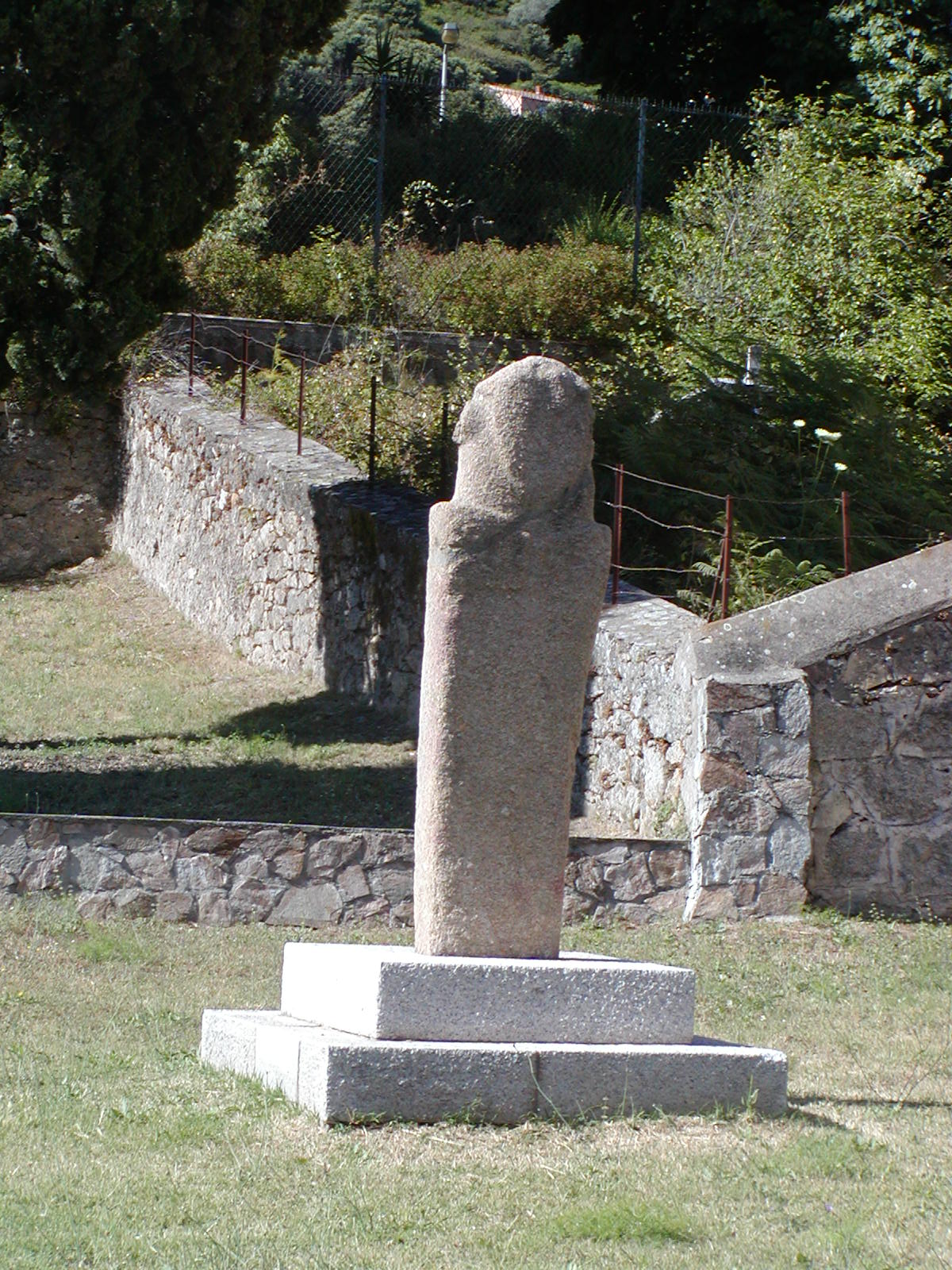
Der Statuenmenhir von Luzzipeu (oder Lutzipeo, auch Statuenmenhir von Urtacciu genannt) steht im Amtszimmer der Chapelle Santa Ristituta (Sainte Restitude), nahe der Straße D 151, etwa eineinhalb Kilometer nordöstlich von Calenzana bei Montegrosso im Département Haute-Corse auf der französischen Mittelmeerinsel Korsika.
Der gesichtslose Menhir ist einer von über 80 Statuenmenhiren auf der Insel.
Luzzipeu ist ein Ort mit zahlreichen archäologischen Rätseln. Im nahen Teghja di Linu II, einer umfangreichen Fundstelle, wurde 1999 das gut erhaltene Fragment eines weiteren Statuenmenhirs gefunden.
Der Schlüssel zur Kapelle ist im Dorf zu erhalten. Aber das Büro, in dem der Statuenmenhir steht, ist verschlossen, so dass er nur durch die Fenster zu sehen ist.
Article in GermanRead on Wikipedia2 min readCC BY-SA 4.0
Where it sits in time
The site's dated range, placed against world reference points.
The scale is logarithmic: each step to the left is about ten times older than the last.
The full article
Statuenmenhir von Luzzipeu: the whole story
In briefSources for this section
- Wikipedia (German): Statuenmenhir von LuzzipeuCC BY-SA 4.0
Sources for this section
- Wikipedia (German): Statuenmenhir von LuzzipeuCC BY-SA 4.0
The Statuenmenhir von Luzzipeu, also called Lutzipeo or Statuenmenhir von Urtacciu, stands in the office of the Chapelle Santa Ristituta near Calenzana on Corsica. The office is locked, so the monument can be seen only through the windows; the chapel key is kept in the village.
The faceless statue menhir is one of more than 80 statue menhirs on Corsica. It dates from between 1900 BCE and 730 BCE, based on a typological estimate.
The village of Luzzipeu has numerous archaeological puzzles. At the nearby site of Teghja di Linu II, a well-preserved fragment of another statue menhir was found in 1999.
Italy’s megaliths include standing stones in Sardinia, Bronze Age dolmens in Apulia and Sicily, and statue stelae from the Copper Age and Iron Age in the Alps and Lunigiana. The Arco stelae in Trentino, discovered in 1989, include a limestone statue menhir showing an armed figure.
No English Wikipedia article exists for it; the full text below is the German article "Statuenmenhir von Luzzipeu", shown in the original language.
Summary in EnglishSources for this section
- Wikipedia (German): Statuenmenhir von LuzzipeuCC BY-SA 4.0
Sources for this section
- Wikipedia (German): Statuenmenhir von LuzzipeuCC BY-SA 4.0
Statuenmenhir von Luzzipeu is a megalith (abstract root) in Italy. A typological estimate: 1900 BCE to 730 BCE. No English Wikipedia article exists for it; the full text below is the German article "Statuenmenhir von Luzzipeu", shown in the original language.
How this page was madeSources for this section
- Wikipedia (German): Statuenmenhir von LuzzipeuCC BY-SA 4.0
Sources for this section
- Wikipedia (German): Statuenmenhir von LuzzipeuCC BY-SA 4.0
The summary at the top of this page was written by MiniMax-M3 (2026-11-08) from the cited Wikipedia article “Statuenmenhir von Luzzipeu”, translated from German. The numbers in it were checked automatically against the source text. The rest of the page is the article itself, the structured records and computed distances.
Tradition and region
About this kind of monument
Megaliths of Italy
Italy's megaliths are scattered and varied. Menhirs are especially common in Sardinia, where at least 332 standing stones can be seen. They include elaborate statue-menhirs with a human face at the top and gendered symbols on the flat front, over a hundred of them found around the village of Laconi, and called perdas fittas or perdas lungas in Sardinian. In Apulia, near Bisceglie, the Bronze Age dolmens include the Dolmen della Chianca, with a passage 10 metres long leading to a burial cell of 2 by 1.6 metres. Small dolmens also exist in Sicily, at Mura Pregne near Palermo, Sciacca, Monte Bubbonia and Butera.
In the north, statue stelae of the Copper Age and Iron Age stand in the Alps and in Lunigiana. The Arco stelae in Trentino, discovered in 1989, are six Copper Age statue menhirs, and Arco I is a limestone stele 2.15 metres high showing an armed figure with seven daggers, three axes and three halberds. The Iron Age statue stelae of Liguria and Lunigiana are among the best-known Italian megalithic monuments.
Sardinia's tombs and towers, the nuraghi, giants' graves and domus de janas, have their own articles. Dolmens occur in Apulia, Sardinia and Sicily, and statue menhirs, which are carved standing stones of the later Neolithic, are most commonly found in southern and western France, Corsica, Sardinia, Italy and the Alps. In Lunigiana the statue stelae are believed to have served as funerary or commemorative monuments for local elites, though their exact function remains debated.
When visiting, pair a megalith with a local museum, since several statue stelae are kept indoors.
Paraphrased from Wikipedia: Dolmen, Wikipedia: List of menhirs, Wikipedia: Statue menhir, Wikipedia: Bisceglie, Wikipedia: List of dolmens, Wikipedia: Arco stelae, Wikipedia: Lunigiana · CC BY-SA 4.0
From the article
Dated moments in the story
- 1999
Im nahen Teghja di Linu II, einer umfangreichen Fundstelle, wurde 1999 das gut erhaltene Fragment eines weiteren Statuenmenhirs gefunden.
Source
Lore
Evidence & Lore
What the sources actually support — and, kept apart, what has been claimed.
What the evidence supports
Dates
Est. 1900–730 BCEHow this date was established: Type comparisonTypical range for megaliths in Italy; this site has not been dated itself. The nuraghe is the main type of ancient megalithic edifice of Sardinia developed during the Nuragic Age between 1900 and 730 BC.Source for this date
Where it stands
Italy
The pin marks the monument itself — its exact point.
- Coordinates
- 42°30′51″ N, 8°51′56″ EFor a GPS or map app: 42.51403, 8.86553
Access is as our sources describe it; we have not visited the site to check.
Nearby
The closest sites in the Atlas, by straight line.




Sources
Every record behind this page, with the link it came from.
2 sources behind this page
- 01Wikidata Q51076261wikidata.org
- 02Source for this dateen.wikipedia.org
Report a correctionWrong date, name, photograph or source? Tell us and it will be put right.
Around this place
The ten nearest sites, by compass
Credit
Text, licence and sources
Text from the Wikipedia article "Statuenmenhir von Luzzipeu" (German), licensed CC BY-SA 4.0; authors are listed in the page history. Reused under CC BY-SA 4.0. Read on Wikipedia · Edit history and authors