Smerral Wood
DatedEst. 390 BCE–200 CE
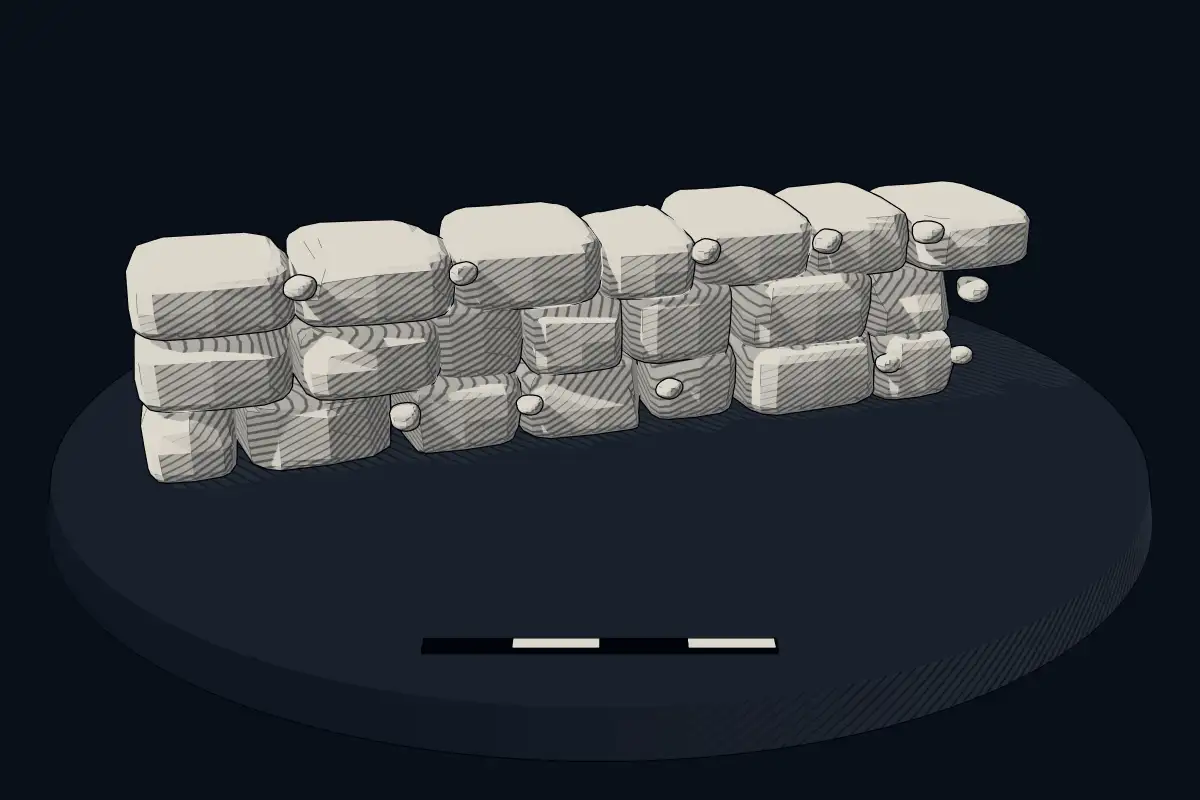
No licensed photograph yetWe have no photograph we may publish for this site, so the interpretive 3D view leads instead.
Overview
About this site
Overview
Smerral Wood is a cyclopean masonry in United Kingdom. It lies at 58.2868° N, 3.4047° W.
Catalogue recordSources and licences
Where it sits in time
The site's dated range, placed against world reference points.
The scale is logarithmic: each step to the left is about ten times older than the last.
Article
Smerral Wood
ContextSources for this section
- en.wikipedia.orgCC BY-SA 4.0
- en.wikipedia.orgCC BY-SA 4.0
- en.wikipedia.orgCC BY-SA 4.0
- en.wikipedia.orgCC BY-SA 4.0
- en.wikipedia.orgCC BY-SA 4.0
- en.wikipedia.orgCC BY-SA 4.0
Sources for this section
- en.wikipedia.orgCC BY-SA 4.0
- en.wikipedia.orgCC BY-SA 4.0
- en.wikipedia.orgCC BY-SA 4.0
- en.wikipedia.orgCC BY-SA 4.0
- en.wikipedia.orgCC BY-SA 4.0
- en.wikipedia.orgCC BY-SA 4.0
A broch is an Iron Age hollow-walled drystone tower found in Scotland, and Scotland holds more than 500 of them. Brochs belong to the class that Scottish archaeologists call "complex Atlantic roundhouses". There are approximately 571 candidate sites, concentrated in northern Scotland, with the densest groups in Caithness, Sutherland and the Northern Isles. The Atlas files them under "cyclopean masonry" because of the heavy drystone walls, but they are Scottish Iron Age buildings, unrelated to the Mycenaean walls that give that term its name. The regional background, “Scottish brochs”, is given below.
DatingSources for this section
- en.wikipedia.orgCC BY-SA 4.0
Sources for this section
- en.wikipedia.orgCC BY-SA 4.0
No scientific date has been published for this site. Monuments of this type in United Kingdom are generally dated 390 BCE to 200 CE; the site itself may fall inside or outside that range.
The first brochs may have been built circa 300 BC and most of the towers were built in the 1st centuries BC and AD; a sheep bone from Old Scatness Broch dates to between 390 and 200 BC.
Setting
40 other recorded monuments lie within 10 km (1 within 1 km, 30 within 5 km), 23 of them of the same type. In United Kingdom, 1 of the 48 recorded monuments are of this type.
The nearest recorded monuments are Smerral, broch to E of Bunellich (0.2 km south, cyclopean masonry); Guidebest, stone circle, Latheronwheel Burn (1.2 km north, megalithic mound); broch 500m W of Latheronwheel House (1.5 km south, cyclopean masonry); broch 450m S of Latheronwheel Bridge (1.7 km south-east, cyclopean masonry).
ProtectionSources for this section
Sources for this section
No heritage designation is recorded for the site.
Tradition and region
About this kind of monument
Scottish brochs
A broch is an Iron Age hollow-walled drystone tower found in Scotland, and Scotland holds more than 500 of them. Brochs belong to the class that Scottish archaeologists call "complex Atlantic roundhouses". There are approximately 571 candidate sites, concentrated in northern Scotland, with the densest groups in Caithness, Sutherland and the Northern Isles. The Atlas files them under "cyclopean masonry" because of the heavy drystone walls, but they are Scottish Iron Age buildings, unrelated to the Mycenaean walls that give that term its name.
The finest is the Broch of Mousa in Shetland, the tallest broch still standing and among the best-preserved prehistoric buildings in Europe; it is thought to have been built about 300 BCE. Midhowe Broch on Rousay in Orkney has an internal diameter of 9 metres within a wall 4.5 metres thick, which still stands more than 4 metres high. At the Broch of Gurness on Mainland Orkney, a village grew around a tower that probably once reached about 10 metres; settlement began between 500 and 200 BCE, and Robert Rendall found it in 1929.
Dating is not secure. Most brochs may have been built from about 300 BCE; a sheep bone at Old Scatness in Shetland dates to between 390 and 200 BCE. The old view that brochs were defensive refuges for people and their livestock has been challenged: it has been argued that they were the "stately homes" of their time, showing the status of important families, though there is no archaeological proof, and the purpose may have combined defensive, offensive and symbolic functions.
When visiting, look for the two skins of drystone wall with a stair or gallery between them, and for the settlement of smaller houses around the tower.
Paraphrased from Wikipedia: Broch, Wikipedia: Mousa Broch, Wikipedia: Dun Carloway, Wikipedia: Midhowe Broch, Wikipedia: Gurness Broch, Wikipedia: Cyclopean masonry · CC BY-SA 4.0
Lore
Evidence & Lore
What the sources actually support — and, kept apart, what has been claimed.
What the evidence supports
Dates
Est. 390 BCE–200 CEHow this date was established: Type comparisonTypical range for cyclopean masonries in United Kingdom; this site has not been dated itself. The first brochs may have been built circa 300 BC and most of the towers were built in the 1st centuries BC and AD; a sheep bone from Old Scatness Broch dates to between 390 and 200 BC.Source for this date
Where it stands
United Kingdom
The pin marks the monument itself — its exact point.
- Coordinates
- 58°17′12″ N, 3°24′17″ WFor a GPS or map app: 58.28678, -3.40468
Access is as our sources describe it; we have not visited the site to check.
Nearby
The closest sites in the Atlas, by straight line.
- Cyclopean masonrySmerral, broch to E of Bunellich390 BCE–200 CE
- Megalithic mound (tumulus with integral stones)Guidebest, stone circle, Latheronwheel Burn4000–800 BCE
 broch 500m W of Latheronwheel House390 BCE–200 CE
- Cyclopean masonrybroch 450m S of Latheronwheel Bridge390 BCE–200 CE
- Chambered cairnchambered cairn 580m SE of Latheronwheel House4000–2500 BCE
- Cyclopean masonrybroch 230m E of Upper Latheron390 BCE–200 CE
- Menhir (standing stone)Latheron, 2 standing stones2800–1800 BCE
 Greentulloch,broch 180m NE of390 BCE–200 CE


Sources
Every record behind this page, with the link it came from.
2 sources behind this page
- 01Wikidata Q134428575wikidata.org
- 02Source for this dateen.wikipedia.org
Report a correctionWrong date, name, photograph or source? Tell us and it will be put right.
Around this place
The ten nearest sites, by compass
- Smerral, broch to E of Bunellich0.2 km S
- Guidebest, stone circle, Latheronwheel Burn1.2 km N
- broch 500m W of Latheronwheel House1.5 km S
- broch 450m S of Latheronwheel Bridge1.6 km SE
- chambered cairn 580m SE of Latheronwheel House2.0 km SE
- broch 230m E of Upper Latheron2.2 km S
- Latheron, 2 standing stones2.2 km E
- Greentulloch,broch 180m NE of2.2 km SW
- standing stone 470m S of Minera2.2 km W
- Latheron stone2.2 km E
Credit
Text, licence and sources
Compiled from open records (Wikidata, CC0; OpenStreetMap, ODbL) and a regional background article based on Wikipedia (CC BY-SA 4.0).
- Wikidata Q134428575CC0
- en.wikipedia.orgCC BY-SA 4.0
- en.wikipedia.orgCC BY-SA 4.0
- en.wikipedia.orgCC BY-SA 4.0
- en.wikipedia.orgCC BY-SA 4.0
- en.wikipedia.orgCC BY-SA 4.0
- en.wikipedia.orgCC BY-SA 4.0