
Pradinas dolmen
Also known asLes Pradèches dolmen · Pradèches dolmen
DatedEst. 4000–3000 BCE
Photo Petr1888 · CC BY-SA 3.0Source file on Wikimedia Commons

Overview
About this site
What the sources say
Der Dolmen du Pradinas (auch Pradèches Dolmen genannt) liegt in der Gemeinde Bidon, bei Pierrelatte im Département Ardèche in Frankreich. Dolmen ist in Frankreich der Oberbegriff für neolithische Megalithanlagen aller Art (siehe: Französische Nomenklatur). Er zählt zu den „Dolmens de l’Ardèche“, die mit 800 Dolmen hinter der Bretagne das zweitgrößte megalithische Areal bilden.
Der aus vier Kalksteinplatten bestehende Dolmen du Pradinas liegt mit einer Länge von etwa 1,5 Metern, einer Breite von etwa 1,2 Metern und einer Höhe von 1,5 Metern im mittleren Größenbereich der Dolmen im Département Ardèche.
Etwa 150 m entfernt liegt der Cromlech du Pradinas.
Article in GermanRead on Wikipedia2 min readCC BY-SA 4.0
Where it sits in time
The site's dated range, placed against world reference points.
The scale is logarithmic: each step to the left is about ten times older than the last.
The full article
Pradinas dolmen: the whole story
In briefSources for this section
- Wikipedia (German): Dolmen du PradinasCC BY-SA 4.0
Sources for this section
- Wikipedia (German): Dolmen du PradinasCC BY-SA 4.0
Pradinas dolmen, also called Les Pradèches dolmen or Pradèches dolmen, is a Neolithic megalithic monument in the commune of Bidon, near Pierrelatte in the Ardèche department of France. It belongs to the “Dolmens de l’Ardèche”, an area containing 800 dolmens and second only to Brittany in size.
The monument is made from four limestone slabs. It measures about 1.5 metres in length, about 1.2 metres in width and 1.5 metres in height, placing it among the medium-sized dolmens of the Ardèche department. About 150 m away stands the Cromlech du Pradinas.
The Pradinas dolmen is dated by typological estimate to 4000 BCE to 3000 BCE. In France, the term dolmen refers broadly to Neolithic megalithic structures of different forms. A dolmen generally consists of a single chamber with two or more upright stones supporting a large capstone, although many were once covered by earth or smaller stones to form a mound.
France has about 4,500 dolmens spread across 60 departments. Most belong to the Late Neolithic and date to about 4000 to 3000 BCE. Some of Europe’s oldest megalithic monuments are in western France, including the Cairn of Barnenez in Finistère, which dates to around 4000 BCE.
No English Wikipedia article exists for it; the full text below is the German article "Dolmen du Pradinas", shown in the original language.
Summary in EnglishSources for this section
- Wikipedia (German): Dolmen du PradinasCC BY-SA 4.0
Sources for this section
- Wikipedia (German): Dolmen du PradinasCC BY-SA 4.0
Pradinas dolmen is a dolmen in Bidon, France. A typological estimate: 4000 BCE to 3000 BCE. No English Wikipedia article exists for it; the full text below is the German article "Dolmen du Pradinas", shown in the original language.
How this page was madeSources for this section
- Wikipedia (German): Dolmen du PradinasCC BY-SA 4.0
Sources for this section
- Wikipedia (German): Dolmen du PradinasCC BY-SA 4.0
The summary at the top of this page was written by MiniMax-M3 (2026-11-08) from the cited Wikipedia article “Dolmen du Pradinas”, translated from German. The numbers in it were checked automatically against the source text. The rest of the page is the article itself, the structured records and computed distances.
Tradition and region
About this kind of monument
French dolmens
France is the dolmen country of Europe: the Dolmen de Bagneux at Saumur is the largest of some 4,500 dolmens scattered across 60 French departments, and one of the largest in Europe. A dolmen is a single-chamber megalithic tomb with two or more upright stones carrying a great capstone. Most date to the Late Neolithic, about 4000 to 3000 BCE, and many were covered with earth or smaller stones to form a mound.
Some of the oldest megalithic monuments in Europe are in western France. The Cairn of Barnenez in Finistère dates to the early Neolithic, around 4000 BCE, and with the Tumulus of Bougon and the Locmariaquer megaliths it is among the earliest megalithic monuments in Europe; it also has megalithic art. La Roche-aux-Fées near Essé in Ille-et-Vilaine is a covered corridor about 20 metres long, built of some 48 blocks, the heaviest around 45 tonnes, and divided into two chambers. It is thought to date from 3000 to 2500 BCE, and its entrance is aligned on sunrise at the winter solstice.
Folklore: the name of La Roche-aux-Fées, "the fairies' rock", comes from a legend that fairies placed the stones. Such stories are traditions about the monuments, not evidence of how they were built.
Because the Atlas draws on national inventories, its French records include many small and ruined dolmens, often reduced to a capstone resting on a few supports. Dates rest on the typology of the monument and, where a dolmen has been excavated, on radiocarbon dating of material from the chamber.
When visiting, look for the capstone and its supports, for the low rise of the old mound around the stones, and for the direction in which the entrance faces.
Paraphrased from Wikipedia: Dolmen, Wikipedia: Dolmen de Bagneux, Wikipedia: La Roche-aux-Fées, Wikipedia: Barnenez, Wikipedia: Carnac stones · CC BY-SA 4.0
From the article
Dated moments in the story
- 800 CE
Er zählt zu den „Dolmens de l’Ardèche“, die mit 800 Dolmen hinter der Bretagne das zweitgrößte megalithische Areal bilden.
Source
See it in 3D
An interpretive reconstruction of the monument, standing on the real ground at its exact point, under the sun for that place and season. Drag to look around it.
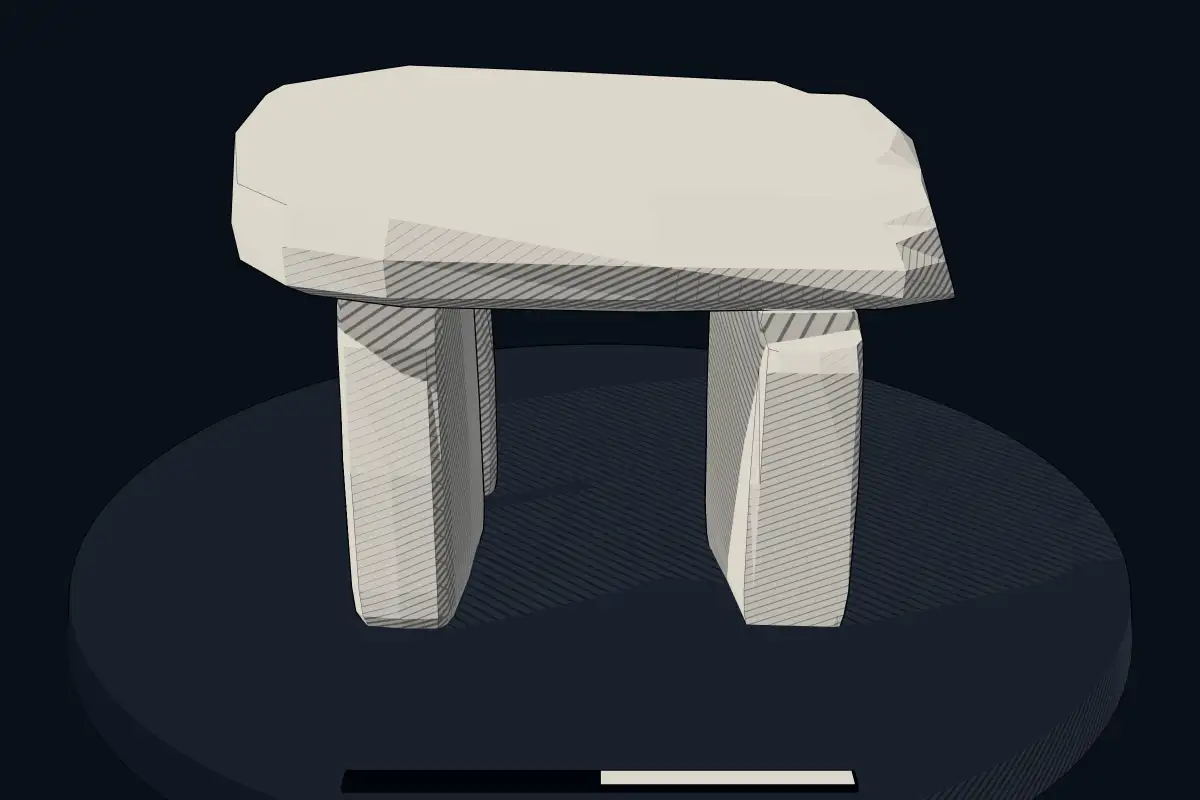
The reconstruction is ours, not a survey: it shows what a monument of this type looks like, at the size the record gives for this one.
Photographs
5 photographs, each with its author and licence
More photographs


Lore
Evidence & Lore
What the sources actually support — and, kept apart, what has been claimed.
What the evidence supports
Dates
Est. 4000–3000 BCEHow this date was established: Type comparisonTypical range for dolmens in France; this site has not been dated itself. Most dolmens date from the Late Neolithic period (4000-3000 BCE).Source for this date
Where it stands
France
The pin marks the monument itself — its exact point.
- Coordinates
- 44°21′05″ N, 4°34′14″ EFor a GPS or map app: 44.35130, 4.57060
Access is as our sources describe it; we have not visited the site to check.
Nearby
The closest sites in the Atlas, by straight line.
 dolmens n° 7 du Bois des Géantes4000–3000 BCE
 Bois des Géantes, dolmen N°14000–3000 BCE
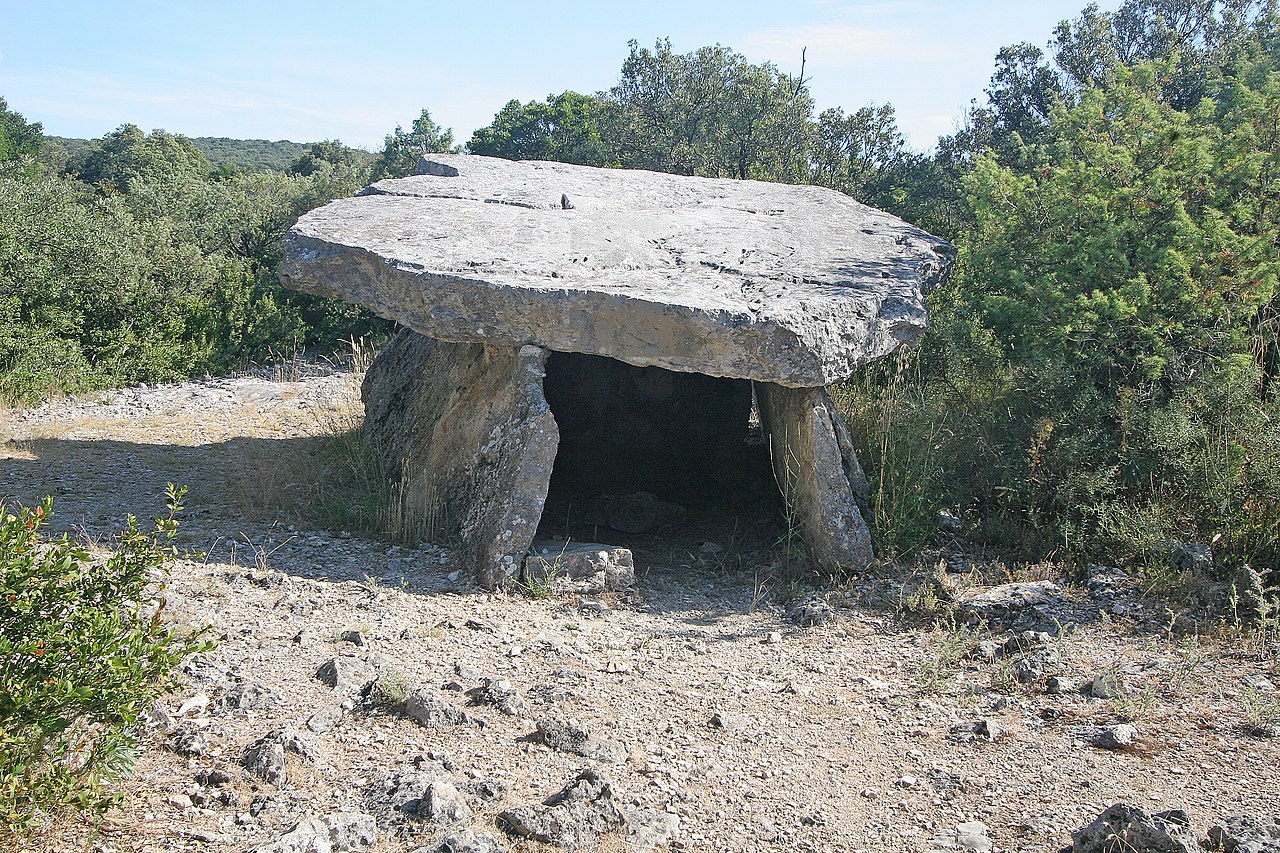 Champvermeil dolmen4000–3000 BCE
 Bois des Géantes dolmens4000–3000 BCE
 Bois des Géantes, dolmen N°24000–3000 BCE
 Bois des Géantes, dolmen N°34000–3000 BCE
 dolmens n° 5 du Bois des Géantes4000–3000 BCE
 dolmens n° 4 du Bois des Géantes4000–3000 BCE


Sources
Every record behind this page, with the link it came from.
2 sources behind this page
- 01Wikidata Q14541891wikidata.org
- 02Source for this dateen.wikipedia.org
Image files
- Dolmen du Pradinas 01.JPGPetr1888CC BY-SA 3.0
- Dolmen du Pradinas 02.JPGPetr1888CC BY-SA 3.0
- Dolmen des Pradèches © by Besenbinder - panoramio (1).jpgBesenbinderCC BY-SA 3.0
- Dolmen des Pradèches © by Besenbinder - panoramio.jpgBesenbinderCC BY-SA 3.0
- Léopold Chiron Dolmen de Pradinas.jpgLéopold ChironPublic domain
Report a correctionWrong date, name, photograph or source? Tell us and it will be put right.
Around this place
The ten nearest sites, by compass
- dolmens n° 7 du Bois des Géantes1.8 km NE
- Bois des Géantes, dolmen N°11.8 km NE
- Champvermeil dolmen1.8 km NW
- Bois des Géantes dolmens2.0 km N
- Bois des Géantes, dolmen N°22.1 km N
- Bois des Géantes, dolmen N°32.1 km N
- dolmens n° 5 du Bois des Géantes2.1 km N
- dolmens n° 4 du Bois des Géantes2.2 km N
- Grosse Pierre2.6 km SW
- Colombier dolmen2.9 km SW
Credit
Text, licence and sources
Text from the Wikipedia article "Dolmen du Pradinas" (German), licensed CC BY-SA 4.0; authors are listed in the page history. Reused under CC BY-SA 4.0. Read on Wikipedia · Edit history and authors
- Wikipedia (German): Dolmen du PradinasCC BY-SA 4.0
- Wikidata Q14541891CC0