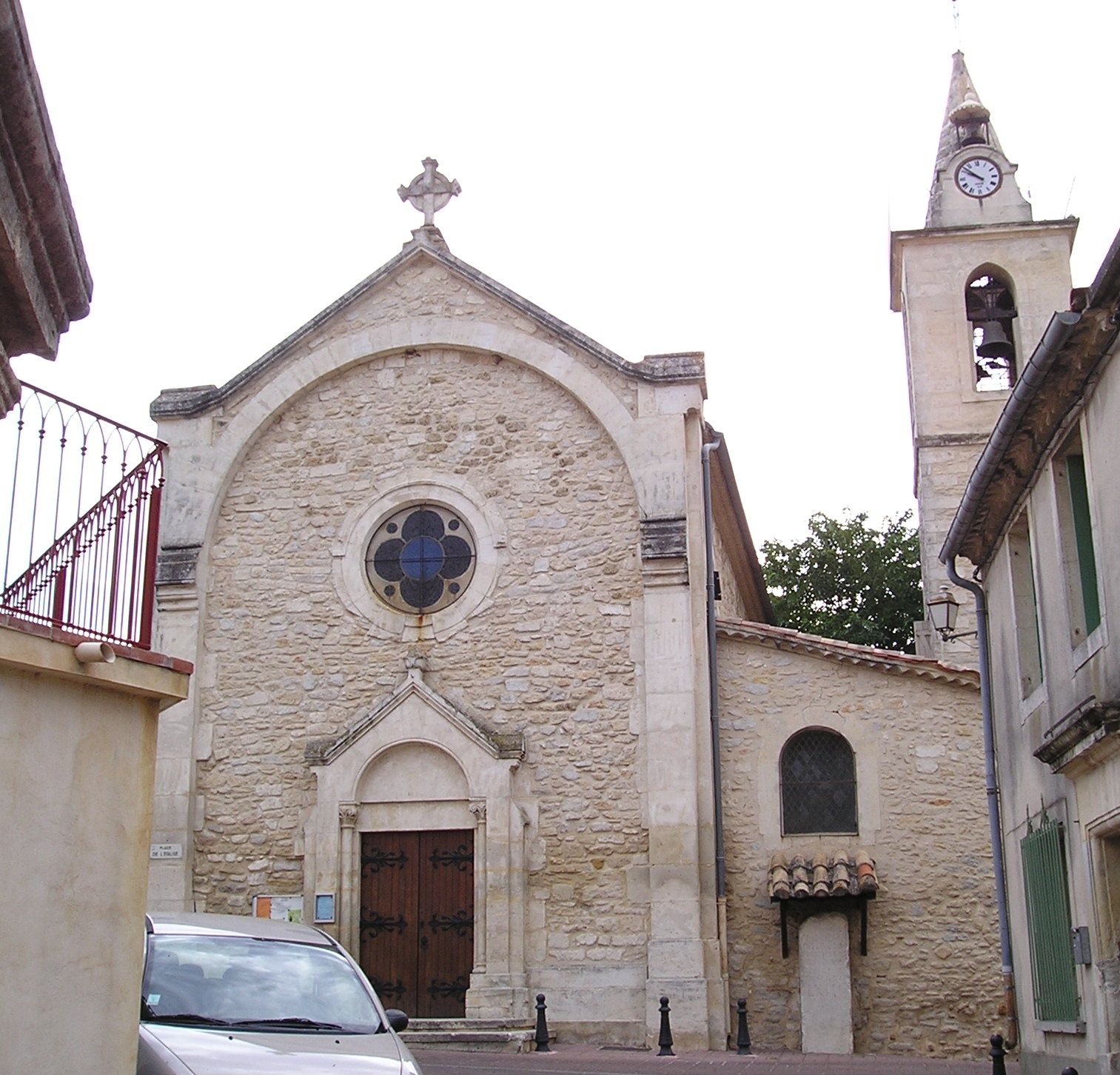
Mil·liari
Photo Sebjarod · CC BY-SA 3.0Source file on Wikimedia Commons
Overview
About this site
Overview
The Saint-Aunès milestone is a Roman milestone (borne milliaire) in the commune of Saint-Aunès, in the département of Hérault, France. It is a protected historical monument, classified in 1911.
Read on Wikipedia1 min readCC BY-SA 4.0
Article
Mil·liari
Its inscription is catalogued as CIL 17-02, 00277, in the corpus of Roman milestones of the Gallic and Germanic provinces.
SettingSources for this section
Sources for this section
The milestone stands in the commune of Saint-Aunès, in the département of Hérault. Its inscription is catalogued as CIL 17-02, 00277, in the corpus of Roman milestones of the Gallic and Germanic provinces.
ConservationSources for this section
Sources for this section
The milestone was classified as a historical monument (monument historique) in 1911. It appears on the national list of protected milestones in France.
ContextSources for this section
Sources for this section
A milestone is a numbered marker placed on a route to indicate distances to towns or landmarks. A Roman milestone carries inscriptions that indicate its function, so it can often be placed within a reign.
Tradition and region
About this kind of monument
French steles, milestones and memorials
The Atlas's French steles are a mixed group. A stele is a stone or wooden slab, generally taller than it is wide, erected as a monument, with text, ornament, or both. Steles were made as grave markers, as government notices and boundary markers, and as memorials to battles. Among the French records are Gaulish steles, funerary steles, Roman milestones and a number of modern memorials.
A milestone is a numbered marker placed on a route to indicate distances to towns or landmarks. In the Roman world a cippus was a low, round or rectangular pedestal set up for purposes such as a milestone or a boundary post, with inscriptions that indicated its function or the area it enclosed. A Roman milestone carries inscriptions that indicate its function, so it can often be placed within a reign.
In Rome cippi marked the limits of the pomerium after the city walls were expanded, the course of aqueducts and of the imperial post; cippi lined up in rows were often numbered, and sometimes carried the name of the magistrate responsible. Roman cippi were made of wood or stone. Stelae were also erected as memorials to battles, and the Gaulish and Roman examples of France sit in that long tradition.
Modern memorials are recorded as stone monuments in the registers, and the Atlas keeps them, but they are not prehistoric.
When visiting, read the inscription, which is the quickest way to tell a Roman milestone from a modern memorial.
Paraphrased from Wikipedia: Stele, Wikipedia: Milestone, Wikipedia: Cippus · CC BY-SA 4.0
From the article
Dated moments in the story
- 1911
La borne est classée au titre des monuments historiques en 1911.
Source
Photographs
1 photograph, each with its author and licence
Where it stands
France
The pin marks the monument itself — its exact point.
- Coordinates
- 43°38′12″ N, 3°57′57″ EFor a GPS or map app: 43.63660, 3.96585
Access is as our sources describe it; we have not visited the site to check.
Nearby
The closest sites in the Atlas, by straight line.


Sources
Every record behind this page, with the link it came from.
1 source behind this page
- 01Wikidata Q2911168wikidata.org
Image files
Report a correctionWrong date, name, photograph or source? Tell us and it will be put right.
Around this place
The ten nearest sites, by compass
Credit
Text, licence and sources
Adapted from the Wikipedia article "Borne milliaire de Saint-Aunès" (French), licensed CC BY-SA 4.0; authors are listed in the page history. Reused under CC BY-SA 4.0. Read on Wikipedia · Edit history and authors