Castaldu statue menhir
DatedEst. 4800–2500 BCE
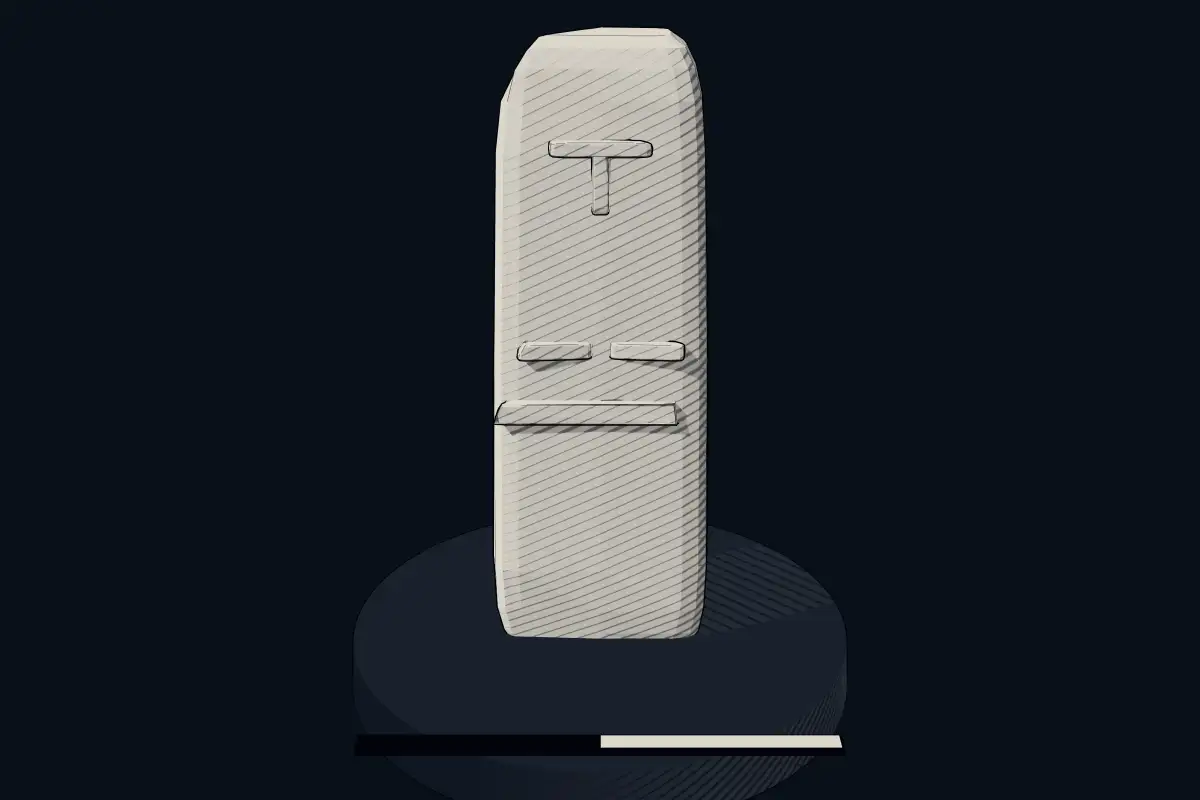
No licensed photograph yetWe have no photograph we may publish for this site, so the interpretive 3D view leads instead.
Overview
About this site
What the sources say
Der Statuenmenhir Castaldu 1 ist ein etwa einen Meter großer Torso eines einst überlebensgroßen korsischen Statuenmenhirs aus grobkörnigem Granit. Er wurde in der abgelegenen Gemeinde Ciamannacce (im Département Corse-du-Sud), am rechten Ufer des Flusses Taravo gefunden.
Das Fragment lag in einem kleinen Eichenwald, am Rande einer natürlichen Terrasse, 60 m über dem Fluss. 1981 sollte der Stein bearbeitet werden, dabei wurde die Skulptierung entdeckt. Der an den Schultern 41 cm breiten und nach unten schmaler werdenden Statue fehlen Kopf und Unterkörper. Die Erosion beschädigte die Rückenpartie. Die nackte Statue zeigt, unter dem Halsansatz und den nur angedeuteten Schultern, als eine von wenigen weibliche Brüste und im Bauchbereich ein etwa lotrecht angeordnetes Schwert. Damit gehört sie zu den „bewaffneten Menhiren“ der Phase 5 (1800–1500 v. Chr.) nach Roger Grosjean, die nur im Süden der Insel vorkommen und insgesamt 73 Statuenmenhire umfasst.
Article in GermanRead on Wikipedia3 min readCC BY-SA 4.0
Where it sits in time
The site's dated range, placed against world reference points.
The scale is logarithmic: each step to the left is about ten times older than the last.
The full article
Castaldu statue menhir: the whole story
In briefSources for this section
- Wikipedia (German): Statuenmenhir Castaldu 1CC BY-SA 4.0
Sources for this section
- Wikipedia (German): Statuenmenhir Castaldu 1CC BY-SA 4.0
The Castaldu statue menhir is a carved standing stone from Ciamannacce in the Département Corse-du-Sud, France. It was found on the right bank of the Taravo river, in a small oak wood at the edge of a natural terrace, 60 m above the river. The fragment was first noticed when the stone was to be worked in 1981.
The surviving piece is the roughly one-meter torso of a statue that was originally larger than life-size. Made from coarse-grained granite, it is 41 cm across at the shoulders and narrows toward the bottom. The head and lower body are missing, while erosion has damaged the back. The unclothed figure has one of the few female breasts shown on the group of Corsican statue menhirs and a sword arranged almost vertically on the abdomen.
The sculpture belongs to the “bewaffneten Menhiren” or armed menhirs of phase 5 in Roger Grosjean’s classification, dated to 1800–1500 v. Chr. This group occurs only in the south of Corsica and contains 73 statue menhirs in total. The wider date given for the Castaldu statue menhir is 4800 BCE to 2500 BCE, based on a typological estimate.
Statue menhirs are carved standing stones of the later European Neolithic. Their upright slabs or pillars bear simplified human figures, sometimes with indications of clothing or weapons. They are found especially in southern and western France, Catalonia, Corsica, Sardinia, Italy and the Alps. No legend or later history is given for the Castaldu statue menhir.
No English Wikipedia article exists for it; the full text below is the German article "Statuenmenhir Castaldu 1", shown in the original language.
Summary in EnglishSources for this section
- Wikipedia (German): Statuenmenhir Castaldu 1CC BY-SA 4.0
Sources for this section
- Wikipedia (German): Statuenmenhir Castaldu 1CC BY-SA 4.0
Castaldu statue menhir is a statue-menhir in Ciamannacce, France. Wikidata describes it as: statue menhir in Ciamannacce, France. A typological estimate: 4800 BCE to 2500 BCE. No English Wikipedia article exists for it; the full text below is the German article "Statuenmenhir Castaldu 1", shown in the original language.
How this page was madeSources for this section
- Wikipedia (German): Statuenmenhir Castaldu 1CC BY-SA 4.0
Sources for this section
- Wikipedia (German): Statuenmenhir Castaldu 1CC BY-SA 4.0
The summary at the top of this page was written by MiniMax-M3 (2026-11-08) from the cited Wikipedia article “Statuenmenhir Castaldu 1”, translated from German. The numbers in it were checked automatically against the source text. The rest of the page is the article itself, the structured records and computed distances.
Tradition and region
About this kind of monument
Statue menhirs of France
A statue menhir is a carved standing stone of the later European Neolithic, in which a vertical slab or pillar has a stylised human figure cut into it, sometimes with hints of clothing or weapons. They are most commonly found in southern and western France, Catalonia, Corsica, Sardinia, Italy and the Alps, and France has most of the Atlas's records. A group from the Iron Age is also known in Liguria and Lunigiana in Italy, and there are two on Guernsey. One of them, La Gran'mère du Chimquière, "the grandmother of the cemetery", stands in a churchyard.
A well-known site is on Corsica. Filitosa, in the south of the island, is a megalithic site occupied from the end of the Neolithic and the beginning of the Bronze Age until about Roman times. Arrowheads and pottery date the earliest habitation to 3300 BCE. Around 1500 BCE menhirs 2 to 3 metres high were erected there, carved with human faces, armour and weapons. About twenty menhirs of various periods have been counted. One interpretation, by Roger Grosjean, was that they were set up to ward off an invasion by a people he called the Torréens, who threw them down, broke them up and reused some as building stone, and then built the circular stone structures called torri; later researchers disputed this theory.
Dating rests on comparison with the Arco stelae, six Copper Age statue menhirs found in Trentino in 1989, which are similar in style to other anthropomorphic stelae of the fourth and third millennia BCE.
When visiting, look at the weapons and belt carved on the stone.
Paraphrased from Wikipedia: Statue menhir, Wikipedia: Filitosa, Wikipedia: Arco stelae · CC BY-SA 4.0
From the article
Dated moments in the story
Lore
Evidence & Lore
What the sources actually support — and, kept apart, what has been claimed.
What the evidence supports
Dates
Est. 4800–2500 BCEHow this date was established: Type comparisonTypical range for statue-menhirs in France; this site has not been dated itself. Statue menhirs were created during the later European Neolithic Period and the megalithic constructions of Brittany begin c. 4800 BC.Source for this date
Where it stands
France
The pin marks the monument itself — its exact point.
- Coordinates
- 41°55′54″ N, 9°08′03″ EFor a GPS or map app: 41.93167, 9.13419
Access is as our sources describe it; we have not visited the site to check.
Nearby
The closest sites in the Atlas, by straight line.


Sources
Every record behind this page, with the link it came from.
2 sources behind this page
- 01Wikidata Q2334165wikidata.org
- 02Source for this dateen.wikipedia.org
Report a correctionWrong date, name, photograph or source? Tell us and it will be put right.
Lore, kept apart
Legends and claims
These are stories and claims reported by the sources. They are not evidence, and they never stand in for the dating above.
- Tradition
Statue menhirs are carved standing stones of the later European Neolithic.
Statue menhirs are carved standing stones of the later European Neolithic. Their upright slabs or pillars bear simplified human figures, sometimes with indications of clothing or weapons. They are found especially in southern and western France, Catalonia, Corsica, Sardinia, Italy and the Alps. No legend or later history is given for the Castaldu statue menhir.
Source
Around this place
The ten nearest sites, by compass
Credit
Text, licence and sources
Text from the Wikipedia article "Statuenmenhir Castaldu 1" (German), licensed CC BY-SA 4.0; authors are listed in the page history. Reused under CC BY-SA 4.0. Read on Wikipedia · Edit history and authors