
Gallery grave (allée couverte)
Allée couverte du Prieuré
DatedEst. 4500–3300 BCE
Photo XIIIfromTOKYO · CC BY-SA 3.0Source file on Wikimedia Commons
Overview
About this site
Overview
The allée couverte du Prieuré, also called the allée couverte de Roh-Prioldi (Roc'h-Prioldi, Prioldi), is a gallery grave at Baud in the department of Morbihan, Brittany, France. It is dated by typological estimate to between 4500 and 3300 BCE. It was discovered in 1969 and classified as a historical monument by order of 6 January 1971.
Read on Wikipedia2 min readCC BY-SA 4.0
Where it sits in time
The site's dated range, placed against world reference points.
The scale is logarithmic: each step to the left is about ten times older than the last.
Article
Allée couverte du Prieuré
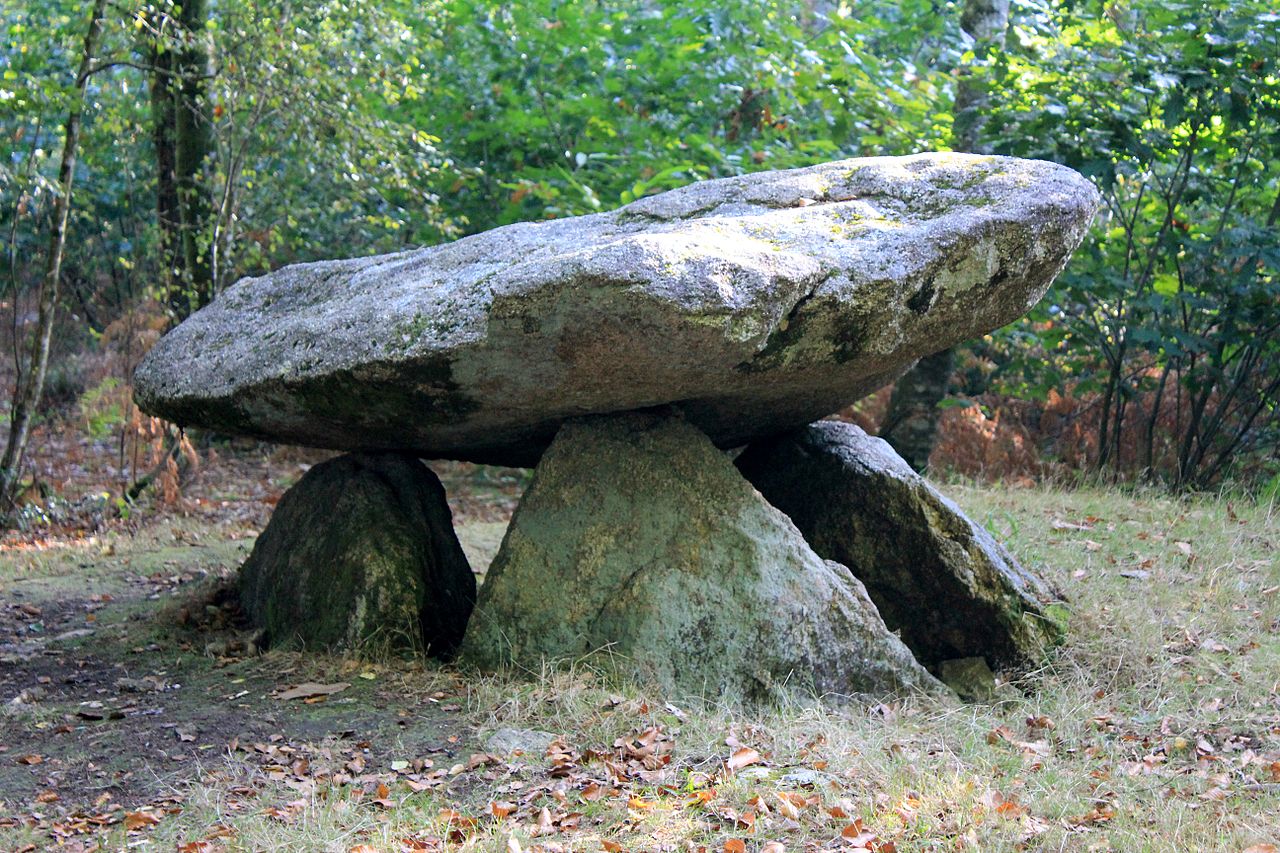
The cover slabs are incomplete, and only one remains in position, leaning towards the north-east.
DescriptionSources for this section
- Wikipedia (French): Allée couverte du PrieuréCC BY-SA 4.0
Sources for this section
- Wikipedia (French): Allée couverte du PrieuréCC BY-SA 4.0
The gallery is about 11 m long. It is oriented to the north-west and opens to the south. The entrance measures 0.60 m. The chamber averages 1.60 m in width and is separated from the antechamber by a transverse slab. Practically all the orthostats are still in place. The cover slabs are incomplete, and only one remains in position, leaning towards the north-east. The height of the chamber varies from 0.40 m at its south-east end to 1.10 m at its north-west end. All the slabs are of foliated granite.
ArchaeologySources for this section
- Wikipedia (French): Allée couverte du PrieuréCC BY-SA 4.0
Sources for this section
- Wikipedia (French): Allée couverte du PrieuréCC BY-SA 4.0
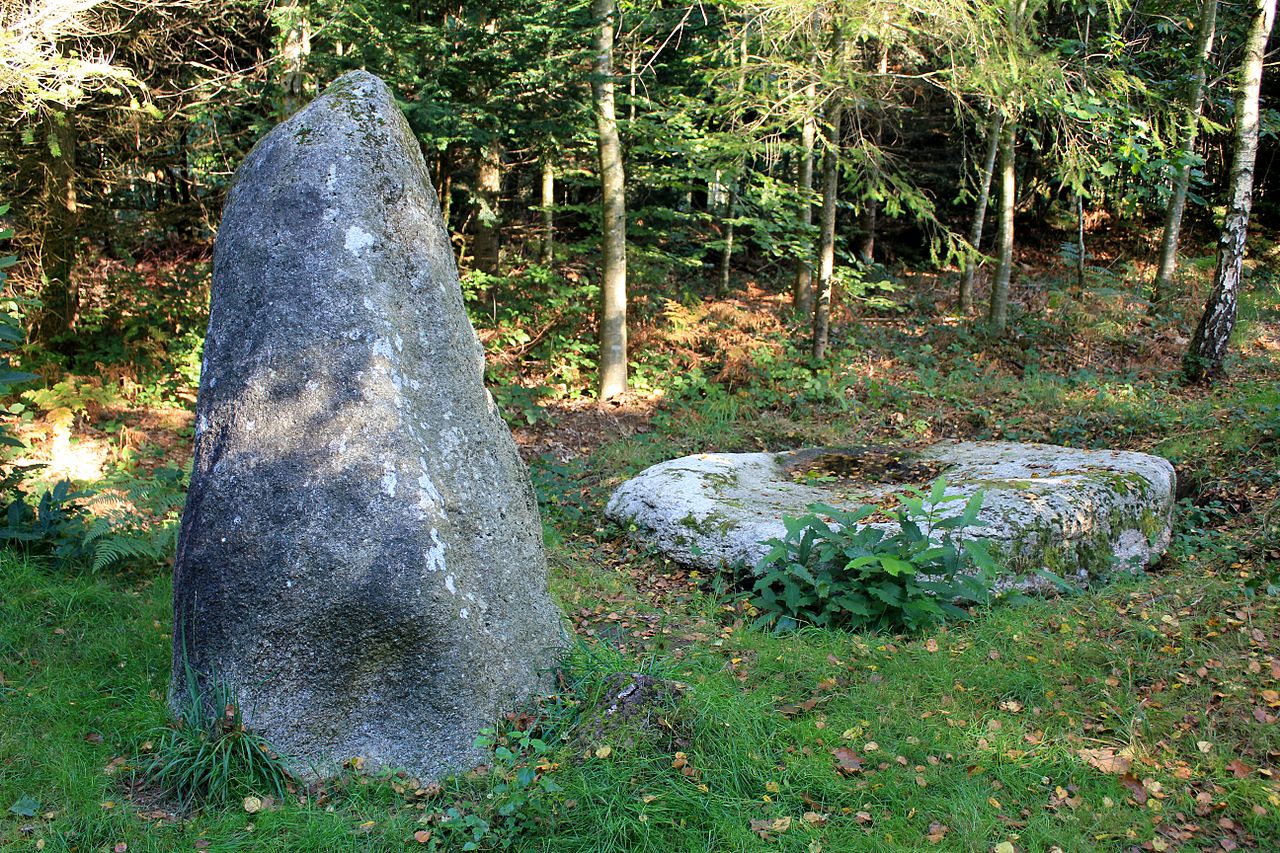
Remains of an outer structure, possibly a tumulus, are still visible. Two imposing slabs a few metres to the north may have formed part of the monument.
Research historySources for this section
- Wikipedia (French): Allée couverte du PrieuréCC BY-SA 4.0
Sources for this section
- Wikipedia (French): Allée couverte du PrieuréCC BY-SA 4.0
The monument was discovered in 1969 during a survey organised by the tourist office (syndicat d'initiative) of the commune.
ContextSources for this section
- Wikipedia (French): Allée couverte du PrieuréCC BY-SA 4.0
Sources for this section
- Wikipedia (French): Allée couverte du PrieuréCC BY-SA 4.0
A gallery grave is a megalithic tomb built mainly in the Neolithic in which the main gallery is entered directly. According to the archaeologist T. Douglas Price, the gallery grave was a form of community burial site, and those placed in it were most likely members of the same family or hamlet.
Tradition and region
About this kind of monument
Gallery graves (allées couvertes)
A gallery grave is a megalithic tomb built mainly in the Neolithic in which the main gallery is entered directly, with no antechamber or passage in front. The French term is allée couverte, "covered alley". There are at least four major types: complex, transepted, segmented and wedge-shaped, and they may be covered with an earthen mound or a cairn.
According to the archaeologist T. Douglas Price, the gallery grave was a form of community burial site. Those placed in it were most likely members of the same family or hamlet, and the burial probably served to reinforce community. Gallery graves are found at sites in the Loire valley of France, in south-west Great Britain and in Ireland, and it is thought that the builders had cultural links with one another.
In Germany the Wartberg culture of northern Hesse, southern Lower Saxony and western Thuringia, which lasted from about 3600 to 2800 BCE, built stone gallery graves. In Britain and Ireland the same idea appears in the Irish wedge tombs and the Severn-Cotswold tombs of Wales and south-west England.
Along with the dolmen and passage grave, the gallery grave is the most common megalithic tomb in western Europe. Most were built in the Neolithic, but some date to the Middle and Late Bronze Age. Dating is difficult, since a tomb built in the Late Neolithic or Early Bronze Age may have been reopened and used for burials until the Late Bronze Age.
When visiting, look for the long rectangular chamber and its capstones.
Paraphrased from Wikipedia: Gallery grave, Wikipedia: Allée couverte, Wikipedia: Wartberg culture · CC BY-SA 4.0
Photographs
5 photographs, each with its author and licence
More photographs
Lore
Evidence & Lore
What the sources actually support — and, kept apart, what has been claimed.
What the evidence supports
Dates
Est. 4500–3300 BCEHow this date was established: Type comparisonTypical range for gallery graves in France; this site has not been dated itself. The gallery graves (allees couvertes) of north-west France belong to the tradition of the Carnac stones which date from 4500-3300 BC.Source for this date
Where it stands
France
The pin marks the monument itself — its exact point.
- Coordinates
- 47°50′54″ N, 3°02′28″ WFor a GPS or map app: 47.84824, -3.04106
Access is as our sources describe it; we have not visited the site to check.
Nearby
The closest sites in the Atlas, by straight line.





Sources
Every record behind this page, with the link it came from.
2 sources behind this page
- 01Wikidata Q22927263wikidata.org
- 02Source for this dateen.wikipedia.org
Image files
- Allée couverte du Prieuré 8831.JPGXIIIfromTOKYOCC BY-SA 3.0
- Allée couverte du Prieuré 8816.JPGXIIIfromTOKYOCC BY-SA 3.0
- Allée couverte du Prieuré 8820.JPGXIIIfromTOKYOCC BY-SA 3.0
- Allée couverte du Prieuré 8829.JPGXIIIfromTOKYOCC BY-SA 3.0
- Allée couverte du Prieuré 8827.JPGXIIIfromTOKYOCC BY-SA 3.0
Report a correctionWrong date, name, photograph or source? Tell us and it will be put right.
Around this place
The ten nearest sites, by compass
Credit
Text, licence and sources
Adapted from the Wikipedia article "Allée couverte du Prieuré" (French), licensed CC BY-SA 4.0; authors are listed in the page history. Reused under CC BY-SA 4.0. Read on Wikipedia · Edit history and authors