Dolmen de la Casa Nova
DatedEst. 4000–3000 BCE
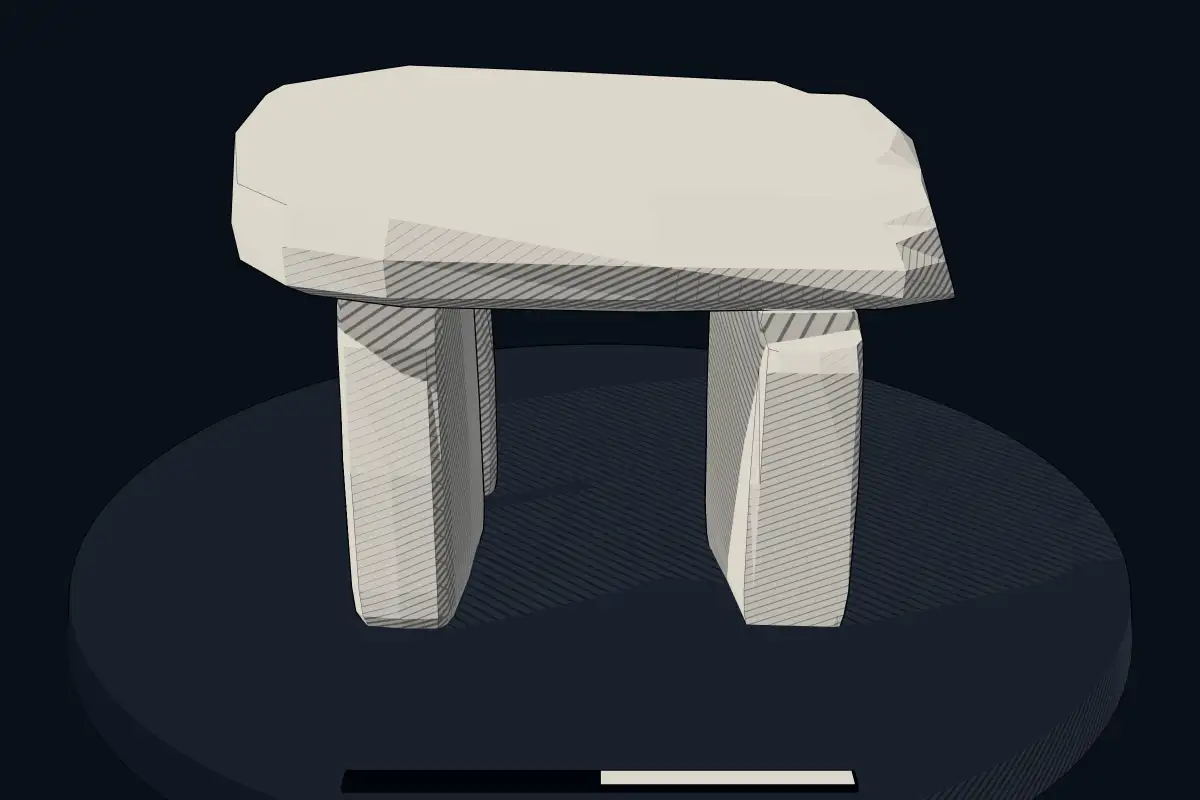
No licensed photograph yetWe have no photograph we may publish for this site, so the interpretive 3D view leads instead.
Overview
About this site
What the sources say
El Dolmen de la Casa Nova o Verdeguer és un megàlit del neolític del terme municipal de Castellcir, (Moianès), inclòs a l'Inventari del Patrimoni Arqueològic i Paleontològic de Catalunya.
Està situat a migdia de la Casa Nova del Verdeguer, a llevant de la Casa del Guarda i al nord-est de la masia del Verdeguer.
És un megàlit del tipus de cambra simple, de mida força gran. Aquests tipus de sepulcres pertanyen a l'etapa entre l'Eneolític i el bronze inicial, entre el 2000 i el 1500 aC.
Prop del dolmen es trobà també un sepulcre de fossa d'1,30 per 0,70 metres, format per tres lloses de pedra sorrenca del país i sense llosa superior de cobertura.
Està orientat d'est a oest. Les restes antropològiques associades estaven compostes per nombrosos ossos mal conservats i noranta dents, onze d'elles de nen. Anaven acompanyades de vuitanta-nou fragments informes de terrissa llisa de pasta vermellosa i negrosa amb desgreixant molt groller, un fragment de vora i una nansa de mugró d'un vas de petites dimensions, vint-i-dues peces de collaret (os, pecten i una de bronze) i un fragment de botó amb perforació en V.
Per la tipologia del monument i pels materials recuperats durant l'excavació se li atribuí una cronologia dins del calcolític.
Fou descobert i excavat per L.Sala, J.Surroca i R.Batista l'any 1960 i durant la visita realitzada el mes de desembre del 2016 amb motiu de la revisió de la Carta Arqueològica es va comprovar que el seu estat és el mateix que el de les revisions anteriors (1992).
Article in CatalanRead on Wikipedia3 min readCC BY-SA 4.0
Where it sits in time
The site's dated range, placed against world reference points.
The scale is logarithmic: each step to the left is about ten times older than the last.
The full article
Dolmen de la Casa Nova: the whole story
In briefSources for this section
- Wikipedia (Catalan): Dolmen de la Casa NovaCC BY-SA 4.0
Sources for this section
- Wikipedia (Catalan): Dolmen de la Casa NovaCC BY-SA 4.0
The Dolmen de la Casa Nova, also called Verdeguer, is a Neolithic megalithic tomb in the municipal area of Castellcir, Moianès, Spain. It is included in the Inventari del Patrimoni Arqueològic i Paleontològic de Catalunya and stands south of Casa Nova del Verdeguer, east of Casa del Guarda, and north-east of the masia del Verdeguer.
It is a fairly large megalith of the simple chamber type, oriented from east to west. Near the dolmen was found a pit grave measuring 1,30 by 0,70 metres, formed from three slabs of local sandstone and without an upper covering slab.
The associated human remains were poorly preserved and included numerous bones and ninety teeth, eleven of them from a child. The grave also held eighty-nine plain pottery fragments with red and black paste and a very coarse degreasing agent, one rim fragment and one handle from a small vessel, twenty-two necklace pieces made of bone, pecten and one bronze piece, and a button fragment with a V-shaped perforation.
The monument's type and the materials recovered during excavation led to its being dated to the Chalcolithic, within a catalogue estimate of 4000 BCE to 3000 BCE. It was discovered and excavated by L.Sala, J.Surroca and R.Batista in 1960. A visit in December 2016, made during the review of the Carta Arqueològica, confirmed that its condition was the same as at the earlier review in 1992.
No English Wikipedia article exists for it; the full text below is the Catalan article "Dolmen de la Casa Nova", shown in the original language.
Summary in EnglishSources for this section
- Wikipedia (Catalan): Dolmen de la Casa NovaCC BY-SA 4.0
Sources for this section
- Wikipedia (Catalan): Dolmen de la Casa NovaCC BY-SA 4.0
Dolmen de la Casa Nova is a dolmen in Castellcir, Spain. A typological estimate: 4000 BCE to 3000 BCE. No English Wikipedia article exists for it; the full text below is the Catalan article "Dolmen de la Casa Nova", shown in the original language.
Enllaços externsSources for this section
- Wikipedia (Catalan): Dolmen de la Casa NovaCC BY-SA 4.0
Sources for this section
- Wikipedia (Catalan): Dolmen de la Casa NovaCC BY-SA 4.0
El Dolmen de la Casa Nova en el seu entorn, a l'Institut Cartogràfic de Catalunya
How this page was madeSources for this section
- Wikipedia (Catalan): Dolmen de la Casa NovaCC BY-SA 4.0
Sources for this section
- Wikipedia (Catalan): Dolmen de la Casa NovaCC BY-SA 4.0
The summary at the top of this page was written by MiniMax-M3 (2026-11-08) from the cited Wikipedia article “Dolmen de la Casa Nova”, translated from Catalan. The numbers in it were checked automatically against the source text. The rest of the page is the article itself, the structured records and computed distances.
Tradition and region
About this kind of monument
Dolmens of Andalusia, Extremadura and Galicia
Spain has a great many megalithic tombs, and the Atlas's Spanish dolmens run from Andalusia in the south to Galicia in the north-west. The finest are at Antequera in Andalusia, where the Dolmen of Menga, dated to about 3750 to 3650 BCE, is among the largest ancient megalithic structures in Europe. It is 27.5 metres long, 6 metres wide and 3.5 metres high, built with thirty-two megaliths, the largest weighing about 180 tonnes. After the chamber was finished it was covered with soil and built up into the hill seen today; when it was opened in the nineteenth century archaeologists found the skeletons of several hundred people. The Dolmen of Viera stands 70 metres away, and the tholos of El Romeral lies about 4 kilometres off; the three were inscribed as the Antequera Dolmens Site, a UNESCO World Heritage Site, in 2016.
In the south-west, the Dolmen de Soto at Trigueros in Huelva province is a Neolithic tomb estimated to date between 3000 and 2500 BCE, one of about 200 Neolithic burial sites in the province. It was found in 1922 when its owner, Armando de Soto Morillas, wanted to build a house; the German archaeologist Hugo Obermaier found eight bodies in a fetal position with artefacts, and its engraved and painted uprights have been studied more recently.
In Galicia and Portugal a dolmen is an anta, and in Catalan-speaking areas dolmens have folk names such as cova (cave), caixa (crate or coffin), taula (table) and arca (chest). These names are tradition: they record what people made of the monuments, not what they were built for.
When visiting Menga, look at the great capstones from inside the corridor, and at the way the mound was built up over the chamber.
Paraphrased from Wikipedia: Dolmen of Menga, Wikipedia: Dolmen of Viera, Wikipedia: Antequera Dolmens Site, Wikipedia: Dolmen de Soto, Wikipedia: Dolmen · CC BY-SA 4.0
From the article
Dated moments in the story
- 1960
Fou descobert i excavat per L.Sala, J.Surroca i R.Batista l'any 1960 i durant la visita realitzada el mes de desembre del 2016 amb motiu de la revisió de la Carta Arqueològica es va comprovar que el seu estat és el mateix que el de les revisions anteriors (1992).
Source - 2000
Aquests tipus de sepulcres pertanyen a l'etapa entre l'Eneolític i el bronze inicial, entre el 2000 i el 1500 aC.
Source
See it in 3D
An interpretive reconstruction of the monument, standing on the real ground at its exact point, under the sun for that place and season. Drag to look around it.
The reconstruction is ours, not a survey: it shows what a monument of this type looks like, at the size the record gives for this one.
Lore
Evidence & Lore
What the sources actually support — and, kept apart, what has been claimed.
What the evidence supports
Dates
Est. 4000–3000 BCEHow this date was established: Type comparisonTypical range for dolmens in Spain; this site has not been dated itself. Most dolmens date from the Late Neolithic period (4000-3000 BCE); the Dolmen of Menga in Andalusia dates to about 3750-3650 BCE.Source for this date
Where it stands
Spain
The pin marks the monument itself — its exact point.
- Coordinates
- 41°47′02″ N, 2°08′33″ EFor a GPS or map app: 41.78400, 2.14238
Access is as our sources describe it; we have not visited the site to check.
Nearby
The closest sites in the Atlas, by straight line.
- DolmenDolmen de les Humbertes4000–3000 BCE
- DolmenDolmen del Cospinar4000–3000 BCE
- DolmenDolmen del Mas Clamí4000–3000 BCE
 Dolmen del Gavatx4000–3000 BCE
- DolmenDolmen de Santa Magdalena4000–3000 BCE
 Dolmen de Puig Rodó4000–3000 BCE
- DolmenDolmen del Trompo4000–3000 BCE
- DolmenDolmen de la Clusella4000–3000 BCE


Sources
Every record behind this page, with the link it came from.
2 sources behind this page
- 01Wikidata Q17600311wikidata.org
- 02Source for this dateen.wikipedia.org
Report a correctionWrong date, name, photograph or source? Tell us and it will be put right.
Around this place
The ten nearest sites, by compass
Credit
Text, licence and sources
Text from the Wikipedia article "Dolmen de la Casa Nova" (Catalan), licensed CC BY-SA 4.0; authors are listed in the page history. Reused under CC BY-SA 4.0. Read on Wikipedia · Edit history and authors