
MegalithFringe siteThe Bronze Age
Osireion
Also known asTemple of Osiris, Abydos
Datedc. 1300 BCE–1300 CE*
Photo Olaf Tausch · CC BY 3.0Source file on Wikimedia Commons
Overview
About this site
Overview
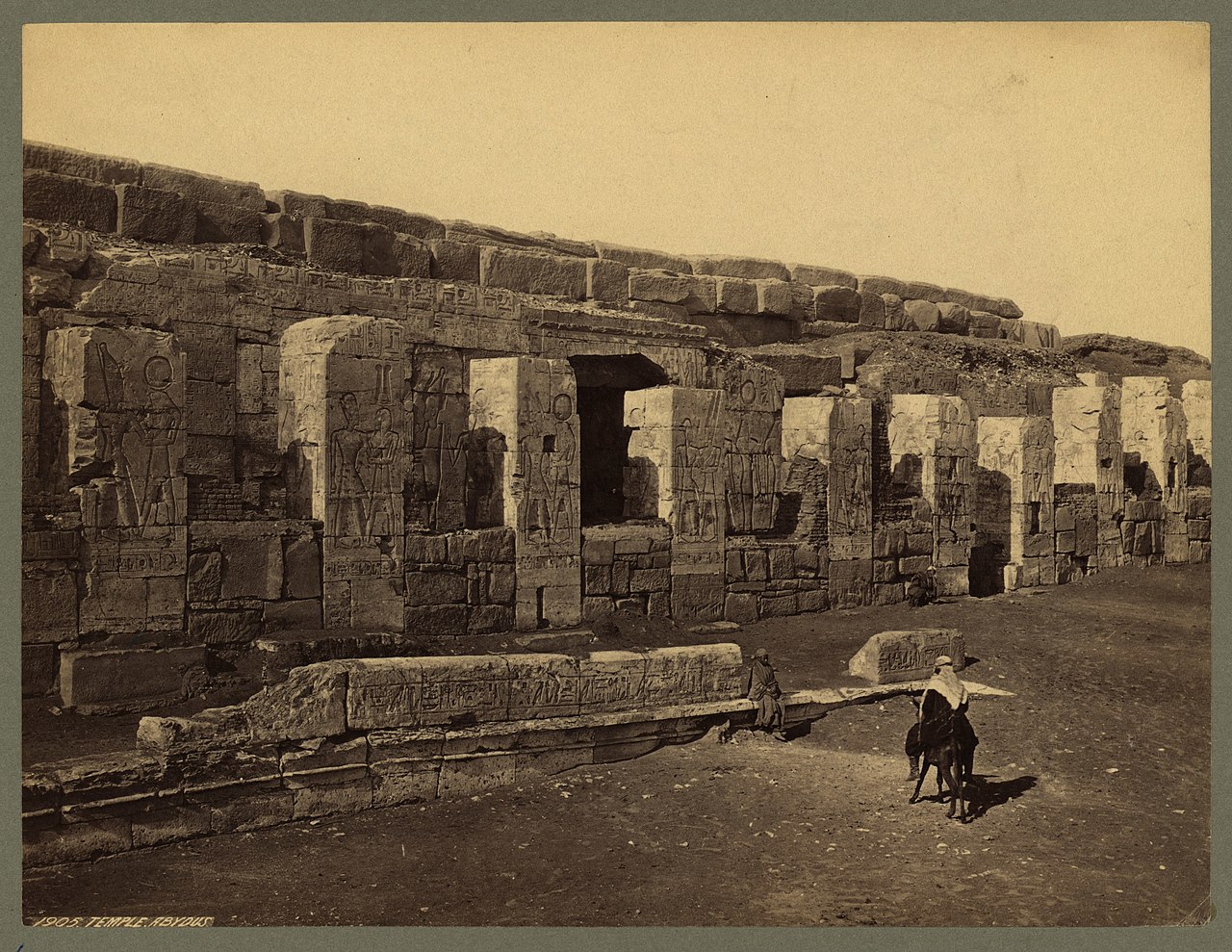
The Osireion (or Osirion) is believed to be the cenotaph of Seti I, located to the rear of the Temple of Seti I at Abydos, Egypt. The temple was built in the 13th century BC, and many researchers believe the Osireion dates from the same period; Seti I ruled from c. 1294 BCE to c. 1279 BCE.
Read on Wikipedia3 min readCC BY-SA 4.0
Age sources
Sources disagree on the age of this site
Sources do not agree on how old this site is. Each claim is listed with where it comes from; the mainstream reading is marked.
Range across all claimsc. 1300 BCE–1300 CE*
MeasuredWhat this badge means
A physical measurement of this site: a radiocarbon date, a tree-ring count, a luminescence date, or a record that can itself be dated.
- 1294–1279 BCEHistorical recordThe date range follows the stated reign of Seti I, during which the structure was built.Source: en.wikipedia.org
- 1300–1201 BCEWikipedia: OsireionSource: en.wikipedia.org
- 1201–1300 CEWikipedia: Osireion (infobox)Source: en.wikipedia.org
Where it sits in time
The site's dated range, placed against world reference points.
The scale is logarithmic: each step to the left is about ten times older than the last.
Article
Osireion
The Osireion is part of the Temple of Seti I's complex and lies centrally behind its main part along an east–west axis.
DescriptionSources for this section
- Wikipedia (English): OsireionCC BY-SA 4.0
Sources for this section
- Wikipedia (English): OsireionCC BY-SA 4.0
The Osireion is part of the Temple of Seti I's complex and lies centrally behind its main part along an east–west axis. It may have been built to resemble the tombs in the Valley of the Kings. Most of its structure would have been subterranean, built at a considerably lower level than the foundations of the Temple of Seti I, and most of the roof has been lost. An entrance tunnel, 69 metres (226 ft) long and stone lined, runs along a north–south axis behind the central hall.
The central hall is constructed with very large stone blocks, with a limestone interior and sandstone facing. The roof would have been formed of large granite beams. The hall contains a stone-paved 'island' in the centre surrounded by a channel of water, the depth of which is yet to be determined; the water is at least 10.4 metres (34 ft) deep and connects to an underground water source. There are 17 small chambers in the hall's walls, and behind the wall opposite the entrance there is a 'sarcophagus chamber'.
Research historySources for this section
- Wikipedia (English): OsireionCC BY-SA 4.0
Sources for this section
- Wikipedia (English): OsireionCC BY-SA 4.0
Strabo visited the Osireion in the first century BCE and described, at Abydus, a royal building of solid stone and a fountain lying at a great depth, reached down vaulted galleries made of monoliths of surprising size and workmanship. The subterranean water basin was consequently named Strabo's Well by modern excavators. Strabo suggested that the structure might have been built by Ismandes, or Mandes, the purported builder of the Labyrinth at Hawara, and his uncertainty about its origins suggests that these were already unknown by the time of his visit.
The Osireion was rediscovered by the archaeologists Flinders Petrie and Margaret Murray, who were excavating the site in 1902–1903.
DatingSources for this section
- Wikipedia (English): OsireionCC BY-SA 4.0
Sources for this section
- Wikipedia (English): OsireionCC BY-SA 4.0
Because of the depth of the building, its atypical architectural style and its unclear role in religious practice, it has been suggested that the Osirion may be a much older structure incorporated into the Temple of Seti I. The suggestion is generally rejected by archaeologists. Excavations of the Egypt Exploration Society (EES) uncovered an ancient mark reading 'Menmaatre [Seti I] is Beneficial to Osiris', believed to be the ancient name given to the subterranean structure. The EES concluded that it was built during the reign of Seti I, as detailed in its report published in 1933. In his 1998 dissertation on Seti I, P.J. Brand (2000) emphasised that the numerous cartouches of Seti I agreed with the EES, and that it can be dated confidently to Seti's reign.
InterpretationSources for this section
- Wikipedia (English): OsireionCC BY-SA 4.0
Sources for this section
- Wikipedia (English): OsireionCC BY-SA 4.0
Since the water is connected to an underground water source, the structure could have been used as a well. Graffiti by Egyptian priests of Dynasties XXI–XXII, found in the long entrance passage, hint at its function: 'The hidden / secret place of the Underworld / Duat of Menmaatre [Seti I]' and, more specifically, the 'Birth House of Isis'.
Tradition and region
About this kind of monument
Pharaonic stone monuments of Egypt
Egypt's stone monuments are the best dated and the most famous in the Atlas. The pyramid took shape from the mastaba, a flat-roofed rectangular tomb with sloping sides built of mudbrick or limestone, which marked the burial sites of eminent Egyptians in the Early Dynastic Period and Old Kingdom. The Great Pyramid of Giza, the tomb of the Fourth Dynasty pharaoh Khufu ("Cheops"), was built about 2600 BCE over a period of about 26 years. It was originally 146.6 metres high and remained the world's tallest human-made structure for more than 3,700 years. Most of the smooth white limestone casing has been removed over time, which has lowered the pyramid's height to the present 138.5 metres.
Temples were just as large. The Karnak Temple Complex near Luxor is a vast mix of temples, pylons, chapels and other buildings. Construction began in the reign of Senusret I (1971 to 1926 BCE) in the Middle Kingdom and continued into the Ptolemaic Kingdom (305 to 30 BCE), though most of the surviving buildings date from the New Kingdom. An obelisk, which the Egyptians called tekhenu, is a tall, four-sided, narrow tapering monument, usually a single block of stone, with a pyramidal top.
Egyptian monuments are dated by the reigns of the kings who built them, and many carry their names. This is a strong contrast with the prehistoric megaliths of Europe, which can be dated only by radiocarbon or by comparison.
The Atlas files these monuments among the megaliths only because they are great works in stone.
When visiting, look at the scale of the blocks and at the inscriptions and reliefs that give the names of the kings.
Paraphrased from Wikipedia: Pyramid, Wikipedia: Great Pyramid of Giza, Wikipedia: Temple of Karnak, Wikipedia: Obelisk, Wikipedia: Mastaba · CC BY-SA 4.0
From the article
Dated moments in the story
- 1294 BCE
Seti I ruled from c. 1294 BCE to c. 1279 BCE.
Source - 1933
The EES came to the conclusion that it was built during the reign of Seti I, as detailed in its report published in 1933. In his 1998 dissertation on Seti I, P.J.
Source - 2000
Brand (2000), emphasised the numerous cartouches of Seti I agreed with the EES, it "... can be dated confidently to Seti's reign". Since the water is connected to an underground water source, it could have been used as a well.
Source
Photographs
8 photographs, each with its author and licence
More photographs
Lore
Evidence & Lore
What the sources actually support — and, kept apart, what has been claimed.
What the evidence supports
Dates
1294–1279 BCEHow this date was established: Historical sourcesThe date range follows the stated reign of Seti I, during which the structure was built.Source for this date
Measured facts
- Mainstream position
- Archaeologists generally reject the older-structure suggestion and date the Osireion to Seti I’s reign.Source: Mainstream position
- Location
- Behind the Temple of Seti I at Abydos, EgyptSource: Location
- Entrance tunnel
- 69 metres (226 ft) long and stone linedSource: Entrance tunnel
- Central hall
- Large stone blocks with limestone interiors and sandstone facingSource: Central hall
- Water channel
- At least 10.4 metres (34 ft) deep and connected to an underground sourceSource: Water channel
- Small chambers
- 17 chambers in the hall’s wallsSource: Small chambers
- Historic visitor
- Strabo visited in the first century BCESource: Historic visitor
- Culture
- Ancient EgyptSource: Culture
Alternative claims
Alternative claims about this site, kept in their own block and labelled with where they stand.
The Osireion may be a much older structure that was incorporated into the Temple of Seti I.
Where it stands
Egypt
The pin marks the monument itself — its exact point.
- Coordinates
- 26°11′02″ N, 31°55′06″ EFor a GPS or map app: 26.18402, 31.91825
Access is as our sources describe it; we have not visited the site to check.
Nearby
The closest sites in the Atlas, by straight line.


Sources
Every record behind this page, with the link it came from.
2 sources behind this page
- 01Wikidata Q2033435wikidata.org
- 02Fringe claim sourceen.wikipedia.org
Image files
- Osireion 07.jpgOlaf TauschCC BY 3.0
- Osireion at Abydos.jpgNo machine-readable author provided. RsAzevedo assumed (based on copyright claims).CC BY-SA 3.0
- L'Égypte. Vues photographiques - btv1b10525736z (50 of 73).jpgBisson, Auguste Rosalie (1826-1900). Photographe Welling, Edouard. PhotographePublic domain
- Osireion 06.jpgOlaf TauschCC BY 3.0
- Osireion 03.JPGOlaf TauschCC BY 3.0
- Temple of Seti I at Abydos (LI).jpgInstitute for the Study of the Ancient WorldCC BY 2.0
- Osireion at Abydos (I).jpgisawnyuCC BY 2.0
- Osireion at Abydos (II).jpgisawnyuCC BY 2.0
Report a correctionWrong date, name, photograph or source? Tell us and it will be put right.
Lore, kept apart
Legends and claims
These are stories and claims reported by the sources. They are not evidence, and they never stand in for the dating above.
- Tested: not supported
The Osireion may be a much older structure that was incorporated into the Temple of Seti I.
Source
Around this place
The ten nearest sites, by compass
Credit
Text, licence and sources
Adapted from the Wikipedia article "Osireion" (English), licensed CC BY-SA 4.0; authors are listed in the page history. Reused under CC BY-SA 4.0. Read on Wikipedia · Edit history and authors
- Wikipedia (English): OsireionCC BY-SA 4.0
- Wikidata Q2033435CC0