
Overview
About this site
What the sources say
Kamenný pastýř (též Zkamenělý pastýř, Kamenný muž, Zkamenělec či Zkamenělý slouha) je menhir stojící osamoceně v poli asi jeden kilometr severozápadně od obce Klobuky na Slánsku v okrese Kladno. Jedná se o nejvyšší menhir v Česku, tři a půl metru vysoký neopracovaný sloupovitý balvan z tmavého železitého křídového pískovce. Jde o jeden z mála „kamenů“ v Česku, který lze považovat za skutečný pravěký menhir.
K menhiru vede trasa naučné stezky z Kokovic do Klobuk.
Article in CzechRead on Wikipedia5 min readCC BY-SA 4.0
Where it sits in time
The site's dated range, placed against world reference points.
The scale is logarithmic: each step to the left is about ten times older than the last.
The full article
Kamenný pastýř: the whole story
In briefSources for this section
- Wikipedia (Czech): Kamenný pastýřCC BY-SA 4.0
Sources for this section
- Wikipedia (Czech): Kamenný pastýřCC BY-SA 4.0
Kamenný pastýř is an isolated menhir standing in a field about one kilometre northwest of Klobuky in the Kladno District of the Czech Republic. It is the tallest menhir in the Czech Republic. An educational trail leads to it from Kokovice to Klobuky.
The unworked pillar is made of dark, iron-bearing chalk sandstone and is three and a half metres high. Its height is about 340 cm, with 70 cm embedded in the ground; it is roughly one metre across at its widest point and weighs about five tonnes. It is considered one of the few stones in the Czech Republic that can be regarded as a genuine prehistoric menhir.
Its prehistoric age is likely but unproven. A typological estimate places it between 2800 BCE and 1800 BCE. In 1898, J. L. Píč had digging conducted beside it and showed that it had been deliberately erected in a sandy layer above bedrock. The oldest known record dates from 1841, and a chronicle from 1852 recounts that a storm overturned the stone before it was raised again.
Kamenný pastýř is also called Zkamenělý pastýř, Kamenný muž, Zkamenělec and Zkamenělý slouha. Local legends say that it once stood with a flock of smaller stones, or that a shepherd petrified after losing his sheep. Another tells that the stone takes a step toward the church whenever its bell rings, but returns when the bell at Telce rings instead.
No English Wikipedia article exists for it; the full text below is the Czech article "Kamenný pastýř", shown in the original language.
Summary in EnglishSources for this section
- Wikipedia (Czech): Kamenný pastýřCC BY-SA 4.0
Sources for this section
- Wikipedia (Czech): Kamenný pastýřCC BY-SA 4.0
Kamenný pastýř is a menhir (standing stone) in Czech Republic. A typological estimate: 2800 BCE to 1800 BCE. No English Wikipedia article exists for it; the full text below is the Czech article "Kamenný pastýř", shown in the original language.
GeologieSources for this section
- Wikipedia (Czech): Kamenný pastýřCC BY-SA 4.0
Sources for this section
- Wikipedia (Czech): Kamenný pastýřCC BY-SA 4.0
Menhir tvoří rezavě hnědý, středně zrnný pískovec se železitým tmelem. Jeho výška je asi 340 cm, 70 cm je zapuštěno v zemi. V nejširším místě je široký zhruba metr, hmotnost je asi pět tun. Český geolog J. N. Woldřich již v 19. století tvrdil, že vztyčený kámen je zbytkem velmi hutného a zvětrávání více vzdorujícího jádra permských pískovců (jako např. známé skalní útvary Pokličky nedaleko Kokořína). Oponoval mu J. L. Píč, který roku 1898 nechal u kamene kopat a ukázalo se, že kámen byl vztyčen uměle – byl osazen v písčité vrstvě nad podložní skálou. Co se datace vztyčení týče, převládá názor, že se tak stalo v období bójském.
HistorieSources for this section
- Wikipedia (Czech): Kamenný pastýřCC BY-SA 4.0
Sources for this section
- Wikipedia (Czech): Kamenný pastýřCC BY-SA 4.0
Je pravděpodobně pravěkého stáří, ovšem dokázáno to zatím nebylo. Nejstarší doklady o Zkamenělém pastýři se datují do roku 1841, kdy byl zanesen do mapy. Z roku 1852 je zachován zápis z kroniky v Klobukách: „… byla veliká bouře v kraji, při které zahrála si vichřice s kamenným mužem hru nepěknou a nikterak neodpovídající jeho důstojnosti. Vyvrátila jej totiž a porazila. Klobučtí se proto velmi rmoutili. Sešla se obecní rada a smluvila to, aby pro zachování staré památky byl kamenný muž zase postaven. Řízení práce té svěřeno jest jednomu příslušníku počestného pořádku mlynářského. Snadná robota pak to nebyla. Měli s ním několikahodinovou lopotu, než mu zase hlavu vztyčili. Potom přišli hudebníci a družičky. Bylo z toho mnoho radosti, že kamenný muž zase stojí v polích na stráži…“
V roce 1861 amatérský archeolog Karel Frost podal zprávu o kamenu pražskému Archeologickému sboru. První o něm napsal do časopisu Beseda Vojtěch Krupka v roce 1864 a v roce 1877 napsal článek do časopisu Vesmír Antonín Frič. Místní usedlíci měli kámen v úctě. Když se v únoru roku 1852 překotil, znovu ho obřadně postavili.
Z roku 1901 se dochovalo svědectví účetního klobuckého cukrovaru, že 200–300 metrů severně od dnešního menhiru byly vyorány dva kameny z podobného materiálu a asi dvacet osm kroků od stojícího kamene směrem na Telce byl vyorán další větší kámen.
V roce 2007 bylo místo kolem pastýře upraveno (vydlážděno okolí a pěšinka k silnici). V bezprostřední blízkosti menhiru je možné se posadit na nízké dřevěné palisádové ohrazení. Podle některých názorů touto úpravou ztratilo místo „genia loci“ způsobeného romantickou představou polooděných pravěkých stavitelů sloužících u Pastýře dávné pohanské obřady.
PověstiSources for this section
- Wikipedia (Czech): Kamenný pastýřCC BY-SA 4.0
Sources for this section
- Wikipedia (Czech): Kamenný pastýřCC BY-SA 4.0
Podle místních obyvatel byl menhir obklopen šesti až dvanácti menšími kameny (snad kruhem menších megalitů), které však musely ustoupit orbě. Proto byl nazýván Pastýř se stádem (oveček). Jiná pověst praví, že se jedná o pastýře, kterému se jeho ovečky zatoulaly a on tak dlouho zoufalé stál, až zkameněl. Avšak nejznámější pověst praví: „… Pastýř při každém zvonění v kostelíku postoupí o jeden krok, který je veliký jako zrnko písku. Až přijde Zkamenělý pastýř ke kostelíku v Klobukách, nastane konec světa. Konce světa se však bát nemusíme, protože pokaždé, když zvoní na protější straně v Telcích, musí se kámen vrátit zpět.“
ZajímavostiSources for this section
- Wikipedia (Czech): Kamenný pastýřCC BY-SA 4.0
Sources for this section
- Wikipedia (Czech): Kamenný pastýřCC BY-SA 4.0
V roce 1994 zde bylo provedeno magnetometrické měření. První se uskutečnilo v předvečer slunovratu a druhé měření bylo provedeno při východu slunce. Přitom byl zjištěn posun magnetické anomálie v místě menhiru, jako by menhir skutečně postoupil o krok. V roce 1998 firma měření zopakovala, ale k posunu nedošlo. Podle geofyzika Romana Křivánka mohl být ranní posun anomálie způsoben řadou přirozených příčin, například různými podmínkami při měření nebo různými rušivými vlivy v okolí. Ohniště, která zde během slunovratu zakládají příznivci keltských tradic, jsou magnetická a ztěžují také interpretaci měření.
O kameni u Klobuk se vypráví také různé tajemné historky. O keltských svátcích zde novodobí Keltové pořádají obřady. Na Pastýře věší různé „posvátné“ předměty, zastrkují mince do puklin v kameni a pálí zde rituální ohně. Což netěší majitele pozemku i vědce. Někteří návštěvníci jezdí k menhiru proto, aby si nechali z těla odsát „negativní energii“ dotýkáním se menhiru. Kolem kamene se podle archeologů záhadné věci nedějí. Příznivci záhad však tvrdí opak.
Ve dnech 30. dubna a 13. srpna na keltské svátky Beltain a Lughnasadh je vidět slunce, jak vychází přímo nad Řípem.
How this page was madeSources for this section
- Wikipedia (Czech): Kamenný pastýřCC BY-SA 4.0
Sources for this section
- Wikipedia (Czech): Kamenný pastýřCC BY-SA 4.0
The summary at the top of this page was written by MiniMax-M3 (2026-11-08) from the cited Wikipedia article “Kamenný pastýř”, translated from Czech. The numbers in it were checked automatically against the source text. The rest of the page is the article itself, the structured records and computed distances.
Tradition and region
About this kind of monument
Central and southern European menhirs
Outside the Atlantic fringe, menhirs also occur across central and southern Europe. In the Czech Republic there are about 40 real menhirs and dozens of stones that could also be menhirs, and others have been erected recently. The largest real menhir is Kamenný pastýř, the "stony shepherd", near Klobuky, 3.3 metres high; the Czech menhirs are probably the last outcrop of a tradition that ran across northern Germany. Some of the Czech stones in the Atlas may be natural boulders.
Italy has its most famous menhirs in Sardinia, where at least 332 standing stones can be seen. They include elaborate "statue-menhirs" that show a human face at the top and gendered symbols on the flat front; over a hundred of this standardised type have been found, mostly around the village of Laconi. In the Sardinian language they are called perdas fittas or perdas lungas. In Switzerland, in the canton of Vaud, several menhirs form linear patterns at Clendy in Yverdon-les-Bains, and date back to the third millennium BCE.
A statue menhir is a carved standing stone of the later European Neolithic, in which a slab or pillar has a stylised human figure cut into it, sometimes with hints of clothing or weapons. They are most commonly found in southern and western France, Catalonia, Corsica, Sardinia, Italy and the Alps.
Menhirs are usually difficult to date, and those without excavation can only be given a broad range. A stone's present position is not always its original one.
When visiting, check whether a stone stands in its original position and look for signs of shaping.
Paraphrased from Wikipedia: Menhir, Wikipedia: List of menhirs, Wikipedia: Statue menhir · CC BY-SA 4.0
From the article
Dated moments in the story
- 1841
Nejstarší doklady o Zkamenělém pastýři se datují do roku 1841, kdy byl zanesen do mapy.
Source - 1852
Z roku 1852 je zachován zápis z kroniky v Klobukách: „… byla veliká bouře v kraji, při které zahrála si vichřice s kamenným mužem hru nepěknou a nikterak neodpovídající jeho důstojnosti.
Source - 1852
Když se v únoru roku 1852 překotil, znovu ho obřadně postavili.
Source - 1861
Bylo z toho mnoho radosti, že kamenný muž zase stojí v polích na stráži…“ V roce 1861 amatérský archeolog Karel Frost podal zprávu o kamenu pražskému Archeologickému sboru.
Source - 1864
První o něm napsal do časopisu Beseda Vojtěch Krupka v roce 1864 a v roce 1877 napsal článek do časopisu Vesmír Antonín Frič.
Source - 1898
Píč, který roku 1898 nechal u kamene kopat a ukázalo se, že kámen byl vztyčen uměle – byl osazen v písčité vrstvě nad podložní skálou.
Source - 1901
Z roku 1901 se dochovalo svědectví účetního klobuckého cukrovaru, že 200–300 metrů severně od dnešního menhiru byly vyorány dva kameny z podobného materiálu a asi dvacet osm kroků od stojícího kamene směrem na Telce byl vyorán další větší kámen.
Source - 1994
V roce 1994 zde bylo provedeno magnetometrické měření.
Source - 1998
V roce 1998 firma měření zopakovala, ale k posunu nedošlo.
Source - 2007
V roce 2007 bylo místo kolem pastýře upraveno (vydlážděno okolí a pěšinka k silnici).
Source
See it in 3D
An interpretive reconstruction of the monument, standing on the real ground at its exact point, under the sun for that place and season. Drag to look around it.
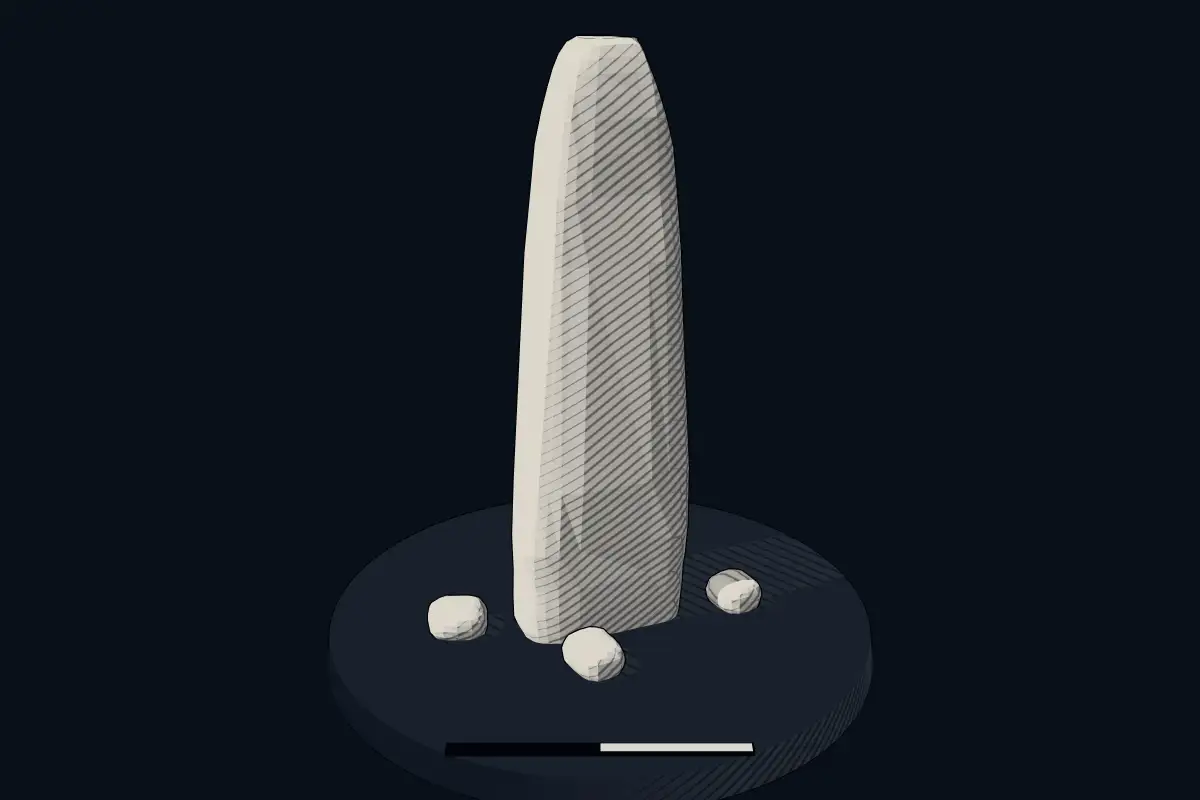
The reconstruction is ours, not a survey: it shows what a monument of this type looks like, at the size the record gives for this one.
Photographs
8 photographs, each with its author and licence
More photographs
Lore
Evidence & Lore
What the sources actually support — and, kept apart, what has been claimed.
What the evidence supports
Dates
Est. 2800–1800 BCEHow this date was established: Type comparisonTypical range for menhirs in Czech Republic; this site has not been dated itself. Standing stones of the European late Neolithic and early Bronze Age c. 2800-1800 BC; many Czech menhirs are however medieval stone markers so this is a weak estimate.Source for this date
Where it stands
Czech Republic
The pin marks the monument itself — its exact point.
- Coordinates
- 50°18′05″ N, 13°59′04″ EFor a GPS or map app: 50.30130, 13.98450
Access is as our sources describe it; we have not visited the site to check.
Nearby
The closest sites in the Atlas, by straight line.


Sources
Every record behind this page, with the link it came from.
2 sources behind this page
- 01Wikidata Q12027838wikidata.org
- 02Source for this dateen.wikipedia.org
Image files
- Klobucký menhir1.jpgzzbyCC BY 3.0
- Klobuky, Kamenný pastýř (březen 2013).jpgJuandevCC BY-SA 3.0
- Evening at Menhir Kamenný Muž, Klobuky - panoramio.jpgPetr KraumannCC BY 3.0
- Menhir Kamenný Muž, Klobuky - panoramio.jpgPetr KraumannCC BY 3.0
- Kamenný pastýř u Klobuk 2012-05-08.jpgJan MurinCC BY 2.0
- Klobuky CZ Zkamenely pastyr 093.jpgUser:Miaow MiaowPublic domain
- Klobuky CZ Zkamenely pastyr 097.jpgUser:Miaow MiaowPublic domain
- Menhir with two devil's shodows.jpgzzbyCC BY 3.0
Report a correctionWrong date, name, photograph or source? Tell us and it will be put right.
Lore, kept apart
Legends and claims
These are stories and claims reported by the sources. They are not evidence, and they never stand in for the dating above.
- Tradition
Kamenný pastýř is also called Zkamenělý pastýř, Kamenný muž, Zkamenělec and Zkamenělý slouha.
Kamenný pastýř is also called Zkamenělý pastýř, Kamenný muž, Zkamenělec and Zkamenělý slouha. Local legends say that it once stood with a flock of smaller stones, or that a shepherd petrified after losing his sheep. Another tells that the stone takes a step toward the church whenever its bell rings, but returns when the bell at Telce rings instead.
Source - Tradition
Podle místních obyvatel byl menhir obklopen šesti až dvanácti menšími kameny (snad kruhem menších megalitů), které však musely ustoupit orbě.
Podle místních obyvatel byl menhir obklopen šesti až dvanácti menšími kameny (snad kruhem menších megalitů), které však musely ustoupit orbě. Proto byl nazýván Pastýř se stádem (oveček). Jiná pověst praví, že se jedná o pastýře, kterému se jeho ovečky zatoulaly a on tak dlouho zoufalé stál, až zkameněl. Avšak nejznámější pověst praví: „… Pastýř při každém zvonění v kostelíku postoupí o jeden krok, který je veliký jako zrnko písku. Až přijde Zkamenělý pastýř ke kostelíku v Klobukách, nastane konec světa. Konce světa se však bát nemusíme, protože pokaždé, když zvoní na protější straně v Telcích, musí se kámen vrátit zpět.“
Source
Around this place
The ten nearest sites, by compass
Credit
Text, licence and sources
Text from the Wikipedia article "Kamenný pastýř" (Czech), licensed CC BY-SA 4.0; authors are listed in the page history. Reused under CC BY-SA 4.0. Read on Wikipedia · Edit history and authors
- Wikipedia (Czech): Kamenný pastýřCC BY-SA 4.0
- Wikidata Q12027838CC0