
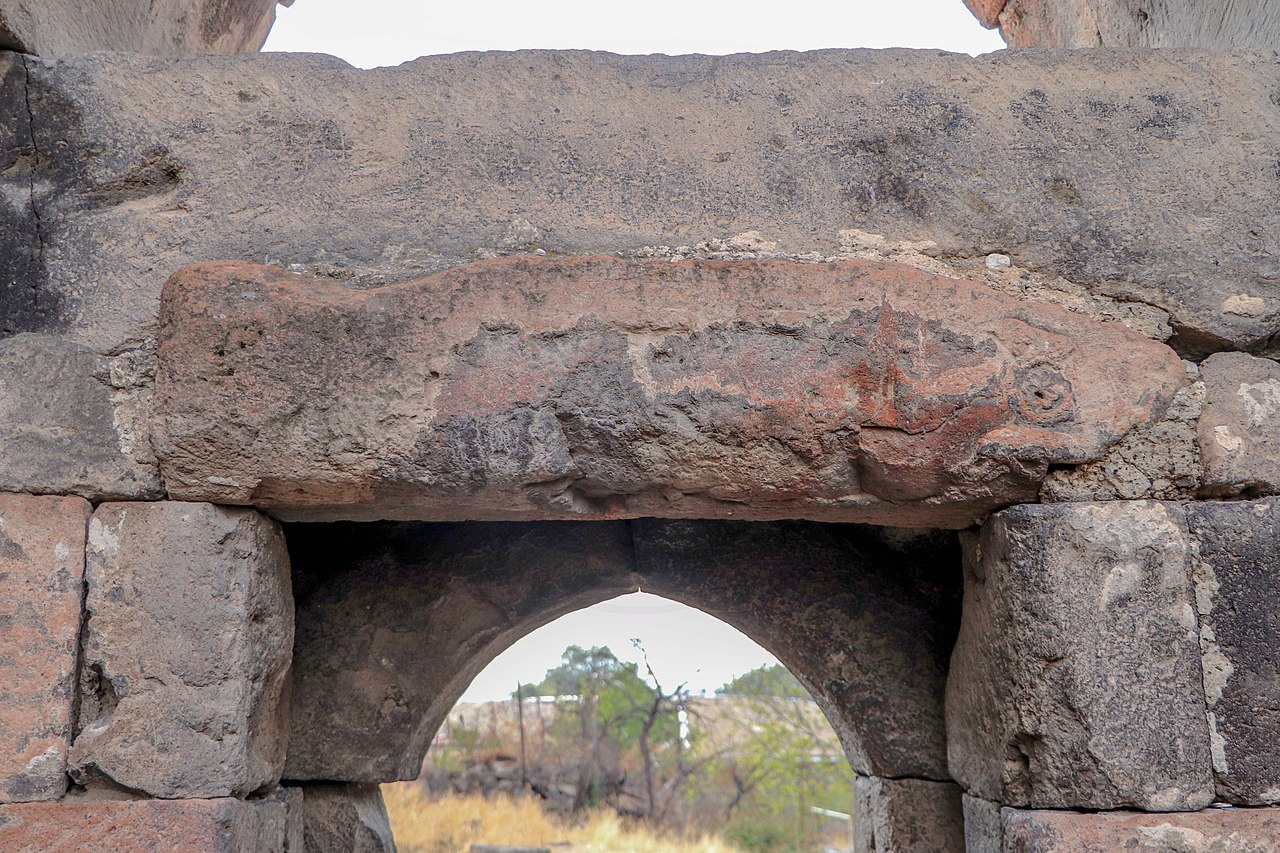
Կոթող Վահան Ամատունուն
Datedc. 500 CE
Photo Մելքոն Մինասյան · CC BY-SA 3.0Source file on Wikimedia Commons
Overview
About this site
Overview
Կոթող Վահան Ամատունուն is a stele in Oshakan, Armenia. It lies at 40.2586° N, 44.3167° E.
Catalogue recordSources and licences
Article
Կոթող Վահան Ամատունուն
ContextSources for this section
- en.wikipedia.orgCC BY-SA 4.0
- en.wikipedia.orgCC BY-SA 4.0
- en.wikipedia.orgCC BY-SA 4.0
Sources for this section
- en.wikipedia.orgCC BY-SA 4.0
- en.wikipedia.orgCC BY-SA 4.0
- en.wikipedia.orgCC BY-SA 4.0
A khachkar (խաչքար) is a carved memorial stele bearing a cross. The name combines the Armenian words for "cross" and "stone". Khachkars are characteristic of medieval Christian Armenian art, and since 2010 they, with their symbolism and craftsmanship, have been inscribed on the UNESCO list of Intangible Cultural Heritage. The most common feature is a cross surmounting a rosette or a solar disc. The rest of the face is typically filled with elaborate patterns of leaves, grapes, pomegranates and bands of interlace, and occasionally a khachkar is topped by a cornice that holds biblical or saintly figures. The regional background, “Armenian khachkars”, is given below.
DatingSources for this section
Sources for this section
An age of 500 CE is recorded for the site; the basis of this estimate is not stated.
Published age estimates for the site include 500 CE (wikidata inception). The mainstream range is 500 CE.
Setting
2 other recorded monuments lie within 10 km (0 within 1 km, 1 within 5 km), 1 of them of the same type. In Oshakan, Armenia, 1 of the 1 recorded monuments are of this type.
The nearest recorded monuments are Ardar Davit Kulesi (3.1 km south-west, megalith); Oşakan Savaşı Anıtı (7.7 km south, stele); Վիշապաքար (18.9 km south-east, menhir); Avan Tsiranavor Kilisesi Vişapı (22.1 km east, menhir).
ProtectionSources for this section
Sources for this section
Heritage status: cultural heritage monument in Armenia.
Tradition and region
About this kind of monument
Armenian khachkars
A khachkar (խաչքար) is a carved memorial stele bearing a cross. The name combines the Armenian words for "cross" and "stone". Khachkars are characteristic of medieval Christian Armenian art, and since 2010 they, with their symbolism and craftsmanship, have been inscribed on the UNESCO list of Intangible Cultural Heritage. The most common feature is a cross surmounting a rosette or a solar disc. The rest of the face is typically filled with elaborate patterns of leaves, grapes, pomegranates and bands of interlace, and occasionally a khachkar is topped by a cornice that holds biblical or saintly figures.
Most early khachkars were erected for the salvation of the soul of a living or dead person. Others commemorate a military victory or the building of a church, or were meant as protection from natural disasters. The most common place for early khachkars was a graveyard, though Armenian gravestones take many forms and only a minority are khachkars. The first true khachkars appeared in the ninth century, and the form developed in the following centuries.
The Noratus cemetery in Armenia has one of the largest concentrations, and at Geghard the monastery complex has khachkars carved into its rock. Many khachkars are dated by their inscriptions, and the carvers are sometimes named.
The Atlas's Armenian records are mostly of khachkars and have been classed as steles. They are medieval, not prehistoric. The vishapakar, the "dragon stones" of the Armenian highlands, are a much older tradition and are described in the article on menhirs.
When visiting, look at the carving of the cross, which differs from one khachkar to the next, and at any inscription.
Paraphrased from Wikipedia: Khachkar, Wikipedia: Noratus cemetery, Wikipedia: Geghard · CC BY-SA 4.0
Photographs
1 photograph, each with its author and licence
Where it stands
Armenia
The pin marks the monument itself — its exact point.
- Coordinates
- 40°15′31″ N, 44°19′00″ EFor a GPS or map app: 40.25861, 44.31667
Access is as our sources describe it; we have not visited the site to check.
Nearby
The closest sites in the Atlas, by straight line.




Sources
Every record behind this page, with the link it came from.
1 source behind this page
- 01Wikidata Q42869590wikidata.org
Image files
- Օշական կոթող` Վահան Ամատունուն22.4.JPGՄելքոն ՄինասյանCC BY-SA 3.0
Report a correctionWrong date, name, photograph or source? Tell us and it will be put right.
Around this place
The ten nearest sites, by compass
Credit
Text, licence and sources
Compiled from open records (Wikidata, CC0; OpenStreetMap, ODbL) and a regional background article based on Wikipedia (CC BY-SA 4.0).
- Wikidata Q42869590CC0
- en.wikipedia.orgCC BY-SA 4.0
- en.wikipedia.orgCC BY-SA 4.0
- en.wikipedia.orgCC BY-SA 4.0