Anta da Herdade de Tourais
Also known asAnta dos Tourais
DatedEst. 4000–3000 BCE
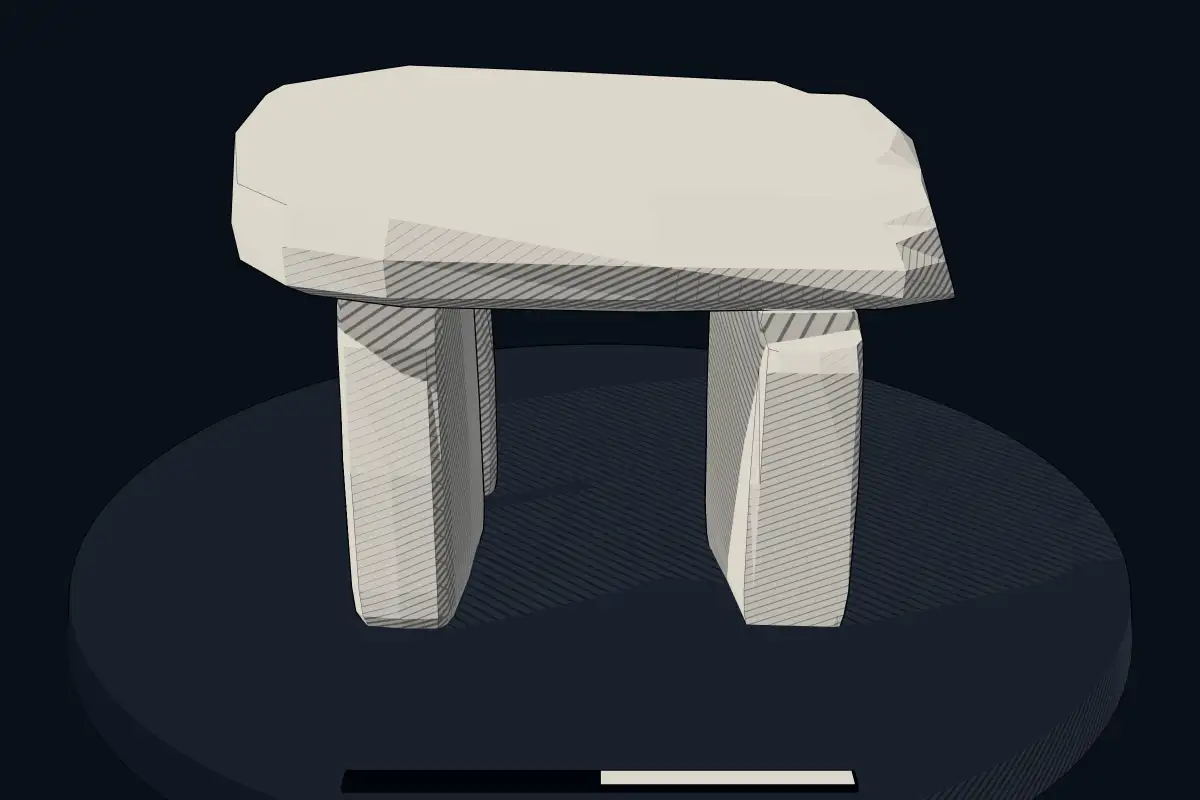
No licensed photograph yetWe have no photograph we may publish for this site, so the interpretive 3D view leads instead.
Overview
About this site
What the sources say
Anta da Herdade de Tourais is a dolmen recorded in Nossa Senhora da Vila, Nossa Senhora do Bispo e Silveiras, Portugal. It is also recorded as Anta dos Tourais. The catalogue places it at 38.6419° N, 8.1601° W and links it to Wikidata item Q66813740.
Built from structured records, not from an articleSources and licences
Where it sits in time
The site's dated range, placed against world reference points.
The scale is logarithmic: each step to the left is about ten times older than the last.
The full article
About Anta da Herdade de Tourais
This kind of monument hereSources for this section
- en.wikipedia.orgCC BY-SA 4.0
- en.wikipedia.orgCC BY-SA 4.0
- en.wikipedia.orgCC BY-SA 4.0
- en.wikipedia.orgCC BY-SA 4.0
Sources for this section
- en.wikipedia.orgCC BY-SA 4.0
- en.wikipedia.orgCC BY-SA 4.0
- en.wikipedia.orgCC BY-SA 4.0
- en.wikipedia.orgCC BY-SA 4.0
Around Évora, in the Alentejo, megalithic tombs are called antas, and some of the largest in Iberia stand here. The Great Dolmen of Zambujeiro, near Valverde in the municipality of Évora, is considered one of the biggest such structures in Iberia. Research has dated it to between 4000 and 3000 BCE, concurrent with the megalithic building of the Évora region, and it is linked to the Great Dolmen of Comenda da Igreja at Montemor-o-Novo. Henrique Leonor Pina excavated it in 1965, and although his methods caused some controversy, the work recovered slate tablets, necklaces, crosiers, copper objects, ceramics and carinated bowls. The Portuguese government declared it a national monument in 1971. The full article, “Portuguese antas of the Alentejo”, follows below under About this kind of monument.
DatingSources for this section
- en.wikipedia.orgCC BY-SA 4.0
Sources for this section
- en.wikipedia.orgCC BY-SA 4.0
The Atlas shows 4000 BCE to 3000 BCE for this site, but that is a regional estimate for this kind of monument, not a date for this particular dolmen. No excavation, radiocarbon sample or other measurement is recorded for it, so the real age could fall anywhere within the range, or outside it.
The range rests on this regional background (source: the Wikipedia article “Dolmen”): Most dolmens date from the Late Neolithic period (4000-3000 BCE); megalithic tombs at Algarve in Portugal date to c. 2500 BC.
Landscape and neighbours
The catalogue lists 0 other sites within 1 km, 1 within 5 km and 6 within 10 km; 5 of them are also classed as dolmen. It is one of 12 dolmen records among the 15 sites catalogued in Nossa Senhora da Vila, Nossa Senhora do Bispo e Silveiras, Portugal.
The nearest neighbours in the catalogue are Anta da Herdade do Zambujal (4.4 km east, dolmen); Anta da Herdade das Comendas (6.9 km south-west, dolmen); antas do Pinheiro do Campo (8.4 km south-east, dolmen); Menires da Pedra Longa (8.8 km north-east, menhir). The catalogue is assembled from open records and is not complete, so unrecorded monuments may lie closer.
Records and protectionSources for this section
Sources for this section
Wikidata lists the site with the heritage status National Monument of Portugal. The open records for it are Wikidata (Q66813740), where corrections and further identifiers can be added. Access varies from open common land to private fields; check local access rules, ask where needed, and take care not to damage the monument.
How this page was madeSources for this section
Sources for this section
This page was built automatically from Wikidata (CC0), the heritage register named above and the regional article “Portuguese antas of the Alentejo”, written for the Atlas from the Wikipedia articles it cites (CC BY-SA 4.0), plus distances and counts computed from the catalogue coordinates. It contains no AI-written text.
Tradition and region
About this kind of monument
Portuguese antas of the Alentejo
Around Évora, in the Alentejo, megalithic tombs are called antas, and some of the largest in Iberia stand here. The Great Dolmen of Zambujeiro, near Valverde in the municipality of Évora, is considered one of the biggest such structures in Iberia. Research has dated it to between 4000 and 3000 BCE, concurrent with the megalithic building of the Évora region, and it is linked to the Great Dolmen of Comenda da Igreja at Montemor-o-Novo. Henrique Leonor Pina excavated it in 1965, and although his methods caused some controversy, the work recovered slate tablets, necklaces, crosiers, copper objects, ceramics and carinated bowls. The Portuguese government declared it a national monument in 1971.
The finds show that the tombs were used for generations: slate tablets, personal ornaments and copper objects in the chambers reach into the Chalcolithic, so one anta can carry evidence for several centuries of burial custom. Excavated anta chambers are the main source for dating, since the stones themselves cannot be dated.
Nearby, the Almendres Cromlech is a large group of standing stones, a reminder that the Alentejo's megalithic landscape also includes open-air stone enclosures and single menhirs, not only tombs.
The Atlas's records here include small antas, some reduced to a few standing slabs, and many lack a secure excavation date. They are labelled with a typological range.
When visiting, look for the chamber and the passage that leads to it, and for the way the monument sits in its field. Check access in advance.
Paraphrased from Wikipedia: Great Dolmen of Zambujeiro, Wikipedia: Great Dolmen of Comenda da Igreja, Wikipedia: Almendres Cromlech, Wikipedia: Dolmen · CC BY-SA 4.0
See it in 3D
An interpretive reconstruction of the monument, standing on the real ground at its exact point, under the sun for that place and season. Drag to look around it.
The reconstruction is ours, not a survey: it shows what a monument of this type looks like, at the size the record gives for this one.
Lore
Evidence & Lore
What the sources actually support — and, kept apart, what has been claimed.
What the evidence supports
Dates
Est. 4000–3000 BCEHow this date was established: Type comparisonTypical range for dolmens in Portugal; this site has not been dated itself. Most dolmens date from the Late Neolithic period (4000-3000 BCE); megalithic tombs at Algarve in Portugal date to c. 2500 BC.Source for this date
Where it stands
Portugal
The pin marks the monument itself — its exact point.
- Coordinates
- 38°38′31″ N, 8°09′36″ WFor a GPS or map app: 38.64186, -8.16008
Access is as our sources describe it; we have not visited the site to check.
Nearby
The closest sites in the Atlas, by straight line.
- DolmenAnta da Herdade do Zambujal4000–3000 BCE
- DolmenAnta da Herdade das Comendas4000–3000 BCE
- Dolmenantas do Pinheiro do Campo4000–3000 BCE
- Menhir (standing stone)Menires da Pedra Longa2800–1800 BCE
- DolmenPatalim dolmen4000–3000 BCE
- DolmenAnta 1 do Monte das Fazendas4000–3000 BCE
- DolmenAnta da Moita do Gato4000–3000 BCE
 Anta de Paredes4000–3000 BCE

Sources
Every record behind this page, with the link it came from.
2 sources behind this page
- 01Wikidata Q66813740wikidata.org
- 02Source for this dateen.wikipedia.org
Report a correctionWrong date, name, photograph or source? Tell us and it will be put right.
Around this place
The ten nearest sites, by compass
- Anta da Herdade do Zambujal4.4 km E
- Anta da Herdade das Comendas6.9 km SW
- antas do Pinheiro do Campo8.4 km SE
- Menires da Pedra Longa8.8 km NE
- Patalim dolmen9.4 km E
- Anta 1 do Monte das Fazendas9.8 km NE
- Anta da Moita do Gato11 km E
- Anta de Paredes11 km E
- Cromeleque dos Cuncos11 km W
- Menir na courela da Casa Nova12 km W
Credit
Text, licence and sources
This page is assembled from open records (Wikidata, CC0; OpenStreetMap, ODbL) and a tradition article paraphrasing Wikipedia (CC BY-SA 4.0). No article exists for this site, and nothing here is written by a model.
- Wikidata Q66813740CC0
- en.wikipedia.orgCC BY-SA 4.0
- en.wikipedia.orgCC BY-SA 4.0
- en.wikipedia.orgCC BY-SA 4.0
- en.wikipedia.orgCC BY-SA 4.0