
Megalithic temple (Maltese type)Fringe site
Mnajdra
Also known asMnajdra Neolithic Temple
Datedc. 4000–3000 BCE
Photo Hamelin de Guettelet · CC BY-SA 3.0Source file on Wikimedia Commons
Overview
About this site
What the sources say
Mnajdra (Maltese: L-Imnajdra) is a megalithic temple complex found on the southern coast of the Mediterranean island of Malta. Mnajdra is approximately 497 metres (544 yd) from the Ħaġar Qim megalithic complex. Mnajdra was built around the fourth millennium BCE; the Megalithic Temples of Malta are among the most ancient religious sites on Earth, described by the World Heritage Sites committee as "unique architectural masterpieces." In 1992, UNESCO recognized the Mnajdra complex and four other Maltese megalithic structures as UNESCO World Heritage Sites. In 2009, work was completed on a protective tent.
Read on Wikipedia7 min readCC BY-SA 4.0
Age sources
How old this site is, and who says so.
Range across all claimsc. 4000–3000 BCE
EstimatedWhat this badge means
A reading of this site: what its style says, or a statement published about it.
- 4000–3000 BCEPublished source4th millennium BCESource: en.wikipedia.org
- 4000–3001 BCEAtlas research notes4th millennium BCESource: en.wikipedia.org
- 3400 BCEWikipedia: Mnajdra (infobox)Source: en.wikipedia.org
Where it sits in time
The site's dated range, placed against world reference points.
The scale is logarithmic: each step to the left is about ten times older than the last.
The full article
Mnajdra: the whole story
In briefSources for this section
- Wikipedia (English): MnajdraCC BY-SA 4.0
Sources for this section
- Wikipedia (English): MnajdraCC BY-SA 4.0
Mnajdra is a megalithic temple complex on the southern coast of the Mediterranean island of Malta, approximately 497 metres (544 yd) from the Ħaġar Qim megalithic complex. It was built around the fourth millennium BCE, and the Megalithic Temples of Malta are among the most ancient religious sites on Earth. In 1992 UNESCO recognized Mnajdra and four other Maltese megalithic structures as World Heritage Sites. In 2009 work was completed on a protective tent.
Mnajdra is made of coralline limestone, which is much harder than the soft globigerina limestone of Ħaġar Qim. The main structural systems are corbelling with smaller stones and post and lintel construction using large slabs. The cloverleaf plan appears more regular than that of Ħagar Qim. The complex consists of three temples, conjoined but not connected: the upper, middle, and lower.
The upper temple is the oldest and dates to the Ġgantija phase (3600-3200 BC); it has three apses, and its pillar-stones are decorated with pitmarks drilled in horizontal rows. The middle temple was built, or possibly rebuilt, in the late Tarxien phase (3150 – 2500 BC), and its main doorway is a hole cut into a large upright limestone. The lowest temple, from the early Tarxien phase, is the most impressive: it has a large forecourt with stone benches, an entrance passage covered by horizontal slabs, spiral carvings and indentations, and windows.
The lowest temple is astronomically aligned. On the vernal and autumnal equinox sunlight passes through the main doorway and lights up the major axis, and on the solstices it illuminates the edges of megaliths to either side. No written records give the purpose of the structures, but sacrificial flint knives, rope holes possibly used to restrain animals, and animal bones suggest ceremonial use, perhaps to heal illness or promote fertility. No human remains were found, so they were not tombs. One stone has drilled holes in rows that can be linked to periods of the moon.
Excavations were directed by J.G. Vance in 1840, and Albert Mayr made the first accurate plan in 1901. Mnajdra was included on the Antiquities List of 1925. On 13 April 2001 at least three people armed with crowbars toppled or broke about 60 megaliths and inscribed graffiti on them, an attack UNESCO called the worst act of vandalism ever committed on the island of Malta. The temples were restored and reopened to the public in 2002. They appear on the 1, 2 and 5 cent Maltese euro coins.
DescriptionSources for this section
- Wikipedia (English): MnajdraCC BY-SA 4.0
Sources for this section
- Wikipedia (English): MnajdraCC BY-SA 4.0
Mnajdra is made of coralline limestone, which is much harder than the soft globigerina limestone of Ħaġar Qim. The main structural systems used in the temples are corbelling with smaller stones, and post and lintel construction using large slabs of limestone.
The cloverleaf plan of Mnajdra appears more regular than that of Ħagar Qim, and seems reminiscent of the earlier complex at Ġgantija. The prehistoric structure consists of three temples, conjoined, but not connected: the upper, middle, and lower.
The upper temple is the oldest structure in the Mnajdra complex and dates to the Ġgantija phase (3600-3200 BC). It is a three-apse building, the central apse opening blocked by a low screen wall. The pillar-stones were decorated with pitmarks drilled in horizontal rows on the inner surface.
The middle temple was built (or possibly rebuilt) in the late Tarxien phase (3150 – 2500 BC), the main central doorway of which is formed by a hole cut into a large piece of limestone set upright, a type of construction typical of other megalithic doorways in Malta. This temple appears originally to have had a vaulted ceiling, but only the base of the ceiling now remain on top of the walls and, in fact, is the most recent structure. It is formed of slabs topped by horizontal courses.
The lowest temple, built in the early Tarxien phase, is the most impressive and possibly the best example of Maltese megalithic architecture. It has a large forecourt containing stone benches, an entrance passage covered by horizontal slabs, one of which has survived, and the remains of a possibly domed roof. The temple is decorated with spiral carvings and indentations, and pierced by windows, some into smaller rooms and one onto an arrangement of stones.
FunctionsSources for this section
- Wikipedia (English): MnajdraCC BY-SA 4.0
Sources for this section
- Wikipedia (English): MnajdraCC BY-SA 4.0
The lowest temple is astronomically aligned and thus was probably used as an astronomical observation and/or calendrical site. On the vernal and the autumnal equinox sunlight passes through the main doorway and lights up the major axis. On the solstices sunlight illuminates the edges of megaliths to the left and right of this doorway.
Although there are no written records to indicate the purpose of these structures, archaeologists have inferred their use from ceremonial objects found within them: sacrificial flint knives and rope holes that were possibly used to constrain animals for sacrifice (since various animal bones were found). These structures were not used as tombs since no human remains were found. The temples contain furniture such as stone benches and tables that give clues to their use. Many artifacts were recovered from within the temples suggesting that these temples were used for religious purposes, perhaps to heal illness and/or to promote fertility.
Astronomy and alignmentsSources for this section
- Wikipedia (English): MnajdraCC BY-SA 4.0
Sources for this section
- Wikipedia (English): MnajdraCC BY-SA 4.0
One of the stones displays a lot of drilled holes arranged in different right-aligned rows that can be linked to several periods determined by the moon.
ArchaeologySources for this section
- Wikipedia (English): MnajdraCC BY-SA 4.0
Sources for this section
- Wikipedia (English): MnajdraCC BY-SA 4.0
The excavations of the Mnajdra temples were performed under the direction of J.G. Vance in 1840, one year after the discovery of Ħagar Qim. In 1871, James Fergusson designed the first plan of the megalithic structure. The plan was quite inaccurate and hence in 1901, Albert Mayr made the first accurate plan which was based on his findings. In 1910, Thomas Ashby performed further investigations which resulted in the collection of the important archaeological material. Further excavations were performed in December 1949, in which two small statues, two large bowls, tools and one large spherical stone, which was probably used to move the temple's large stones, were discovered.
The temple was included on the Antiquities List of 1925.
Mnajdra was vandalized on 13 April 2001, when at least three people armed with crowbars toppled or broke about 60 megaliths, and inscribed graffiti on them. The attack was called "the worst act of vandalism ever committed on the island of Malta" by UNESCO. The damage to the temples was initially considered irreparable, but they were restored using new techniques making it difficult to tell where the megaliths had been damaged. The temples were reopened to the public in 2002.
The 1, 2 and 5 cent Maltese euro coins, minted since 2008, bear a representation of the Mnajdra temples on their obverse side.
A protective shelter was constructed around Mnajdra (along with Ħaġar Qim) in 2009.
Contemporary interpretationsSources for this section
- Wikipedia (English): MnajdraCC BY-SA 4.0
Sources for this section
- Wikipedia (English): MnajdraCC BY-SA 4.0
Anthropologist Kathryn Rountree has explored how "Malta’s neolithic temples", including Ġgantija, "have been interpreted, contested and appropriated by different local and foreign interest groups: those working in the tourist industry, intellectuals and Maltese nationalists, hunters, archaeologists, artists, and participants in the global Goddess movement."
One source from the early years of the twenty-first century speculates that the clover-shape of Mnajdra (presumably the Upper Temple) may represent "the present, past and future (or birth, life and death)", while the solar alignment could mean that "the Sun's Male-energy is also given an honored place in these temples", and that "mother earth was represented by statuettes while father sun was venerated through this temple alignment."
How this page was madeSources for this section
- Wikipedia (English): MnajdraCC BY-SA 4.0
Sources for this section
- Wikipedia (English): MnajdraCC BY-SA 4.0
The summary at the top of this page was written by Claude Sonnet 5.5 (2026-11-06) from the cited Wikipedia article “Mnajdra”. The numbers in it were checked automatically against the source text. The rest of the page is the article itself, the structured records and computed distances.
Tradition and region
About this kind of monument
Megalithic temples of Malta
The Megalithic Temples of Malta are several prehistoric temples, some of them UNESCO World Heritage Sites, built in three distinct periods between about 3600 and 2500 BCE on the islands of Malta. They were once claimed as the oldest free-standing structures on earth, until Göbekli Tepe in Turkey was found. Archaeologists believe that the complexes are the result of local innovations in a process of cultural evolution. The Ġgantija phase (3600 to 3000 BCE) led to the building of several temples, culminating in the large Tarxien temple complex, which remained in use until 2500 BCE. After that date the temple-building culture disappeared.
The Ġgantija temples on Gozo, listed as a UNESCO World Heritage Site in 1980, are the earliest. Ġgantija means "place of giants", and the two temples there are more than 5,500 years old. In 1992 UNESCO extended the listing to include five other sites: Ħaġar Qim and Mnajdra in Qrendi, Ta' Ħaġrat in Mġarr, Skorba, and Tarxien.
Folklore: the name Ġgantija, "place of giants" or "giants' tower", records the old belief that giants built them.
The Tarxien temples take their name from the locality where they were found, from tirix, a large stone. The Hypogeum of Ħal Saflieni, an underground sanctuary and necropolis of 3300 to 3000 BCE nearby, belongs to the same Maltese temple-building culture.
The temples are dated in three periods between about 3600 and 2500 BCE. The Atlas lists a few similar temple records elsewhere, with the same Neolithic range.
When visiting, look at the large upright slabs of the walls.
Paraphrased from Wikipedia: Megalithic Temples of Malta, Wikipedia: Ġgantija, Wikipedia: Ħaġar Qim, Wikipedia: Mnajdra, Wikipedia: Tarxien Temples, Wikipedia: Hypogeum of Ħal-Saflieni · CC BY-SA 4.0
From the article
Dated moments in the story
- 3200 BCE
The upper temple is the oldest structure in the Mnajdra complex and dates to the Ġgantija phase (3600-3200 BC).
Source - 2500 BCE
The middle temple was built (or possibly rebuilt) in the late Tarxien phase (3150 – 2500 BC), the main central doorway of which is formed by a hole cut into a large piece of limestone set upright, a type of construction typical of other megalithic doorways in Malta.
Source - 544 CE
Mnajdra is approximately 497 metres (544 yd) from the Ħaġar Qim megalithic complex.
Source - 1840
Vance in 1840, one year after the discovery of Ħagar Qim.
Source - 1871
In 1871, James Fergusson designed the first plan of the megalithic structure.
Source - 1901
The plan was quite inaccurate and hence in 1901, Albert Mayr made the first accurate plan which was based on his findings.
Source - 1910
In 1910, Thomas Ashby performed further investigations which resulted in the collection of the important archaeological material.
Source - 1925
The temple was included on the Antiquities List of 1925. Mnajdra was vandalized on 13 April 2001, when at least three people armed with crowbars toppled or broke about 60 megaliths, and inscribed graffiti on them.
Source - 1949
Further excavations were performed in December 1949, in which two small statues, two large bowls, tools and one large spherical stone, which was probably used to move the temple's large stones, were discovered.
Source - 1992
Mnajdra was built around the fourth millennium BCE; the Megalithic Temples of Malta are among the most ancient religious sites on Earth, described by the World Heritage Sites committee as "unique architectural masterpieces." In 1992, UNESCO recognized the Mnajdra complex and four other Maltese megalithic structures...
Source - 2002
The temples were reopened to the public in 2002. The 1, 2 and 5 cent Maltese euro coins, minted since 2008, bear a representation of the Mnajdra temples on their obverse side.
Source - 2009
In 2009, work was completed on a protective tent.
Source - 2009
A protective shelter was constructed around Mnajdra (along with Ħaġar Qim) in 2009.
Source
See it in 3D
An interpretive reconstruction of the monument, standing on the real ground at its exact point, under the sun for that place and season. Drag to look around it.
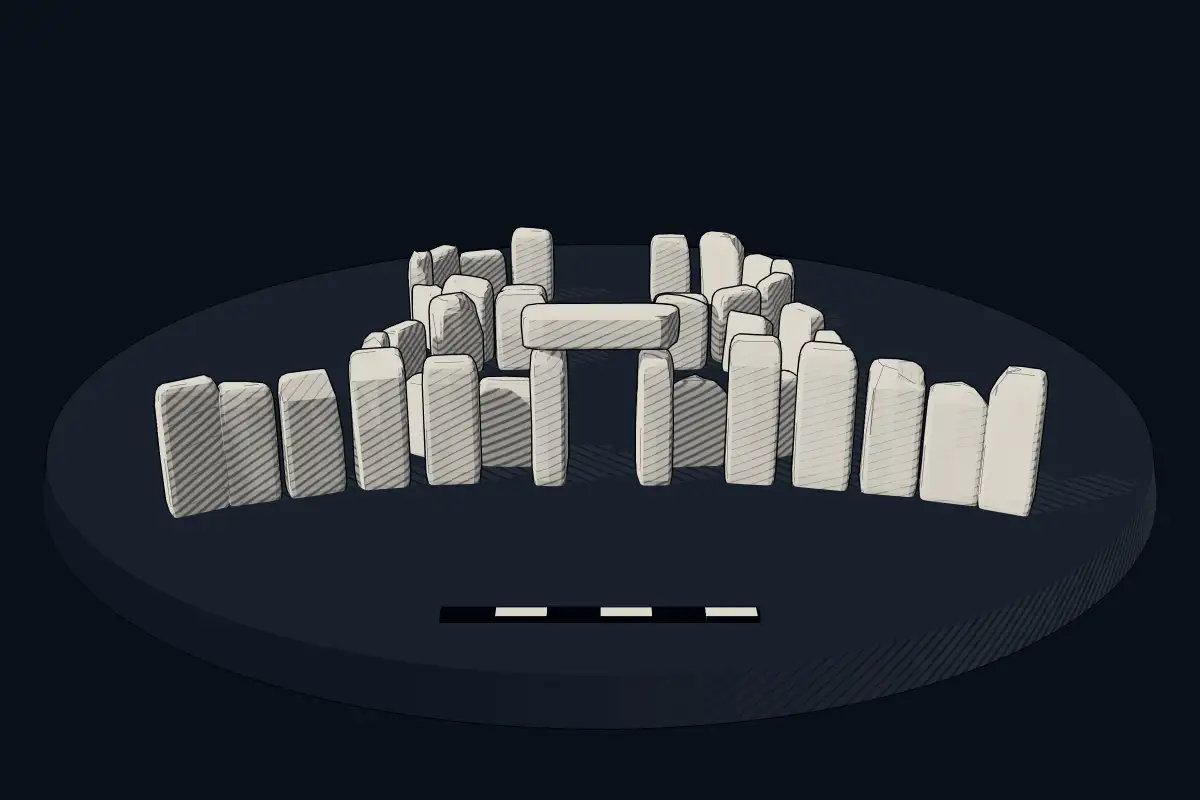
The reconstruction is ours, not a survey: it shows what a monument of this type looks like, at the size the record gives for this one.
Photographs
7 photographs, each with its author and licence
More photographs
Lore
Evidence & Lore
What the sources actually support — and, kept apart, what has been claimed.
What the evidence supports
Dates
4000–3000 BCEHow this date was established: Stated by the source4th millennium BCESource for this date
Measured facts
- Location
- southern coast of MaltaSource: Location
- Distance from Ħaġar Qim
- approximately 497 metresSource: Distance from Ħaġar Qim
- First excavations
- conducted under J.G. Vance in 1840Source: First excavations
- Antiquities List
- included in 1925Source: Antiquities List
- Vandalism
- about 60 megaliths damaged on 13 April 2001Source: Vandalism
- Protective shelter
- completed in 2009Source: Protective shelter
- Heritage designation
- part of UNESCO World Heritage Site, Class ASource: Heritage designation
Where it stands
Malta
The pin marks the monument itself — its exact point.
- Coordinates
- 35°49′36″ N, 14°26′11″ EFor a GPS or map app: 35.82667, 14.43639
Access is as our sources describe it; we have not visited the site to check.
Nearby
The closest sites in the Atlas, by straight line.


Sources
Every record behind this page, with the link it came from.
2 sources behind this page
- 01Wikidata Q584366wikidata.org
- 02Fringe claim sourceen.wikipedia.org
Image files
- Mnajdra Filfla.jpgHamelin de GuetteletCC BY-SA 3.0
- Qrendi. Tempji ta' l-Imnajdra. Mudell.jpgCC BY-SA 4.0
- Mnajdra Temples, Carved stone with typical spiral motif, Malta.jpgDocrgdCC BY 4.0
- Foggy Morning at Mnajdra (2023).jpgTrancelinerCC BY-SA 4.0
- Mnajdra temple (60212).jpgRhododendritesCC BY-SA 4.0
- Mnajdra temple (60210).jpgRhododendritesCC BY-SA 4.0
- Patterned stone in Mnajdra Temple (60202).jpgRhododendritesCC BY-SA 4.0
Report a correctionWrong date, name, photograph or source? Tell us and it will be put right.
Around this place
The ten nearest sites, by compass
Credit
Text, licence and sources
Text from the Wikipedia article "Mnajdra" (English), licensed CC BY-SA 4.0; authors are listed in the page history. Reused under CC BY-SA 4.0. Read on Wikipedia · Edit history and authors
- Wikipedia (English): MnajdraCC BY-SA 4.0
- Wikidata Q584366CC0