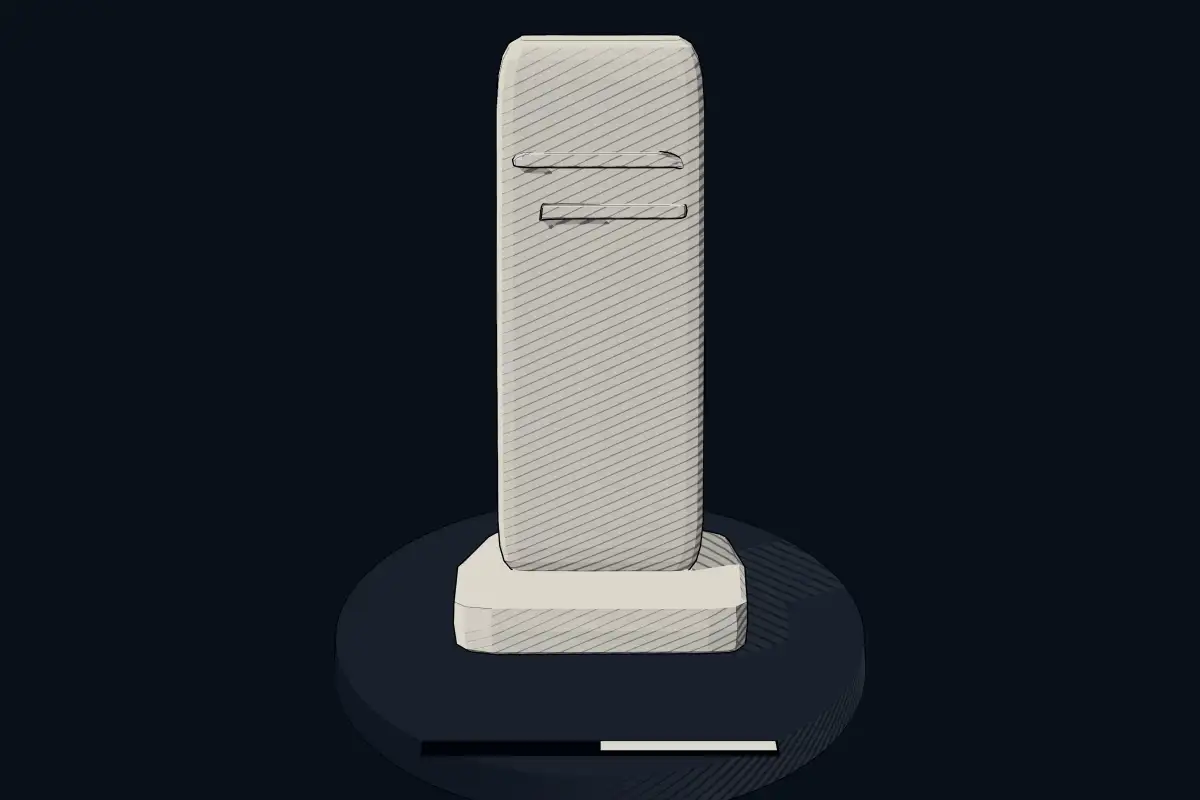
부산진 척화비
No licensed photograph yetWe have no photograph we may publish for this site, so the interpretive 3D view leads instead.
Overview
About this site
Overview
The Busanjin Chokhwabi (부산진 척화비, 釜山鎭 斥和碑) is a stele of the Joseon period, now in the Busan Museum in Nam-gu, Busan, South Korea. It was designated Monument No. 18 of Busan Metropolitan City on 26 June 1972.
It is one of the chokhwabi, steles set up in 1871 bearing a warning against making peace with Western powers.
Read on Wikipedia2 min readCC BY-SA 4.0
Article
부산진 척화비
The stele consists of a square base stone carrying an inscribed body, topped by a roof stone.
DescriptionSources for this section
- Wikipedia (Korean): 부산진 척화비CC BY-SA 4.0
Sources for this section
- Wikipedia (Korean): 부산진 척화비CC BY-SA 4.0
The stele consists of a square base stone carrying an inscribed body, topped by a roof stone. Its inscription is a strongly worded warning, to the effect that not fighting when Western barbarians invade amounts to making peace, and that making peace means selling the country.
HistorySources for this section
- Wikipedia (Korean): 부산진 척화비CC BY-SA 4.0
Sources for this section
- Wikipedia (Korean): 부산진 척화비CC BY-SA 4.0
Chokhwabi were set up across the country by Heungseon Daewongun, during the reign of King Gojong, after the Byeongin yangyo and Sinmi yangyo, in order to raise the people's vigilance against Western barbarians. The steles were erected in the eighth year of Gojong, 1871.
After the Imo Incident of 1882 and the abduction of the Daewongun to Qing China, most of the steles were removed at the demand of the Japanese envoy, and only a few survive in various places.
Later historySources for this section
- Wikipedia (Korean): 부산진 척화비CC BY-SA 4.0
Sources for this section
- Wikipedia (Korean): 부산진 척화비CC BY-SA 4.0
The Busanjin stele was originally set up at the site of the Busanjin fortress. It was moved to Yongdusan Park and, in 1978, to its present location.
ContextSources for this section
- Wikipedia (Korean): 부산진 척화비CC BY-SA 4.0
Sources for this section
- Wikipedia (Korean): 부산진 척화비CC BY-SA 4.0
A stele is a stone or wooden slab, generally taller than it is wide, erected as a monument. Its surface often carries text, ornament, or both, and steles were made as grave markers, government notices, boundary markers and memorials to battles. In East Asia the inscribed stele was a major medium for recording history and law.
Tradition and region
About this kind of monument
East Asian steles and standing stones
A stele is a stone or wooden slab, generally taller than it is wide, erected as a monument. Its surface often carries text, ornament, or both, inscribed, carved in relief or painted, and steles were made for many reasons: as grave markers, as government notices and boundary markers, and as memorials to battles. In East Asia the inscribed stele was a major medium for recording history and law, and the Atlas records those that have survived as monuments in Korea, China and Taiwan.
The Gwanggaeto Stele in Ji'an, Jilin Province, China, is the best known. It is a memorial for the tomb of Gwanggaeto the Great of Goguryeo, erected in 414 by his son Jangsu, and is the largest engraved stele in the world. It is carved out of a single mass of granite, stands about 6.39 metres tall with a girth of nearly four metres, and has an inscription written exclusively in Classical Chinese. It is one of the major primary sources for the history of Goguryeo. The stele stands near the tomb on the Yalu River, in what was then the capital of the kingdom.
A stele with an inscription that names a reign is among the best-dated monuments in the Atlas. Uninscribed standing stones in Korea, Taiwan and Indonesia, which the Atlas also lists under this heading, cannot be dated closely.
When visiting, look at the inscription if there is one, and at the base that holds the stone.
Paraphrased from Wikipedia: Stele, Wikipedia: Gwanggaeto Stele, Wikipedia: Kofun period · CC BY-SA 4.0
From the article
Dated moments in the story
- 1871
척화비는 조선 고종 때 병인양요와 신미양요를 승리로 이끈 흥선대원군이 백성들에게 서양 오랑캐에 대한 경계심을 드높이고자 전국 곳곳에 세운 비이다. 이 비는 원래 부산진의 성지에 세웠던 것이지만, 용두산 공원에 옮겼다가, 1978년 지금 자리로 옮긴 것이다. 네모난 받침돌 위에 글을 새긴 비몸을 얹고 지붕돌을 올린 모습으로, 비문의 내용은 ‘서양 오랑캐가 침범할 때에 싸우지 않는 것은 곧 화친을 하자는 것이요, 화친을 하자는 것은 나라를 파는 것이다’라는 강한 어투의 경고문구를 담고 있다. 척화비를 세운 시기는 고종 8년(1871)으로, 후에...
Source
Where it stands
South Korea
The pin marks the monument itself — its exact point.
- Coordinates
- 35°07′47″ N, 129°05′34″ EFor a GPS or map app: 35.12961, 129.09275
Access is as our sources describe it; we have not visited the site to check.
Nearby
The closest sites in the Atlas, by straight line.
- Megalithic mound (tumulus with integral stones)Ancient Tombs in Jungbu-dong, Yangsan4000–1200 BCE
- Megalithic mound (tumulus with integral stones)Ancient Tombs in Singi-ri, Yangsan4000–1200 BCE
- Megalithic mound (tumulus with integral stones)Ancient Tombs in Bukjeong-ri, Yangsan4000–1200 BCE
- Dolmen김해 무계리 지석묘700–300 BCE
 Changwon Sangnamji Stone Tomb700–300 BCE
 Haman Marisan Tumuli
 계성고분군
- SteleKing Jinheung’s Cheokgyeongbi3000 BCE–900 CE


Sources
Every record behind this page, with the link it came from.
1 source behind this page
- 01Wikidata Q20948226wikidata.org
Report a correctionWrong date, name, photograph or source? Tell us and it will be put right.
Around this place
The ten nearest sites, by compass
- Ancient Tombs in Jungbu-dong, Yangsan24 km N
- Ancient Tombs in Singi-ri, Yangsan24 km N
- Ancient Tombs in Bukjeong-ri, Yangsan26 km N
- 김해 무계리 지석묘27 km W
- Changwon Sangnamji Stone Tomb39 km W
- Haman Marisan Tumuli65 km W
- 계성고분군66 km NW
- King Jinheung’s Cheokgyeongbi70 km NW
- Changnyeong Gyo-dong and Songhyeon-dong Tumuli71 km NW
- 포항 중성리 신라비75 km N
Credit
Text, licence and sources
Adapted from the Wikipedia article "부산진 척화비" (Korean), licensed CC BY-SA 4.0; authors are listed in the page history. Reused under CC BY-SA 4.0. Read on Wikipedia · Edit history and authors
- Wikipedia (Korean): 부산진 척화비CC BY-SA 4.0
- Wikidata Q20948226CC0