
Megalithic mound (tumulus with integral stones)
Togusan Kofun
DatedEst. 250–650 CE
Photo Saigen Jiro · CC0Source file on Wikimedia Commons
Overview
About this site
What the sources say
東宮山古墳(とうぐうさんこふん)は、愛媛県四国中央市妻鳥町(めんどりちょう)にある古墳。形状は円墳または前方後円墳。
実際の被葬者は明らかでないが、宮内庁により「妻鳥陵墓参考地」(被葬候補者:第19代允恭天皇皇子木梨軽皇子)として陵墓参考地に治定されている。
Article in JapaneseRead on Wikipedia3 min readCC BY-SA 4.0
Where it sits in time
The site's dated range, placed against world reference points.
The scale is logarithmic: each step to the left is about ten times older than the last.
The full article
Togusan Kofun: the whole story
In briefSources for this section
- Wikipedia (Japanese): 東宮山古墳CC BY-SA 4.0
Sources for this section
- Wikipedia (Japanese): 東宮山古墳CC BY-SA 4.0
Togusan Kofun is a burial mound in 妻鳥町, 四国中央市, 愛媛県, Japan. It is classified as a megalithic mound with integral stones and is dated by typological estimate to 250 CE to 650 CE. The mound stands near the summit of the independent hill 東宮山 on the inland slope of the 法皇山脈. A 春宮神社 now stands on its northern side.
The present mound is oval, measuring a maximum diameter of 14.6メートル and a height of 3.3メートル, although the surrounding edges have been cut down and the original mound was probably larger. Its gently sloping northeastern side suggests that it may originally have been a 前方後円墳 facing northeast. Its burial chamber is a 両袖式横穴式石室 opening to the northwest and is now buried. A 組合式石棺 on the summit was moved there between 1855-1860年.
The chamber contained a 内行花文鏡 inscribed 長宜子孫, a 広帯二山式冠, two earrings, weapons, horse fittings and pottery. Excavations were carried out in 1894年 and surveys in 1959年 and 2013年. The mound is considered to have been built in the 6世紀代, during the MT85型式期, and was probably the tomb of a powerful local leader. It is also important for studying changes in elite burials across 宇摩平野.
The occupant is unknown. 宮内庁 designated it as 「妻鳥陵墓参考地」 for 木梨軽皇子, a son of 第19代允恭天皇, and local tradition has long identified it as his tomb. The historical accounts give no clear burial place, so the identification lacks firm evidence. Two other 箱式石棺 survive on and near the mound; one contained a 銅矛 from the middle-to-late 弥生時代.
No English Wikipedia article exists for it; the full text below is the Japanese article "東宮山古墳", shown in the original language.
Summary in EnglishSources for this section
- Wikipedia (Japanese): 東宮山古墳CC BY-SA 4.0
Sources for this section
- Wikipedia (Japanese): 東宮山古墳CC BY-SA 4.0
Togusan Kofun is a megalithic mound (tumulus with integral stones) in Shikokuchūō-shi, Japan. A typological estimate: 250 CE to 650 CE. No English Wikipedia article exists for it; the full text below is the Japanese article "東宮山古墳", shown in the original language.
概要Sources for this section
- Wikipedia (Japanese): 東宮山古墳CC BY-SA 4.0
Sources for this section
- Wikipedia (Japanese): 東宮山古墳CC BY-SA 4.0
愛媛県東部、法皇山脈の内海斜面において、独立丘陵の東宮山の頂上付近に築造された古墳である。現在は古墳北側に春宮神社が鎮座する。1894年(明治27年)に発掘されて多数の副葬品が出土しているほか、1959年(昭和34年)・2013年(平成25年)に調査が実施されている。
現状の墳形は楕円形であるが、元々は前方部を北東方向に向ける前方後円形であった可能性が指摘される。埋葬施設は両袖式の横穴式石室で、北西方向に開口した(現在は埋没)。石室内からは明治期の発掘の際に内行花文鏡・広帯二山式冠を始めとする豊富な副葬品が出土している。
この東宮山古墳は、古墳時代後期の6世紀代(MT85型式期)の築造と推定される。実際の被葬者は明らかでないが、木梨軽皇子(第19代允恭天皇皇子)の墓とする伝承がある。当時の有力首長墓と想定され、付近に所在するほぼ同時期の経ヶ岡古墳(四国中央市下柏町)と合わせて宇摩平野における首長墓の変遷を考察するうえで重要視される古墳になる。
遺跡歴Sources for this section
- Wikipedia (Japanese): 東宮山古墳CC BY-SA 4.0
Sources for this section
- Wikipedia (Japanese): 東宮山古墳CC BY-SA 4.0
安政年間(1855-1860年)、隣接平坦地北隅の組合式石棺を墳頂に移築。
1894年(明治27年)、地元民による埋葬施設の発掘、副葬品の出土(現在は宮内庁書陵部保管)。
1895年(明治28年)、宮内省(当時)により陵墓参考地に治定。
1959年(昭和34年)、石室閉鎖に伴う現状調査(三木文雄:宮内庁委嘱、1971年に報告書刊行)。
2013年(平成25年)、墳丘外形調査(宮内庁書陵部、2017年に報告書刊行)。
墳丘Sources for this section
- Wikipedia (Japanese): 東宮山古墳CC BY-SA 4.0
Sources for this section
- Wikipedia (Japanese): 東宮山古墳CC BY-SA 4.0
現状の墳形は楕円形で、最大径14.6メートル・高さ3.3メートルを測るが、周囲の墳裾は削平を受けていることから、本来の墳丘はさらに拡がる規模になる。また近年の調査によれば、墳丘の北東側の斜面は緩やかであることから、元々は北東側に前方部を伴う前方後円墳であった可能性が指摘される。
墳丘の墳頂には緑泥片岩の板石による組合式石棺1基(東宮山1号箱式石棺)が存在するが、この石棺は安政年間(1855-1860年)に隣接平坦地北隅から移築したものという。石棺内からは弥生時代の銅鉾が出土したという。また墳丘北側の広場中央では、上とは別の東宮山2号箱式石棺も遺存する。
埋葬施設Sources for this section
- Wikipedia (Japanese): 東宮山古墳CC BY-SA 4.0
Sources for this section
- Wikipedia (Japanese): 東宮山古墳CC BY-SA 4.0
埋葬施設としては両袖式横穴式石室が構築されており、北西方向に開口した。石室の規模は次の通り。
石室全長:5.5メートル以上
玄室
長さ:4.17メートル
幅:奥壁底部1.96メートル、奥壁上部0.99メートル、玄門部1.86メートル、玄門部上部1.05メートル
高さ:奥壁1.73メートル、玄門部1.49メートル
羨道
長さ:1メートル以上
幅:玄門底部0.59メートル
高さ:1.2メートル
出土品Sources for this section
- Wikipedia (Japanese): 東宮山古墳CC BY-SA 4.0
Sources for this section
- Wikipedia (Japanese): 東宮山古墳CC BY-SA 4.0
古墳からの出土品は次の通り。
石室内出土
内行花文鏡 1 - 長宜子孫銘。蝙蝠座II式、漢鏡6期。直径9.6センチメートル。長期の伝世鏡。
装身具
広帯二山式冠 1
耳環 2
青銅鈴 1
切子玉 7
管玉 3
平玉 2
棗玉 1
武器・武具
三葉文環頭大刀(環頭部) 2 - 新羅からの舶載品か。
大刀 多数 - 非現存。
石突 6 - 非現存。
銅鏃 多数 - 非現存。
横矧板鋲留衝角付冑 1
草摺? 1
馬具
馬鐸 4 - 舌1含む。
飾金具 2
鏡板 2
辻金具 3
不明金属製品 多数 - 非現存。
須恵器 - 壺1、坏3、高坏1。
不明土器 多数 - 非現存。
石棺出土
銅矛 1 - 弥生時代中期後半頃。
不明金属製品 - 非現存。
不明土器 2 - 非現存。
被葬者Sources for this section
- Wikipedia (Japanese): 東宮山古墳CC BY-SA 4.0
Sources for this section
- Wikipedia (Japanese): 東宮山古墳CC BY-SA 4.0
東宮山古墳の実際の被葬者は明らかでないが、第19代允恭天皇皇子の木梨軽皇子(きなしのかるのみこ/きなしのかるのおうじ、木梨軽太子)の墓とする伝承があり、宮内庁では陵墓参考地に治定している。
『日本書紀』によれば、木梨軽皇子は允恭天皇第一皇子で、允恭天皇23年に立太子したが、同母妹の軽大郎皇女との相姧が発覚したことで皇女は伊予に流され、皇子は皇太子であったために刑を免れた。そして允恭天皇崩御後に第三皇子の穴穂皇子(安康天皇)との間で皇位を争ったが破れ、逃げ隠れた物部大前宿禰の家で自害したという(一云として伊予国に流されたとも)。また『古事記』では、允恭天皇崩御後に木梨軽皇子は失脚し、大前小前宿禰の家に逃げ込んだが捕らえられて伊予の湯(愛媛県松山市の道後温泉)に流刑となり、その後を追ってきた軽大娘皇女と自害したという。『日本書紀』・『古事記』のほか『延喜式』諸陵寮では葬所の記載はない。
本古墳が木梨軽皇子の墓であるという根拠は明確でないが、当地では本古墳を墓所とする伝承が古くから存在した。1874年(明治7年)の陵墓取調指示に応じて春宮神社祠官からその旨の報告があったのち、1894年(明治27年)に地元民による発掘が行われ(木梨軽皇子の墓とする証拠を得るためか)、1895年(明治28年)に陵墓参考地として保存することが決定されて現在に至っている。
なお木梨軽皇子・軽大娘皇女の墓については、軽之神社(松山市姫原)の比翼塚とする伝承もある。
参考文献Sources for this section
- Wikipedia (Japanese): 東宮山古墳CC BY-SA 4.0
Sources for this section
- Wikipedia (Japanese): 東宮山古墳CC BY-SA 4.0
(記事執筆に使用した文献)
史跡説明板(川之江市設置)
宮内庁発行
「妻鳥陵墓参考地墳丘外形調査および出土品調査報告」『書陵部紀要 陵墓篇 第68号 (PDF)』宮内庁書陵部、2017年。 - リンクは宮内庁「書陵部所蔵資料目録・画像公開システム」。
事典類
川西宏幸「東宮山古墳」『世界大百科事典』平凡社。
「東宮山古墳」『日本歴史地名大系 39 愛媛県の地名』平凡社、1980年。ISBN 4582490395。
大谷猛「東宮山古墳」『日本古墳大辞典』東京堂出版、1989年。ISBN 4490102607。
北村文治「木梨軽太子」『国史大辞典』吉川弘文館。
関連文献Sources for this section
- Wikipedia (Japanese): 東宮山古墳CC BY-SA 4.0
Sources for this section
- Wikipedia (Japanese): 東宮山古墳CC BY-SA 4.0
(記事執筆に使用していない関連文献)
「妻鳥陵墓参考地東宮山古墳の遺物と遺構について」『書陵部紀要 第23号』宮内庁書陵部、1971年。
「妻鳥陵墓参考地駒形制札改修工事に伴う立会調査」『書陵部紀要 陵墓篇 第72号 (PDF)』宮内庁書陵部、2021年。 - リンクは宮内庁「書陵部所蔵資料目録・画像公開システム」。
「附 金属製品ほか出土品の整理報告」。
「妻鳥陵墓参考地出土品再整理報告 -総括篇- (PDF)」『書陵部紀要 陵墓篇 第73号』宮内庁書陵部、2022年。 - リンクは宮内庁「書陵部所蔵資料目録・画像公開システム」。
How this page was madeSources for this section
- Wikipedia (Japanese): 東宮山古墳CC BY-SA 4.0
Sources for this section
- Wikipedia (Japanese): 東宮山古墳CC BY-SA 4.0
The summary at the top of this page was written by MiniMax-M3 (2026-11-08) from the cited Wikipedia article “東宮山古墳”, translated from Japanese. The numbers in it were checked automatically against the source text. The rest of the page is the article itself, the structured records and computed distances.
Tradition and region
About this kind of monument
Japanese kofun tumuli
Kofun are the great burial mounds of ancient Japan, built mainly between the middle of the third century and the early seventh century CE. The period takes its name from them. The most distinctive form is the keyhole-shaped mound (zempō-kōen-fun), with one square end and one round end seen from above, but there are also plain round mounds, double-rectangle mounds and square mounds. Orientation is not fixed: in the Mozu group at Sakai, some round parts face north and others east.
The largest is Daisenryō kofun at Sakai in Osaka, the biggest kofun in Japan, thought to have been built over some twenty years in the middle of the fifth century. By common acceptance it is the tomb of Emperor Nintoku, and the Imperial Household Agency treats it as such, but this cannot be confirmed because the mound has not been excavated. It stands in the Mozu group, which once had more than a hundred tombs of which fewer than half remain; the group and the neighbouring Furuichi cluster were inscribed on the UNESCO World Heritage List in 2019. The mounds were built on a plateau overlooking Osaka Bay, near the ancient coastline.
Dating rests on mound shape, pottery and grave goods. Haniwa, which means "clay circle", are terracotta cylinders and figures of houses, animals and people that were arranged in rings and rows around and on top of the mounds. Smaller kofun are very numerous and sit in groups in every region of Japan.
When visiting, look for the moat that surrounds the larger mounds, for the stepped outline of terraces, and for reconstructed haniwa in museums and parks beside the tombs.
Paraphrased from Wikipedia: Kofun, Wikipedia: Daisen Kofun, Wikipedia: Haniwa, Wikipedia: Mozu Tombs · CC BY-SA 4.0
From the article
Dated moments in the story
- 1855
安政年間(1855-1860年)、隣接平坦地北隅の組合式石棺を墳頂に移築。
Source - 1855
現状の墳形は楕円形で、最大径14.6メートル・高さ3.3メートルを測るが、周囲の墳裾は削平を受けていることから、本来の墳丘はさらに拡がる規模になる。また近年の調査によれば、墳丘の北東側の斜面は緩やかであることから、元々は北東側に前方部を伴う前方後円墳であった可能性が指摘される。 墳丘の墳頂には緑泥片岩の板石による組合式石棺1基(東宮山1号箱式石棺)が存在するが、この石棺は安政年間(1855-1860年)に隣接平坦地北隅から移築したものという。石棺内からは弥生時代の銅鉾が出土したという。また墳丘北側の広場中央では、上とは別の東宮山2号箱式石棺も遺存する。
Source
See it in 3D
An interpretive reconstruction of the monument, standing on the real ground at its exact point, under the sun for that place and season. Drag to look around it.
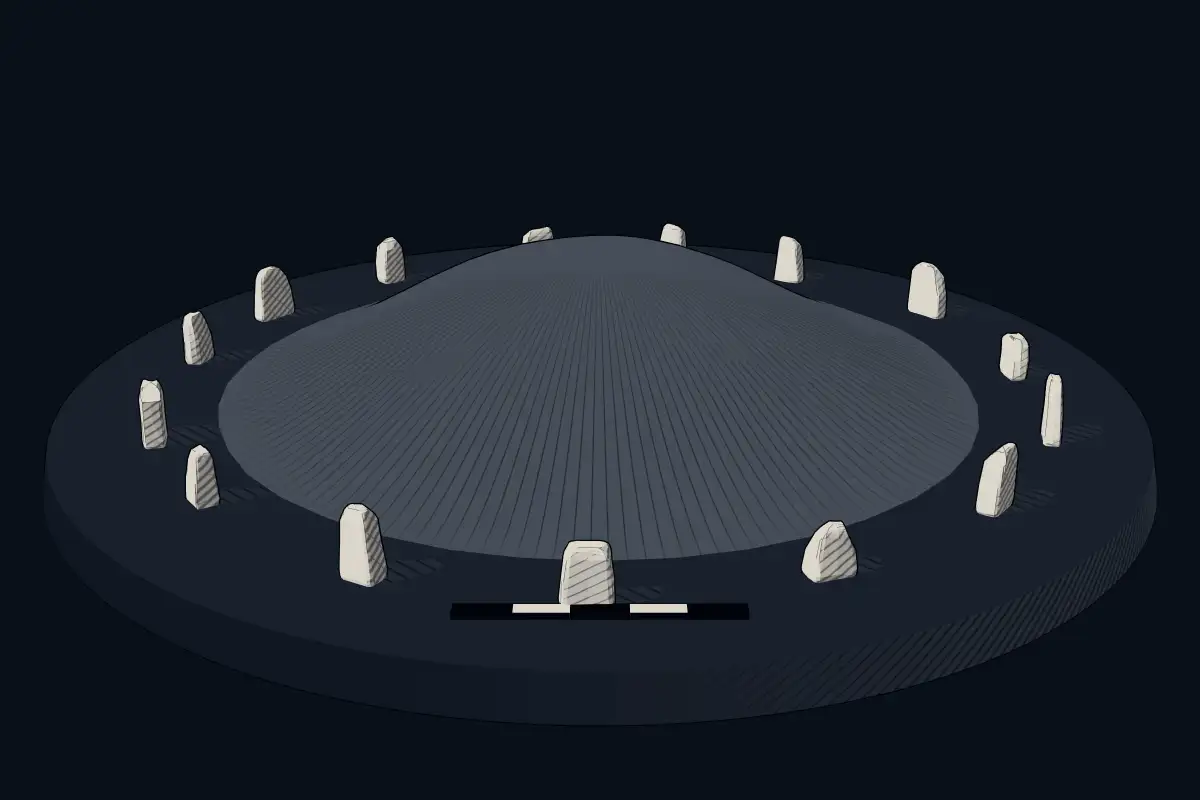
The reconstruction is ours, not a survey: it shows what a monument of this type looks like, at the size the record gives for this one.
Photographs
3 photographs, each with its author and licence
More photographs
Lore
Evidence & Lore
What the sources actually support — and, kept apart, what has been claimed.
What the evidence supports
Dates
Est. 250–650 CEHow this date was established: Type comparisonTypical range for megalithic mounds in Japan; this site has not been dated itself. Japanese kofun burial mounds were mainly constructed between the middle of the 3rd century and the early 7th century AD.Source for this date
Where it stands
Japan
The pin marks the monument itself — its exact point.
- Coordinates
- 33°58′52″ N, 133°34′41″ EFor a GPS or map app: 33.98114, 133.57817
Access is as our sources describe it; we have not visited the site to check.
Nearby
The closest sites in the Atlas, by straight line.


Sources
Every record behind this page, with the link it came from.
2 sources behind this page
- 01Wikidata Q104660439wikidata.org
- 02Source for this dateen.wikipedia.org
Image files
- Togusan Kofun, funkyu-2.jpgSaigen JiroCC0
- Togusan Kofun, haisho.jpgSaigen JiroCC0
- Togusan Kofun, gaikan.jpgSaigen JiroCC0
Report a correctionWrong date, name, photograph or source? Tell us and it will be put right.
Lore, kept apart
Legends and claims
These are stories and claims reported by the sources. They are not evidence, and they never stand in for the dating above.
- Tradition
The occupant is unknown.
The occupant is unknown. 宮内庁 designated it as 「妻鳥陵墓参考地」 for 木梨軽皇子, a son of 第19代允恭天皇, and local tradition has long identified it as his tomb. The historical accounts give no clear burial place, so the identification lacks firm evidence. Two other 箱式石棺 survive on and near the mound; one contained a 銅矛 from the middle-to-late 弥生時代.
Source
Around this place
The ten nearest sites, by compass
Credit
Text, licence and sources
Text from the Wikipedia article "東宮山古墳" (Japanese), licensed CC BY-SA 4.0; authors are listed in the page history. Reused under CC BY-SA 4.0. Read on Wikipedia · Edit history and authors
- Wikipedia (Japanese): 東宮山古墳CC BY-SA 4.0
- Wikidata Q104660439CC0