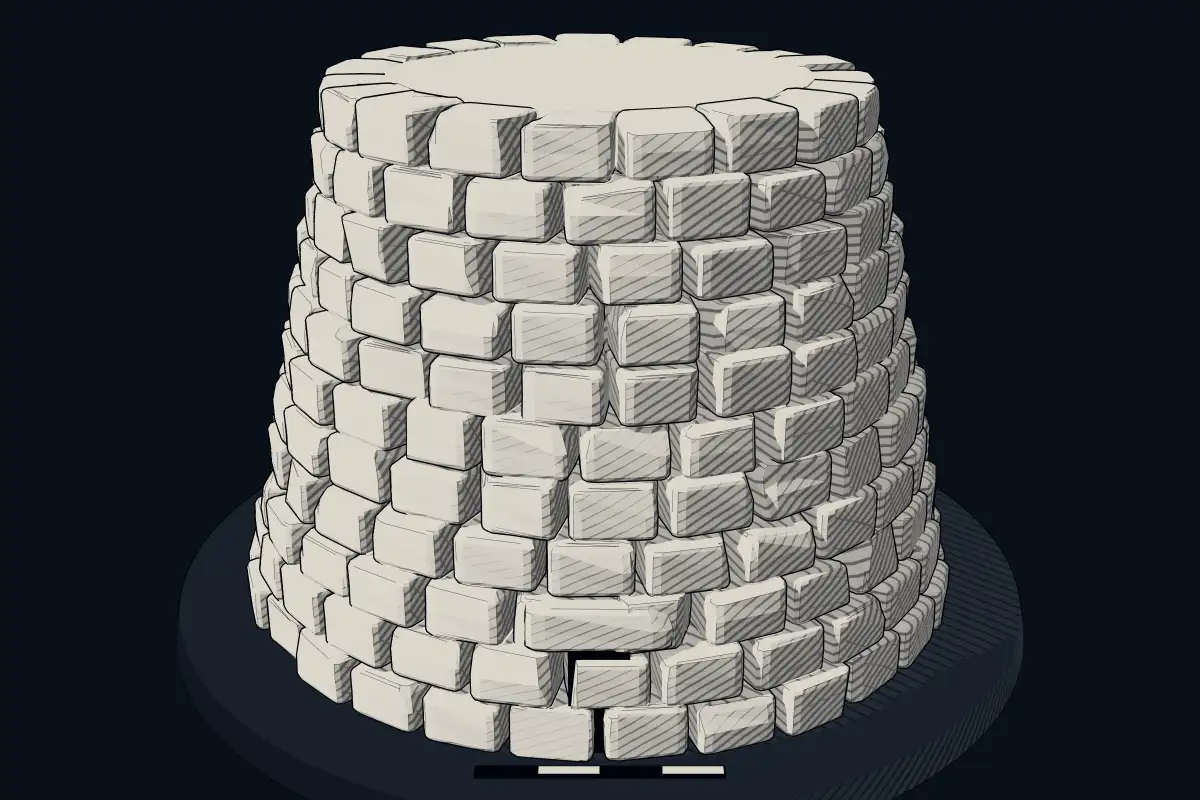
Nuraghe Faraone II
DatedEst. 1900–730 BCE
No licensed photograph yetWe have no photograph we may publish for this site, so the interpretive 3D view leads instead.
Overview
About this site
Overview
Nuraghe Faraone II is a nuraghe in Bonorva, Italy. It lies at 40.4785° N, 8.8180° E.
Catalogue recordSources and licences
Where it sits in time
The site's dated range, placed against world reference points.
The scale is logarithmic: each step to the left is about ten times older than the last.
Article
Nuraghe Faraone II
ContextSources for this section
- en.wikipedia.orgCC BY-SA 4.0
- en.wikipedia.orgCC BY-SA 4.0
- en.wikipedia.orgCC BY-SA 4.0
Sources for this section
- en.wikipedia.orgCC BY-SA 4.0
- en.wikipedia.orgCC BY-SA 4.0
- en.wikipedia.orgCC BY-SA 4.0
The nuraghe is the main type of ancient megalithic building in Sardinia, and it has become the symbol of the island and of its Nuragic civilization. They were built during the Nuragic Age, between 1900 and 730 BCE. More than 7,000 have been found, and archaeologists believe that originally there were more than 10,000. A nuraghe has the outer shape of a truncated conical tower, rather like a medieval tower, with a tholos-like vault inside. The regional background, “Sardinian nuraghi”, is given below.
DatingSources for this section
- en.wikipedia.orgCC BY-SA 4.0
Sources for this section
- en.wikipedia.orgCC BY-SA 4.0
No scientific date has been published for this site. Monuments of this type in Italy are generally dated 1900 BCE to 730 BCE; the site itself may fall inside or outside that range.
The nuraghe is the main type of ancient megalithic edifice of Sardinia developed during the Nuragic Age between 1900 and 730 BC.
Setting
109 other recorded monuments lie within 10 km (1 within 1 km, 43 within 5 km), 96 of them of the same type. The site belongs to a dense concentration of monuments. In Bonorva, Italy, 30 of the 33 recorded monuments are of this type.
The nearest recorded monuments are Nuraghe Porcu Inzu (0.9 km west, nuraghe); Tomba dei giganti di Monte Cujaru (1.0 km south-east, giants' tomb); Tomba dei giganti di Sa Pedra Longa (1.0 km north, giants' tomb); Tomba dei giganti di Sa Pedra Longa II (1.0 km north, giants' tomb).
ProtectionSources for this section
Sources for this section
No heritage designation is recorded for the site.
Tradition and region
About this kind of monument
Sardinian nuraghi
The nuraghe is the main type of ancient megalithic building in Sardinia, and it has become the symbol of the island and of its Nuragic civilization. They were built during the Nuragic Age, between 1900 and 730 BCE. More than 7,000 have been found, and archaeologists believe that originally there were more than 10,000. A nuraghe has the outer shape of a truncated conical tower, rather like a medieval tower, with a tholos-like vault inside.
The finest is Su Nuraxi at Barumini, a UNESCO World Heritage Site since 1997. Its oldest part is a central tower with three superposed chambers, 18.6 metres high, built of basalt blocks between the seventeenth and thirteenth centuries BCE. In the Late Bronze Age four corner towers joined by a curtain wall were added, and a village grew around it, inhabited from the thirteenth to the sixth century BCE. Scholars consider it the most impressive expression of the Nuragic civilization.
There is no consensus on what the nuraghi were for: rulers' residences, military strongholds, meeting halls, temples and ordinary dwellings have all been proposed. The Nuragic civilization lasted from the eighteenth century BCE until the Iron Age or the beginning of Roman colonisation in 238 BCE, and building of nuraghi had stopped by the twelfth or eleventh century BCE. Its origins are disputed: the traditional theory of Giovanni Lilliu, from 1966, saw migrants related to the Beaker culture, while others argue for local development. Even the word nuraghe has an uncertain and disputed etymology.
Many nuraghi have never been excavated, and their dates are inferred from their form.
When visiting, look for the stone courses, the entrance corridor, and the village of huts that often surrounds the tower.
Paraphrased from Wikipedia: Nuraghe, Wikipedia: Nuragic civilization, Wikipedia: Su Nuraxi · CC BY-SA 4.0
Lore
Evidence & Lore
What the sources actually support — and, kept apart, what has been claimed.
What the evidence supports
Dates
Est. 1900–730 BCEHow this date was established: Type comparisonTypical range for nuraghes in Italy; this site has not been dated itself. The nuraghe is the main type of ancient megalithic edifice of Sardinia developed during the Nuragic Age between 1900 and 730 BC.Source for this date
Where it stands
Italy
The pin marks the monument itself — its exact point.
- Coordinates
- 40°28′43″ N, 8°49′05″ EFor a GPS or map app: 40.47853, 8.81796
Access is as our sources describe it; we have not visited the site to check.
Nearby
The closest sites in the Atlas, by straight line.
- NuragheNuraghe Porcu Inzu1900–730 BCE
 Tomba dei giganti di Monte Cujaru1900–730 BCE
 Tomba dei giganti di Sa Pedra Longa1900–730 BCE
 Tomba dei giganti di Sa Pedra Longa II1900–730 BCE
- NuragheNuraghe Lendine1900–730 BCE
- NuragheNuraghe Cassoras1900–730 BCE
- NuragheNuraghe Cagai1900–730 BCE
 Nuraghe Frasciosu1900–730 BCE


Sources
Every record behind this page, with the link it came from.
2 sources behind this page
- 01Wikidata Q122181835wikidata.org
- 02Source for this dateen.wikipedia.org
Report a correctionWrong date, name, photograph or source? Tell us and it will be put right.
Around this place
The ten nearest sites, by compass
- Nuraghe Porcu Inzu0.9 km W
- Tomba dei giganti di Monte Cujaru1.0 km SE
- Tomba dei giganti di Sa Pedra Longa1.0 km N
- Tomba dei giganti di Sa Pedra Longa II1.0 km N
- Nuraghe Lendine1.1 km NE
- Nuraghe Cassoras1.1 km W
- Nuraghe Cagai1.2 km SE
- Nuraghe Frasciosu1.5 km E
- Nuraghe Su Tulis1.6 km N
- dolmen di Su Crastu Covaccadu1.6 km NE
Credit
Text, licence and sources
Compiled from open records (Wikidata, CC0; OpenStreetMap, ODbL) and a regional background article based on Wikipedia (CC BY-SA 4.0).
- Wikidata Q122181835CC0
- en.wikipedia.orgCC BY-SA 4.0
- en.wikipedia.orgCC BY-SA 4.0
- en.wikipedia.orgCC BY-SA 4.0