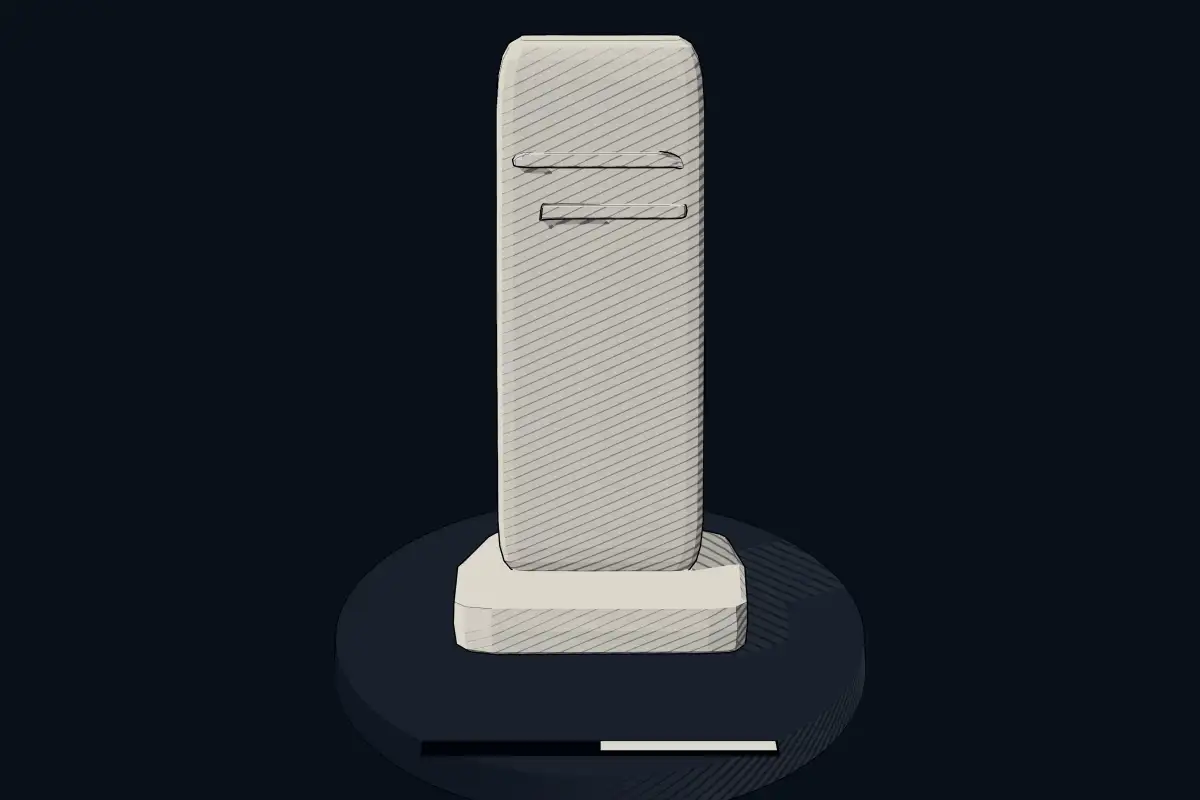
Dandaleith stone
Datedc. 600–699 CE
No licensed photograph yetWe have no photograph we may publish for this site, so the interpretive 3D view leads instead.
Overview
About this site
Overview
The Dandaleith stone is a Class I Pictish stone from Craigellachie, Scotland. It was discovered in May 2013 during ploughing.
It is carved from pink granite and bears incised Pictish symbols on two adjacent faces, an arrangement that is unusual and may be unique.
Read on Wikipedia2 min readCC BY-SA 4.0
Age sources
How old this site is, and who says so.
Range across all claimsc. 600–699 CE
MeasuredWhat this badge means
A physical measurement of this site: a radiocarbon date, a tree-ring count, a luminescence date, or a record that can itself be dated.
- 600–699 CEHistorical recordThe creation date is given as the 7th century CE.Source: en.wikipedia.org
- 600 CEWikidata inceptionSource: wikidata.org
Where it sits in time
The site's dated range, placed against world reference points.
The scale is logarithmic: each step to the left is about ten times older than the last.
Article
Dandaleith stone
It bears incised Pictish symbols on two adjacent faces: a notched rectangle and z rod and a mirror case on one, and an eagle and crescent and v rod on another.
DescriptionSources for this section
- Wikipedia (English): Dandaleith stoneCC BY-SA 4.0
Sources for this section
- Wikipedia (English): Dandaleith stoneCC BY-SA 4.0
The stone is 1.7 metres (5 ft 7 in) high, 0.5 metres (1 ft 8 in) wide and 0.36 metres (1 ft 2 in) deep. It bears incised Pictish symbols on two adjacent faces: a notched rectangle and z rod and a mirror case on one, and an eagle and crescent and v rod on another. The arrangement of symbols on adjacent faces is unusual and may be unique.
SettingSources for this section
- Wikipedia (English): Dandaleith stoneCC BY-SA 4.0
Sources for this section
- Wikipedia (English): Dandaleith stoneCC BY-SA 4.0
The exact location of the find is currently unreported because of the archaeological vulnerability of the site.
ConservationSources for this section
- Wikipedia (English): Dandaleith stoneCC BY-SA 4.0
Sources for this section
- Wikipedia (English): Dandaleith stoneCC BY-SA 4.0
The stone underwent conservation before going on display at Elgin museum.
ContextSources for this section
- Wikipedia (English): Dandaleith stoneCC BY-SA 4.0
Sources for this section
- Wikipedia (English): Dandaleith stoneCC BY-SA 4.0
Pictish stones are a type of monumental stele, generally carved or incised with symbols or designs; a few have ogham inscriptions. They stand in Scotland, mostly north of the Clyde-Forth line and on the eastern side of the country, and are the most visible remaining evidence of the Picts. They are thought to date from the sixth to the ninth century CE, a period during which the Picts became Christianised. About 350 objects classified as Pictish stones have survived.
Tradition and region
About this kind of monument
Pictish and early medieval stones
A Pictish stone is a type of monumental stele, generally carved or incised with symbols or designs; a few have ogham inscriptions. They stand in Scotland, mostly north of the Clyde-Forth line and on the eastern side of the country, and are the most visible remaining evidence of the Picts. They are thought to date from the sixth to the ninth century CE, a period during which the Picts became Christianised. About 350 objects classified as Pictish stones have survived. The earlier stones have no parallels elsewhere in the British Isles, while the later forms are variations within a wider tradition of monumental stones such as high crosses.
The Aberlemno Sculptured Stones in Angus are a series of Pictish standing stones in and around the village. Three are in the village and a fourth, found in 1962, is on display in Dundee. Aberlemno 1, 3 and 5 stand in recesses in a dry stone wall at the side of the road, and Aberlemno 2 is in the kirkyard. They date from the Early Medieval period. A fifth stone in the village carries signs of carving but is of unknown authenticity as a Pictish artefact.
Ogham stones are a related tradition in Ireland, and a few appear in Britain. Ogham is the early medieval alphabet used for the Irish language and for Pictish and British inscriptions, with letters formed by strokes along the edge of a standing stone.
The meaning of the Pictish symbols is still debated. Dating relies on art style and on the relation to Christian monuments, not on any dated find.
When visiting, look at the symbols and at the carving on the reverse of the later stones.
Paraphrased from Wikipedia: Pictish stone, Wikipedia: Aberlemno sculptured stones, Wikipedia: Picts, Wikipedia: Ogham · CC BY-SA 4.0
From the article
Dated moments in the story
- 2013
It was discovered in May 2013 during ploughing.
Source
Lore
Evidence & Lore
What the sources actually support — and, kept apart, what has been claimed.
What the evidence supports
Dates
600–699 CEHow this date was established: Historical sourcesThe creation date is given as the 7th century CE.Source for this date
Measured facts
- Classification
- Class I Pictish stoneSource: Classification
- Location
- Craigellachie, ScotlandSource: Location
- Discovery
- May 2013 during ploughingSource: Discovery
- Inception
- 7th century CESource: Inception
Where it stands
United Kingdom
The pin marks the monument itself — its exact point.
- Coordinates
- 57°29′49″ N, 3°11′17″ WFor a GPS or map app: 57.49681, -3.18792
Access is as our sources describe it; we have not visited the site to check.
Nearby
The closest sites in the Atlas, by straight line.
- SteleArndilly House, symbol stone
- SteleThe Battle Stone
- SteleMortlach, Battle Stone, symbol stone
- SteleKnockando Kirkyard,500m E of Upper Knockando,three carved stones
- Stone circlestone circle 240m NNE of Pitchroy3200–2500 BCE
- Chambered cairnLagmore West,chambered cairn & stone circle4000–2500 BCE
- Stone circlestone circle 250m NW of Bogton3200–2500 BCE
 Birnie Symbol Stone3000 BCE–900 CE

Sources
Every record behind this page, with the link it came from.
2 sources behind this page
- 01Wikidata Q17512940wikidata.org
- 02Wikipedia (en)en.wikipedia.org
Report a correctionWrong date, name, photograph or source? Tell us and it will be put right.
Around this place
The ten nearest sites, by compass
- Arndilly House, symbol stone1.3 km N
- The Battle Stone7.4 km SE
- Mortlach, Battle Stone, symbol stone7.4 km SE
- Knockando Kirkyard,500m E of Upper Knockando,three carved stones11 km W
- stone circle 240m NNE of Pitchroy13 km SW
- Lagmore West,chambered cairn & stone circle15 km SW
- stone circle 250m NW of Bogton15 km N
- Birnie Symbol Stone15 km NW
- Upper Manbeen, symbol stone16 km NW
- Elgin Pillar18 km N
Credit
Text, licence and sources
Adapted from the Wikipedia article "Dandaleith stone" (English), licensed CC BY-SA 4.0; authors are listed in the page history. Reused under CC BY-SA 4.0. Read on Wikipedia · Edit history and authors
- Wikipedia (English): Dandaleith stoneCC BY-SA 4.0
- Wikidata Q17512940CC0