statue-menhir de Montvallon
DatedEst. 4800–2500 BCE
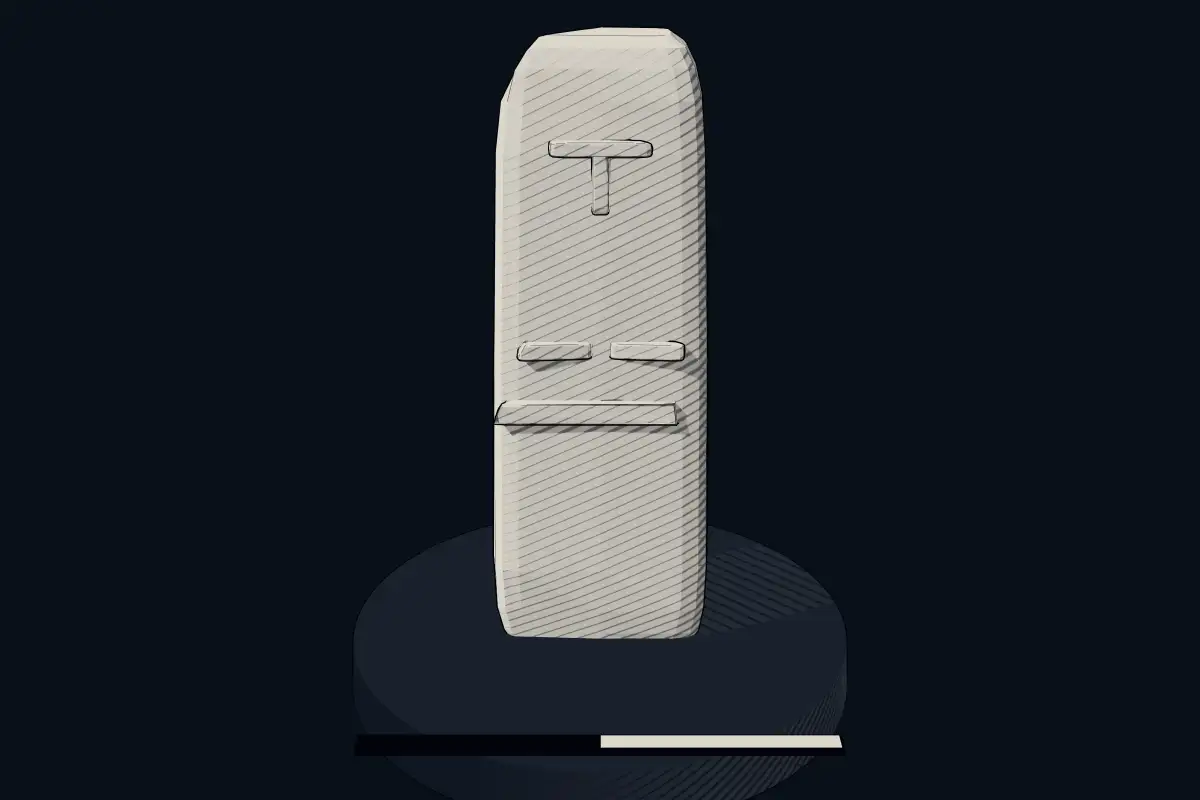
No licensed photograph yetWe have no photograph we may publish for this site, so the interpretive 3D view leads instead.
Overview
About this site
What the sources say
La statue-menhir de Montvallon est une statue-menhir appartenant au groupe rouergat découverte à Laval-Roquecezière, dans le département de l'Aveyron en France.
Article in FrenchRead on Wikipedia3 min readCC BY-SA 4.0
Where it sits in time
The site's dated range, placed against world reference points.
The scale is logarithmic: each step to the left is about ten times older than the last.
The full article
statue-menhir de Montvallon: the whole story
In briefSources for this section
- Wikipedia (French): Statue-menhir de MontvallonCC BY-SA 4.0
Sources for this section
- Wikipedia (French): Statue-menhir de MontvallonCC BY-SA 4.0
The statue-menhir de Montvallon is a carved standing stone belonging to the groupe rouergat, discovered at Laval-Roquecezière in the département of the Aveyron in France. It is dated by typological estimate to 4800 BCE to 2500 BCE. Statues-menhirs are characteristic of the later European Neolithic, and France has the largest number of them known.
The statue was carved on a small slab of sandstone from the Permian period measuring 0,67 m in height, 0,58 m in width and 0,06 m in thickness. Slight damage, in the form of scratches, occurred during its discovery, but the statue remains complete. It is unusual for being no more than a bust, which is a very distinctive feature given its small size.
The figure is female. The face is reduced to the eyes, while the other human features shown are the breasts, arms, hands and a long triangular hairstyle. The figure also wears a necklace with eight rows and a belt.
The statue-menhir was discovered in 2004 by Hubert Lautrec during the demolition of a wall between two fields. It has been listed as a historic monument as an object since 14 October 2019. The Montvallon statue is one of several statues-menhirs in France; such monuments are most often found in southern and western France, as well as in Catalonia, Corsica, Sardinia, Italy and the Alps.
No English Wikipedia article exists for it; the full text below is the French article "Statue-menhir de Montvallon", shown in the original language.
Summary in EnglishSources for this section
- Wikipedia (French): Statue-menhir de MontvallonCC BY-SA 4.0
Sources for this section
- Wikipedia (French): Statue-menhir de MontvallonCC BY-SA 4.0
statue-menhir de Montvallon is a statue-menhir in France. A typological estimate: 4800 BCE to 2500 BCE. No English Wikipedia article exists for it; the full text below is the French article "Statue-menhir de Montvallon", shown in the original language.
HistoriqueSources for this section
- Wikipedia (French): Statue-menhir de MontvallonCC BY-SA 4.0
Sources for this section
- Wikipedia (French): Statue-menhir de MontvallonCC BY-SA 4.0
La statue-menhir a été découverte en 2004 par Hubert Lautrec lors de la démolition d'un mur entre deux champs. La statue-menhir est inscrite monument historique au titre d'objet depuis le 14 octobre 2019.
DescriptionSources for this section
- Wikipedia (French): Statue-menhir de MontvallonCC BY-SA 4.0
Sources for this section
- Wikipedia (French): Statue-menhir de MontvallonCC BY-SA 4.0
La statue-menhir a été gravée sur une petite dalle de grès permien mesurant 0,67 m de hauteur sur 0,58 m de largeur et 0,06 m d'épaisseur. Elle a été légèrement endommagée (éraflures) lors de sa découverte mais la statue est complète malgré sa petite taille, car elle se limite à un buste ce qui est très particulier.
C'est une statue-féminine. Le visage se limite aux yeux, les autres caractères anthropomorphes sont les seins, les bras et les mains et une longue chevelure de forme triangulaire. Le personnage porte un collier à huit rangs et une ceinture.
AnnexesSources for this section
- Wikipedia (French): Statue-menhir de MontvallonCC BY-SA 4.0
Sources for this section
- Wikipedia (French): Statue-menhir de MontvallonCC BY-SA 4.0
Bibliographie
Michel Maillé (préf. Jean Guilaine), Hommes et femmes de pierre - Statues-menhirs du Rouergue et du Haut-Languedoc, Toulouse, Archives d'Écologie Préhistorique, 2010, 538 p. (ISBN 9782358420044), p. 378-379
Articles connexes
Sites mégalithiques de l'Aveyron
Liste des statues-menhirs de France
How this page was madeSources for this section
- Wikipedia (French): Statue-menhir de MontvallonCC BY-SA 4.0
Sources for this section
- Wikipedia (French): Statue-menhir de MontvallonCC BY-SA 4.0
The summary at the top of this page was written by MiniMax-M3 (2026-11-08) from the cited Wikipedia article “Statue-menhir de Montvallon”, translated from French. The numbers in it were checked automatically against the source text. The rest of the page is the article itself, the structured records and computed distances.
Tradition and region
About this kind of monument
Statue menhirs of France
A statue menhir is a carved standing stone of the later European Neolithic, in which a vertical slab or pillar has a stylised human figure cut into it, sometimes with hints of clothing or weapons. They are most commonly found in southern and western France, Catalonia, Corsica, Sardinia, Italy and the Alps, and France has most of the Atlas's records. A group from the Iron Age is also known in Liguria and Lunigiana in Italy, and there are two on Guernsey. One of them, La Gran'mère du Chimquière, "the grandmother of the cemetery", stands in a churchyard.
A well-known site is on Corsica. Filitosa, in the south of the island, is a megalithic site occupied from the end of the Neolithic and the beginning of the Bronze Age until about Roman times. Arrowheads and pottery date the earliest habitation to 3300 BCE. Around 1500 BCE menhirs 2 to 3 metres high were erected there, carved with human faces, armour and weapons. About twenty menhirs of various periods have been counted. One interpretation, by Roger Grosjean, was that they were set up to ward off an invasion by a people he called the Torréens, who threw them down, broke them up and reused some as building stone, and then built the circular stone structures called torri; later researchers disputed this theory.
Dating rests on comparison with the Arco stelae, six Copper Age statue menhirs found in Trentino in 1989, which are similar in style to other anthropomorphic stelae of the fourth and third millennia BCE.
When visiting, look at the weapons and belt carved on the stone.
Paraphrased from Wikipedia: Statue menhir, Wikipedia: Filitosa, Wikipedia: Arco stelae · CC BY-SA 4.0
From the article
Dated moments in the story
- 2004
La statue-menhir a été découverte en 2004 par Hubert Lautrec lors de la démolition d'un mur entre deux champs.
Source - 2010
Jean Guilaine), Hommes et femmes de pierre - Statues-menhirs du Rouergue et du Haut-Languedoc, Toulouse, Archives d'Écologie Préhistorique, 2010, 538 p.
Source - 2019
La statue-menhir est inscrite monument historique au titre d'objet depuis le 14 octobre 2019.
Source
Lore
Evidence & Lore
What the sources actually support — and, kept apart, what has been claimed.
What the evidence supports
Dates
Est. 4800–2500 BCEHow this date was established: Type comparisonTypical range for statue-menhirs in France; this site has not been dated itself. Statue menhirs were created during the later European Neolithic Period and the megalithic constructions of Brittany begin c. 4800 BC.Source for this date
Where it stands
France
The pin marks the monument itself — its exact point.
- Coordinates
- 44°48′24″ N, 2°38′24″ EFor a GPS or map app: 44.80663, 2.64010
Access is as our sources describe it; we have not visited the site to check.
Nearby
The closest sites in the Atlas, by straight line.
- MegalithStatue-menhir du Plo du Roi4500–3300 BCE
 menhir de Peyreficade2800–1800 BCE
- Dolmendolmen de Lunel4000–3000 BCE
 Dolmen d’Alleuzet4000–3000 BCE
 Menhir de Bargueyrac2800–1800 BCE
 Dolmen de la Table au Loup4000–3000 BCE
 Menhir christianisé de la Croix-Grosse2800–1800 BCE
 Dolmen du Bois Grand4000–3000 BCE


Sources
Every record behind this page, with the link it came from.
2 sources behind this page
- 01Wikidata Q111669633wikidata.org
- 02Source for this dateen.wikipedia.org
Report a correctionWrong date, name, photograph or source? Tell us and it will be put right.
Around this place
The ten nearest sites, by compass
- Statue-menhir du Plo du Roi<0.1 km N
- menhir de Peyreficade11 km NW
- dolmen de Lunel31 km SW
- Dolmen d’Alleuzet32 km NE
- Menhir de Bargueyrac35 km NE
- Dolmen de la Table au Loup35 km NE
- Menhir christianisé de la Croix-Grosse36 km NE
- Dolmen du Bois Grand36 km NE
- dolmen de la Vitarelle 237 km S
- Zona arqueològica del dolmen de la Vitarelle III37 km S
Credit
Text, licence and sources
Text from the Wikipedia article "Statue-menhir de Montvallon" (French), licensed CC BY-SA 4.0; authors are listed in the page history. Reused under CC BY-SA 4.0. Read on Wikipedia · Edit history and authors