statue-menhir de Granisse
DatedEst. 4800–2500 BCE
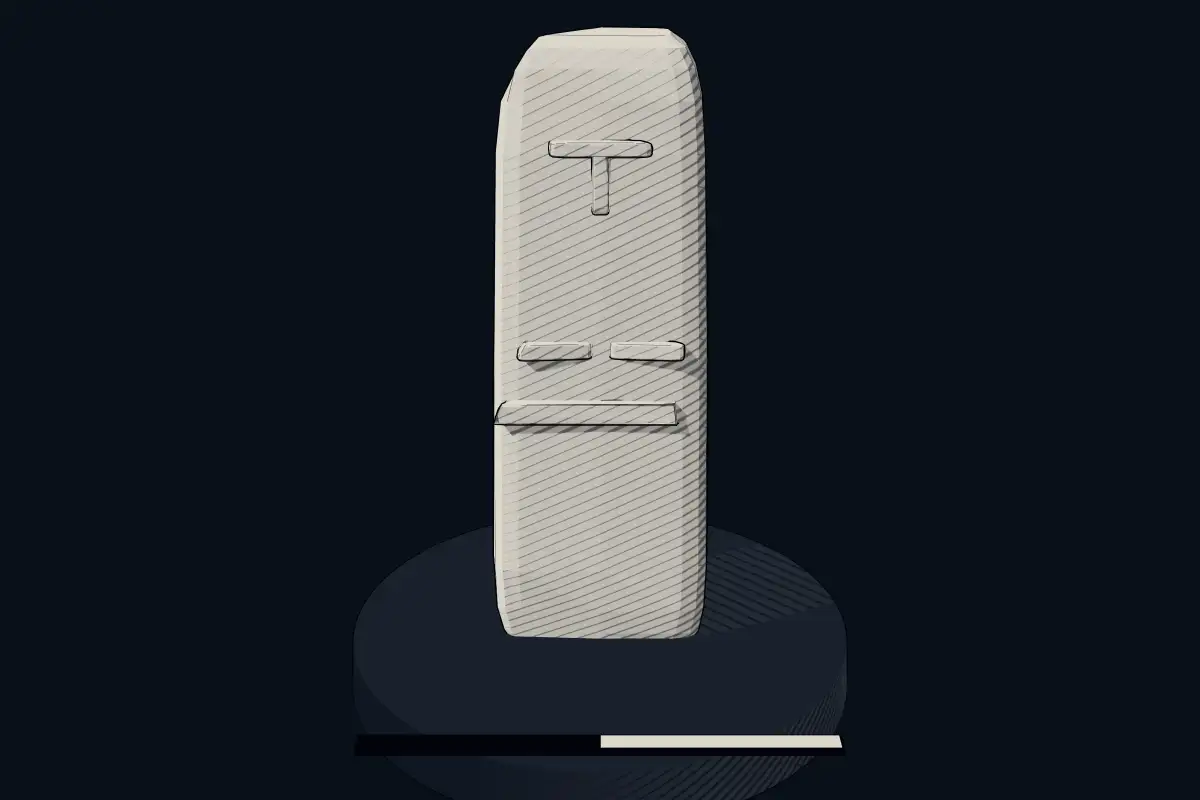
No licensed photograph yetWe have no photograph we may publish for this site, so the interpretive 3D view leads instead.
Overview
About this site
Overview
Statue-menhir de Granisse is a statue-menhir in Lacaune, France. It lies at 43.7068° N, 2.6905° E. Recorded material: sandstone.
Catalogue recordSources and licences
Where it sits in time
The site's dated range, placed against world reference points.
The scale is logarithmic: each step to the left is about ten times older than the last.
Article
statue-menhir de Granisse
ContextSources for this section
- en.wikipedia.orgCC BY-SA 4.0
- en.wikipedia.orgCC BY-SA 4.0
- en.wikipedia.orgCC BY-SA 4.0
Sources for this section
- en.wikipedia.orgCC BY-SA 4.0
- en.wikipedia.orgCC BY-SA 4.0
- en.wikipedia.orgCC BY-SA 4.0
A statue menhir is a carved standing stone of the later European Neolithic, in which a vertical slab or pillar has a stylised human figure cut into it, sometimes with hints of clothing or weapons. They are most commonly found in southern and western France, Catalonia, Corsica, Sardinia, Italy and the Alps, and France has most of the Atlas's records. A group from the Iron Age is also known in Liguria and Lunigiana in Italy, and there are two on Guernsey. One of them, La Gran'mère du Chimquière, "the grandmother of the cemetery", stands in a churchyard. The regional background, “Statue menhirs of France”, is given below.
DatingSources for this section
- en.wikipedia.orgCC BY-SA 4.0
Sources for this section
- en.wikipedia.orgCC BY-SA 4.0
No scientific date has been published for this site. Monuments of this type in France are generally dated 4800 BCE to 2500 BCE; the site itself may fall inside or outside that range.
Statue menhirs were created during the later European Neolithic Period and the megalithic constructions of Brittany begin c. 4800 BC.
Setting
12 other recorded monuments lie within 10 km (2 within 1 km, 4 within 5 km), 12 of them of the same type. In Lacaune, France, 2 of the 2 recorded monuments are of this type.
The nearest recorded monuments are statue-menhir du Trou de l'Avenc (0.1 km south-west, statue-menhir); statue-menhir de Granisse (0.1 km north, statue-menhir); Peyro-Lebado (2.9 km east, statue-menhir); statue-menhir du Puech de Naudène (4.6 km east, statue-menhir).
ProtectionSources for this section
Sources for this section
Heritage status: object listed as historical monument.
Tradition and region
About this kind of monument
Statue menhirs of France
A statue menhir is a carved standing stone of the later European Neolithic, in which a vertical slab or pillar has a stylised human figure cut into it, sometimes with hints of clothing or weapons. They are most commonly found in southern and western France, Catalonia, Corsica, Sardinia, Italy and the Alps, and France has most of the Atlas's records. A group from the Iron Age is also known in Liguria and Lunigiana in Italy, and there are two on Guernsey. One of them, La Gran'mère du Chimquière, "the grandmother of the cemetery", stands in a churchyard.
A well-known site is on Corsica. Filitosa, in the south of the island, is a megalithic site occupied from the end of the Neolithic and the beginning of the Bronze Age until about Roman times. Arrowheads and pottery date the earliest habitation to 3300 BCE. Around 1500 BCE menhirs 2 to 3 metres high were erected there, carved with human faces, armour and weapons. About twenty menhirs of various periods have been counted. One interpretation, by Roger Grosjean, was that they were set up to ward off an invasion by a people he called the Torréens, who threw them down, broke them up and reused some as building stone, and then built the circular stone structures called torri; later researchers disputed this theory.
Dating rests on comparison with the Arco stelae, six Copper Age statue menhirs found in Trentino in 1989, which are similar in style to other anthropomorphic stelae of the fourth and third millennia BCE.
When visiting, look at the weapons and belt carved on the stone.
Paraphrased from Wikipedia: Statue menhir, Wikipedia: Filitosa, Wikipedia: Arco stelae · CC BY-SA 4.0
Lore
Evidence & Lore
What the sources actually support — and, kept apart, what has been claimed.
What the evidence supports
Dates
Est. 4800–2500 BCEHow this date was established: Type comparisonTypical range for statue-menhirs in France; this site has not been dated itself. Statue menhirs were created during the later European Neolithic Period and the megalithic constructions of Brittany begin c. 4800 BC.Source for this date
Where it stands
France
The pin marks the monument itself — its exact point.
- Coordinates
- 43°42′24″ N, 2°41′26″ EFor a GPS or map app: 43.70680, 2.69050
Access is as our sources describe it; we have not visited the site to check.
Nearby
The closest sites in the Atlas, by straight line.
 statue-menhir du Trou de l'Avenc4800–2500 BCE
- Statue-menhirstatue-menhir de Granisse4800–2500 BCE
 Peyro-Lebado4800–2500 BCE
 statue-menhir du Puech de Naudène4800–2500 BCE
- Statue-menhirstatue-menhir du Vacant de Rieuvel4800–2500 BCE
 statue-menhir de Nicoules4800–2500 BCE
 statue-menhir de Rouyregros4800–2500 BCE
 statue-menhir de la Barraque des Fournials4800–2500 BCE


Sources
Every record behind this page, with the link it came from.
2 sources behind this page
- 01Wikidata Q109626532wikidata.org
- 02Source for this dateen.wikipedia.org
Report a correctionWrong date, name, photograph or source? Tell us and it will be put right.
Around this place
The ten nearest sites, by compass
- statue-menhir du Trou de l'Avenc<0.1 km SW
- statue-menhir de Granisse0.1 km N
- Peyro-Lebado3.0 km E
- statue-menhir du Puech de Naudène4.6 km E
- statue-menhir du Vacant de Rieuvel5.3 km NE
- statue-menhir de Nicoules6.9 km N
- statue-menhir de Rouyregros8.2 km SE
- statue-menhir de la Barraque des Fournials9.5 km SE
- statue-menhir du moulin de Louat 29.7 km E
- statue-menhir de Malvieille9.7 km E
Credit
Text, licence and sources
Compiled from open records (Wikidata, CC0; OpenStreetMap, ODbL) and a regional background article based on Wikipedia (CC BY-SA 4.0).
- Wikidata Q109626532CC0
- en.wikipedia.orgCC BY-SA 4.0
- en.wikipedia.orgCC BY-SA 4.0
- en.wikipedia.orgCC BY-SA 4.0
- en.wikipedia.orgCC BY-SA 4.0