
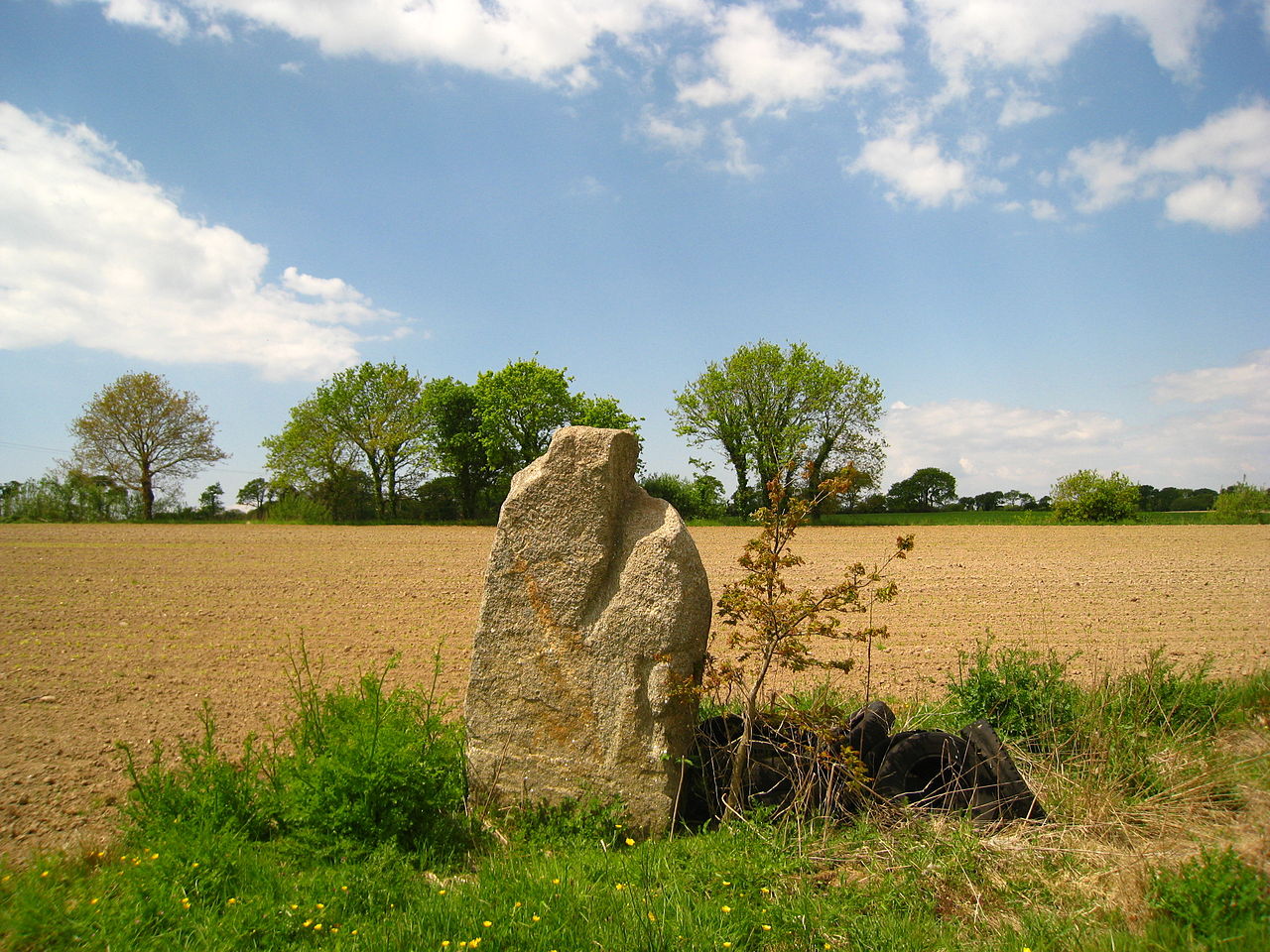
pierres du Meniscoul
DatedEst. 4500–3300 BCE
Photo Romain Bréget · CC BY-SA 3.0Source file on Wikimedia Commons

Overview
About this site
Overview
Pierres du Meniscoul is a megalith in Piriac-sur-Mer, France. It lies at 47.3799° N, 2.5454° W.
Catalogue recordSources and licences
Where it sits in time
The site's dated range, placed against world reference points.
The scale is logarithmic: each step to the left is about ten times older than the last.
Article
pierres du Meniscoul
ContextSources for this section
- en.wikipedia.orgCC BY-SA 4.0
- en.wikipedia.orgCC BY-SA 4.0
- en.wikipedia.orgCC BY-SA 4.0
- en.wikipedia.orgCC BY-SA 4.0
- en.wikipedia.orgCC BY-SA 4.0
Sources for this section
- en.wikipedia.orgCC BY-SA 4.0
- en.wikipedia.orgCC BY-SA 4.0
- en.wikipedia.orgCC BY-SA 4.0
- en.wikipedia.orgCC BY-SA 4.0
- en.wikipedia.orgCC BY-SA 4.0
The Atlas's general "megalith" records for France cover a range of monuments: dolmens and covered alleys (allées couvertes), menhirs, cromlechs, tumuli, groups of stones, and polissoirs. Some of the oldest monuments in Europe are in western France, and the Carnac stones in Brittany, with more than 3,000 prehistoric standing stones, are the largest collection in the world. The regional background, “French megaliths”, is given below.
DatingSources for this section
- en.wikipedia.orgCC BY-SA 4.0
Sources for this section
- en.wikipedia.orgCC BY-SA 4.0
No scientific date has been published for this site. Monuments of this type in France are generally dated 4500 BCE to 3300 BCE; the site itself may fall inside or outside that range.
The megaliths of north-west France are among the oldest in Europe; the Carnac stones date from 4500-3300 BC.
Setting
5 other recorded monuments lie within 10 km (0 within 1 km, 0 within 5 km). In Piriac-sur-Mer, France, 1 of the 1 recorded monuments are of this type.
The nearest recorded monuments are gravier de Gargantua (6.1 km east, dolmen); pierre Beurrée (7.0 km south-east, dolmen); Keroland menhir (7.9 km south-east, menhir); menhir de Kerignon (9.5 km south-east, menhir).
ProtectionSources for this section
Sources for this section
No heritage designation is recorded for the site.
Tradition and region
About this kind of monument
French megaliths
The Atlas's general "megalith" records for France cover a range of monuments: dolmens and covered alleys (allées couvertes), menhirs, cromlechs, tumuli, groups of stones, and polissoirs. Some of the oldest monuments in Europe are in western France, and the Carnac stones in Brittany, with more than 3,000 prehistoric standing stones, are the largest collection in the world.
A polissoir, "polisher", is a Neolithic stone tool used for polishing and sharpening stone objects, especially axes, adzes and chisels. They date to about 5,000 years ago. Polissoirs are typically large stones with smooth, concave surfaces or grooves, made of hard and abrasive rocks such as sandstone, granite or quartzite, and the surface often shows distinctive wear patterns from the back-and-forth motion used to refine the edges of tools. They come in two types: earthfast, large and immovable and found in their original position, and portable. A polissoir is not strictly a megalith, but it is recorded with them because it is a large stone of the same period.
In the Atlas a record with an unspecified type receives a broad Neolithic range, since it cannot be tied to a particular phase. Many small dolmens survive only as a few stones in a field and cannot be dated closely.
Folklore: La Roche-aux-Fées near Essé takes its name, "the fairies' rock", from a legend that fairies placed the stones.
When visiting, look for the polished grooves on boulders near dolmens, and for the way a capstone is propped.
Paraphrased from Wikipedia: Dolmen, Wikipedia: Menhir, Wikipedia: Carnac stones, Wikipedia: Polissoir, Wikipedia: La Roche-aux-Fées · CC BY-SA 4.0
Photographs
4 photographs, each with its author and licence
More photographs


Lore
Evidence & Lore
What the sources actually support — and, kept apart, what has been claimed.
What the evidence supports
Dates
Est. 4500–3300 BCEHow this date was established: Type comparisonTypical range for megaliths in France; this site has not been dated itself. The megaliths of north-west France are among the oldest in Europe; the Carnac stones date from 4500-3300 BC.Source for this date
Where it stands
France
The pin marks the monument itself — its exact point.
- Coordinates
- 47°22′48″ N, 2°32′43″ WFor a GPS or map app: 47.37990, -2.54540
Access is as our sources describe it; we have not visited the site to check.
Nearby
The closest sites in the Atlas, by straight line.
- Dolmengravier de Gargantua4000–3000 BCE
- Dolmenpierre Beurrée4000–3000 BCE
 Keroland menhir2800–1800 BCE
- Menhir (standing stone)menhir de Kerignon2800–1800 BCE
- Gallery grave (allée couverte)allée couverte de Pradel4500–3300 BCE
 Pierre Longue menhir2800–1800 BCE
- Megalithic mound (tumulus with integral stones)tumulus du Plateau du Four5000–3000 BCE
 pierre de Saillé2800–1800 BCE


Sources
Every record behind this page, with the link it came from.
2 sources behind this page
- 01Wikidata Q21255409wikidata.org
- 02Source for this dateen.wikipedia.org
Image files
- Pierres du Meniscoul 2.JPGRomain BrégetCC BY-SA 3.0
- Pierres du Meniscoul 1.JPGRomain BrégetCC BY-SA 3.0
- Pierres du Meniscoul 10.JPGRomain BrégetCC BY-SA 3.0
- Pierres du Meniscoul à Piriac sur Mer (Loire Atlantique).jpgIrma conseilCC BY-SA 4.0
Report a correctionWrong date, name, photograph or source? Tell us and it will be put right.
Around this place
The ten nearest sites, by compass
Credit
Text, licence and sources
Compiled from open records (Wikidata, CC0; OpenStreetMap, ODbL) and a regional background article based on Wikipedia (CC BY-SA 4.0).
- Wikidata Q21255409CC0
- en.wikipedia.orgCC BY-SA 4.0
- en.wikipedia.orgCC BY-SA 4.0
- en.wikipedia.orgCC BY-SA 4.0
- en.wikipedia.orgCC BY-SA 4.0
- en.wikipedia.orgCC BY-SA 4.0