dolmen dit l'Autel du Loup
DatedEst. 4000–3000 BCE
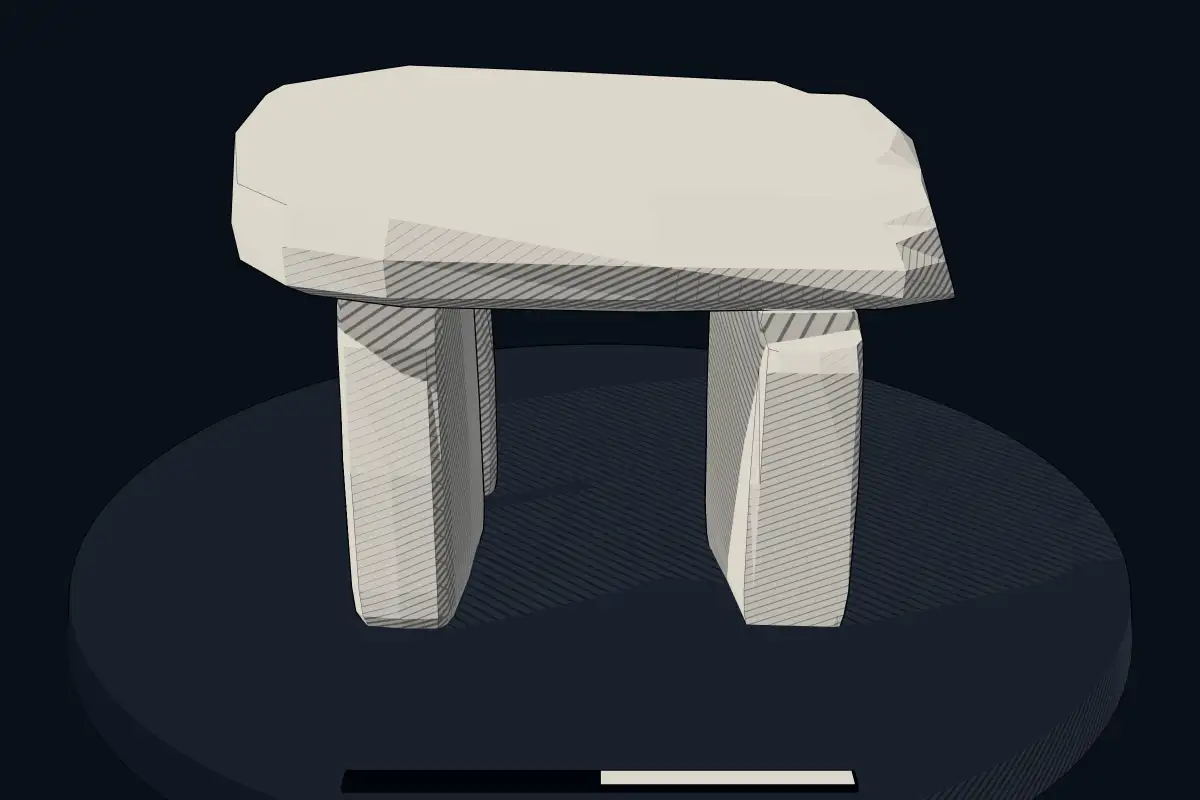
No licensed photograph yetWe have no photograph we may publish for this site, so the interpretive 3D view leads instead.
Overview
About this site
What the sources say
Le dolmen dit l'Autel du Loup ou hôtel du Loup est un monument funéraire néolithique situé sur la commune de Sault dans le Vaucluse (France). Avec le dolmen de l'Ubac à Goult, et le Dolmen de la Pichone, à Ménerbes, il est l'un des trois seuls dolmens connus en Vaucluse et l'un des rares en Provence.
Article in FrenchRead on Wikipedia2 min readCC BY-SA 4.0
Where it sits in time
The site's dated range, placed against world reference points.
The scale is logarithmic: each step to the left is about ten times older than the last.
The full article
dolmen dit l'Autel du Loup: the whole story
In briefSources for this section
- Wikipedia (French): Dolmen dit l'Autel du LoupCC BY-SA 4.0
Sources for this section
- Wikipedia (French): Dolmen dit l'Autel du LoupCC BY-SA 4.0
The Dolmen dit l'Autel du Loup, also called the hôtel du Loup, is a Neolithic funerary monument on the commune of Sault in the Vaucluse, France. It lies on the heights above the village, in the woods of the Défends, east of the Hippodrome de Deffends.
Along with the dolmen de l'Ubac at Goult and the Dolmen de la Pichone at Ménerbes, it is one of only three known dolmens in the Vaucluse and one of the rare dolmens in Provence. The available description does not provide details about the monument’s structure, dimensions, or surviving stones.
The dolmen was already known and mentioned by the end of the XIXe siècle. Its dating is estimated from its type and places it between 4000 BCE and 3000 BCE. No further information about its discovery, excavation, or condition is given.
Dolmens of this kind in France are generally dated to the Late Neolithic, about 4000 to 3000 BCE. A dolmen is a single-chamber megalithic tomb made with two or more upright stones supporting a large capstone, and many were originally covered with earth or smaller stones to form a mound.
No English Wikipedia article exists for it; the full text below is the French article "Dolmen dit l'Autel du Loup", shown in the original language.
Summary in EnglishSources for this section
- Wikipedia (French): Dolmen dit l'Autel du LoupCC BY-SA 4.0
Sources for this section
- Wikipedia (French): Dolmen dit l'Autel du LoupCC BY-SA 4.0
dolmen dit l'Autel du Loup is a dolmen in Sault, France. A typological estimate: 4000 BCE to 3000 BCE. No English Wikipedia article exists for it; the full text below is the French article "Dolmen dit l'Autel du Loup", shown in the original language.
LocalisationSources for this section
- Wikipedia (French): Dolmen dit l'Autel du LoupCC BY-SA 4.0
Sources for this section
- Wikipedia (French): Dolmen dit l'Autel du LoupCC BY-SA 4.0
Le dolmen dit l'Autel du Loup est situé sur les hauteurs du village de Sault, dans les bois du Défends, à l'est de l'Hippodrome de Deffends.
HistoriqueSources for this section
- Wikipedia (French): Dolmen dit l'Autel du LoupCC BY-SA 4.0
Sources for this section
- Wikipedia (French): Dolmen dit l'Autel du LoupCC BY-SA 4.0
Le dolmen est déjà connu et mentionné à la fin du XIXe siècle
AnnexesSources for this section
- Wikipedia (French): Dolmen dit l'Autel du LoupCC BY-SA 4.0
Sources for this section
- Wikipedia (French): Dolmen dit l'Autel du LoupCC BY-SA 4.0
Articles connexes
Sites mégalithiques de Vaucluse
Références
Portail du Vaucluse Portail du mégalithisme
How this page was madeSources for this section
- Wikipedia (French): Dolmen dit l'Autel du LoupCC BY-SA 4.0
Sources for this section
- Wikipedia (French): Dolmen dit l'Autel du LoupCC BY-SA 4.0
The summary at the top of this page was written by MiniMax-M3 (2026-11-08) from the cited Wikipedia article “Dolmen dit l'Autel du Loup”, translated from French. The numbers in it were checked automatically against the source text. The rest of the page is the article itself, the structured records and computed distances.
Tradition and region
About this kind of monument
French dolmens
France is the dolmen country of Europe: the Dolmen de Bagneux at Saumur is the largest of some 4,500 dolmens scattered across 60 French departments, and one of the largest in Europe. A dolmen is a single-chamber megalithic tomb with two or more upright stones carrying a great capstone. Most date to the Late Neolithic, about 4000 to 3000 BCE, and many were covered with earth or smaller stones to form a mound.
Some of the oldest megalithic monuments in Europe are in western France. The Cairn of Barnenez in Finistère dates to the early Neolithic, around 4000 BCE, and with the Tumulus of Bougon and the Locmariaquer megaliths it is among the earliest megalithic monuments in Europe; it also has megalithic art. La Roche-aux-Fées near Essé in Ille-et-Vilaine is a covered corridor about 20 metres long, built of some 48 blocks, the heaviest around 45 tonnes, and divided into two chambers. It is thought to date from 3000 to 2500 BCE, and its entrance is aligned on sunrise at the winter solstice.
Folklore: the name of La Roche-aux-Fées, "the fairies' rock", comes from a legend that fairies placed the stones. Such stories are traditions about the monuments, not evidence of how they were built.
Because the Atlas draws on national inventories, its French records include many small and ruined dolmens, often reduced to a capstone resting on a few supports. Dates rest on the typology of the monument and, where a dolmen has been excavated, on radiocarbon dating of material from the chamber.
When visiting, look for the capstone and its supports, for the low rise of the old mound around the stones, and for the direction in which the entrance faces.
Paraphrased from Wikipedia: Dolmen, Wikipedia: Dolmen de Bagneux, Wikipedia: La Roche-aux-Fées, Wikipedia: Barnenez, Wikipedia: Carnac stones · CC BY-SA 4.0
See it in 3D
An interpretive reconstruction of the monument, standing on the real ground at its exact point, under the sun for that place and season. Drag to look around it.
The reconstruction is ours, not a survey: it shows what a monument of this type looks like, at the size the record gives for this one.
Lore
Evidence & Lore
What the sources actually support — and, kept apart, what has been claimed.
What the evidence supports
Dates
Est. 4000–3000 BCEHow this date was established: Type comparisonTypical range for dolmens in France; this site has not been dated itself. Most dolmens date from the Late Neolithic period (4000-3000 BCE).Source for this date
Where it stands
France
The pin marks the monument itself — its exact point.
- Coordinates
- 44°06′22″ N, 5°25′44″ EFor a GPS or map app: 44.10599, 5.42901
Access is as our sources describe it; we have not visited the site to check.
Nearby
The closest sites in the Atlas, by straight line.


Sources
Every record behind this page, with the link it came from.
2 sources behind this page
- 01Wikidata Q27824020wikidata.org
- 02Source for this dateen.wikipedia.org
Report a correctionWrong date, name, photograph or source? Tell us and it will be put right.
Around this place
The ten nearest sites, by compass
- dolmen du Clau-deï-Meli 129 km SE
- dolmen du Clau-deï-Meli 230 km SE
- dolmen de l'Ubac32 km SW
- Dolmen de la Pitchoune35 km SW
- dolmens des Cudières56 km S
- Borne milliaire de Bidoussanne59 km S
- Borne milliaire59 km S
- Pyramid of Salon-de-Provence59 km SW
- Borne milliaire de la Calanque62 km SW
- Dolmen von Maurély67 km S
Credit
Text, licence and sources
Text from the Wikipedia article "Dolmen dit l'Autel du Loup" (French), licensed CC BY-SA 4.0; authors are listed in the page history. Reused under CC BY-SA 4.0. Read on Wikipedia · Edit history and authors