
Megalithic mound (tumulus with integral stones)
Luistari
Also known asLuistari archaeological site
DatedEst. 2000–500 BCE
Photo Htm · CC BY 4.0Source file on Wikimedia Commons

Overview
About this site
What the sources say
Luistari on Euran kunnassa sijaitseva muinaisjäännösalue. Se on yksi Suomen merkittävimmistä ja eniten tutkituista arkeologisista kohteista. Luistarin muinaisjäännösalue käsittää pronssi- ja varhaisrautakautisen asuinpaikan sekä Suomen suurimman myöhäisrautakautisen kalmiston. Luistari on tunnettu ensisijaisesti kalmistosta tehtyjen puku- ja esinelöytöjen vuoksi ja vuosikymmeniä jatkuneiden tutkimusten avulla on saatu paljon uutta tietoa muun muassa viikinkiaikaisesta kulttuurista ja pukeutumisesta. Luistarin haudan numero 56 perusteella on 1970-luvulla rekonstruoitu Euran emännän puku.
Article in FinnishRead on Wikipedia5 min readCC BY-SA 4.0
Where it sits in time
The site's dated range, placed against world reference points.
The scale is logarithmic: each step to the left is about ten times older than the last.
The full article
Luistari: the whole story
In briefSources for this section
- Wikipedia (Finnish): LuistariCC BY-SA 4.0
Sources for this section
- Wikipedia (Finnish): LuistariCC BY-SA 4.0
Luistari is an archaeological site in Eura, Finland, about two kilometres south of Euran kirkko, on the west side of kantatie 43. It includes a Bronze Age and Early Iron Age settlement and Finland’s largest Late Iron Age cemetery. The site is also known as the “Luistari archaeological site.”
The cemetery was discovered in 1969 during drainage work, when a silver-coated sword dated to the 900s was found. Further rescue excavations and archaeological research under Pirkko-Liisa-Hilander exposed more burials, with investigations continuing from 1969–1992. Over 1300 Late Iron Age inhumation graves have been studied, along with cremation graves in cairns. The cemetery was used from about 500–1300.
Burials included adults, children and some group graves. Finds included jewellery, weapons, pottery, animal bones and tools such as axes, sickles and shears, although many graves were empty of objects. Later burials were often without grave goods, and in some places graves lie in as many as four layers. Animal bones were also found, and one animal grave, number 997, may be a reused Merovingian grave. Finds from the cemetery have provided important evidence about Viking Age culture and dress, including a reconstruction of an Eura woman’s clothing based on grave 56.
Luistari now has an information board and a summer exhibition. The area is also used for grazing sheep. Finds are displayed at the Suomen kansallismuseo and at the Eura prehistoric heritage centre Nauravassa Lohikäärmeessä. Pirkko-Liisa-Hilander also designed the Kalevala Koru Luistari jewellery series from the grave finds.
No English Wikipedia article exists for it; the full text below is the Finnish article "Luistari", shown in the original language.
Summary in EnglishSources for this section
- Wikipedia (Finnish): LuistariCC BY-SA 4.0
Sources for this section
- Wikipedia (Finnish): LuistariCC BY-SA 4.0
Luistari is a megalithic mound (tumulus with integral stones) in Eura, Finland. Wikidata describes it as: iron age grave field in Finland. A typological estimate: 2000 BCE to 500 BCE. No English Wikipedia article exists for it; the full text below is the Finnish article "Luistari", shown in the original language.
SijaintiSources for this section
- Wikipedia (Finnish): LuistariCC BY-SA 4.0
Sources for this section
- Wikipedia (Finnish): LuistariCC BY-SA 4.0
Luistari sijaitsee Kauttualla kantatie 43:n länsipuolella, noin kaksi kilometriä etelään Euran kirkosta. Luistarin lisäksi lähialueella sijaitsee myös toistakymmentä muuta eri-ikäistä kalmistoa ja asuinpaikkaa. Ne ovat kaikki sijoittuneet Pyhäjärven pohjoispäähän, järvestä alkunsa saavan Eurajoen rannoille. Luistari on jokilaakson kalmistoista eteläisin. Kauttuan rautakautisen kylän arvellaan sijainneen aivan Luistarin vieressä, nykyisen maantien itäpuolella olevalla pellolla. Yli tuhat vuotta asuttuna ollut kylä on autioitunut isonjaon myötä 1700-luvulla. Lähistöllä sijaitsee myös 700–800-luvuilla käytössä ollut Kauttuan linnavuori, josta oli näköyhteys Luistariin.
Luistarin kalmistoSources for this section
- Wikipedia (Finnish): LuistariCC BY-SA 4.0
Sources for this section
- Wikipedia (Finnish): LuistariCC BY-SA 4.0
Luistarin kalmisto löytyi vuonna 1969 viemäritöiden yhteydessä. Ojankaivuun yhteydessä löytyi hopeoitu miekka, joka ajoittuu 900-luvulle – eli viikinkiajalle (KM17847:1). Löydön jälkeen paikalla suoritettiin pelastuskaivauksia, joissa paljastui lisää hautoja. Kaivauksia jatkettiin seuraavina kesinä alueilla, joiden arveltiin olevan vaarassa tuhoutua työmaan vuoksi. Paikan laajuuden selvittyä Luistarissa suoritettiin arkeologisia tutkimuksia vv. 1969-1992 dosentti Pirkko-Liisa Lehtosalo-Hilanderin johdolla. Eurassa ei tiettävästi ollut perimätietoa Luistarin käytöstä hautausmaana, vaikka osa alueesta oli 1600-luvun karttojen perusteella jätetty viljelemättä. Tämä saattoi johtua alueen kivikkoisuudesta, tai siitä että paikassa tiedettiin olevan hautoja. Myöhempinä aikoina Luistarin alue on ollut osittain maanviljelykäytössä ja osittain joutomaana. Viimeisimmissä kaivaustutkimuksissa löydettiin jälkiä myös kalmiston vieressä tapahtuneesta muinaisemmasta viljelystä.
HaudatSources for this section
- Wikipedia (Finnish): LuistariCC BY-SA 4.0
Sources for this section
- Wikipedia (Finnish): LuistariCC BY-SA 4.0
Luistarissa on tutkittu yli 1300 myöhäisrautakautista ruumishautaa. Näiden lisäksi alueella sijaitsevista hautaröykkiöistä on löytynyt polttohautauksia. Ruumiskalmistosta on löytynyt sekä aikuisten että lasten hautoja ja myös joitakin ryhmähautoja. Rautakaudella polttohautaus oli yleisin tapa haudata vainajat, joten Euran 500-600-luvuilta peräisin olevat ruumishaudat kuuluvat lähiseudulla sijaitsevien Köyliön ja Yläneen kalmistojen sekä Etelä-Pohjanmaan löytöjen ohella Suomen vanhimpien ruumishautojen joukkoon. Haudoista löydettyjen esineiden, kuten esimerkiksi korujen ja aseiden määrä, vaihtelee. Luistarin haudoista 436 on sisältänyt esineitä ja yli 800 hautaa oli esineettömiä. Vaatteiden jäännösten lisäksi 55 %:ssa esineellisistä haudoista oli saviastioita tai eläinten luita. Yhteensä 102:ssa haudassa oli teräaseita, kuten miekkoja, keihäänkärkiä, väkipuukkoja ja nuolenkärkiä sekä kilpien jäännöksiä ja 99:ssä haudassa viikatteita, sirppejä, keritsimiä ja muita työkaluja. Merovingiajan haudoissa ei ollut työkaluja. Kalmiston käyttöaika on ajoitettu esinelöytöjen ja hautausten sijainnin sekä hautojen kokonaismäärän perusteella noin vuosiin 500–1300, hautaamisen jatkuessa katkeamattomana merovingiajalta aina keskiajalle saakka. Varhaisimmista merovingiajan haudoista suuri osa on jäänyt myöhempien alle, joten niistä voi puuttua esineitä.
Luistarin yhteisön kooksi on arvioitu 600-luvulla noin 12 henkilöä, mutta 1100-luvulle tultaessa määrä on kolminkertaistunut. Paikalle on haudattu Lehtosalo-Hilanderin arvion mukaan merovingiajalla jo enemmän kuin yhden talon asukkaita ja viikinkiajan lopulla viidestä kahdeksaan talon väkeä. Luistariin haudatut edustavat kaikkia ikäryhmiä ja molempia sukupuolia, mutta kokonaisia luurankoja ei ole säilynyt – ainoastaan osia vainajista. Luistarin vainajien sukupuolenmääritys on perustunut haudoista löytyneisiin pukujen osiin sekä esinetyyppeihin. Ihmisjäänteiden lisäksi joistakin haudoista on löydetty myös naudan, hevosen, lampaan tai vuoden, sian sekä koiran luita ja hampaita. Esimerkiksi naudan luurangon sisältänyt eläinhauta numero 997 saattaa radiohiiliajoituksen ja sijaintinsa perusteella olla uudelleen käytetty merovingihauta.
Luistarin myöhäisimmät haudat ovat esineettömiä, vaikkakin tällaisia hautoja on löydetty myös vanhempien hautojen joukossa. Hautoja on paikoitellen jopa neljässä kerroksessa, joista päällimmäiset ovat esineettömiä, joten hautojen sijoittumisen perusteella on selvää, että kalmiston käyttöä on jatkettu sen jälkeen kun juhlavampien vaatteiden tai muiden esineiden hautaanlaittamisesta on luovuttu. Lehtosalo-Hilanderin mukaan esineettömän hautaustavan voi ajoittaa rahalöytöjen loppumisen ja myöhäisten korujen puuttumisen perusteella alkaneeksi jo melko aikaisin – 1100-luvulla.
Nykyään Luistarissa on infotaulu sekä kesäaikana aluetta esittelevä näyttely. Luistarin aluetta hoidetaan muun muassa laiduntamalla siellä lampaita. Luistarin löytöjä on esillä Suomen kansallismuseossa sekä Eurassa sijaitsevassa esihistorian opastuskeskus Nauravassa Lohikäärmeessä. Lehtosalo-Hilander on myös suunnitellut hautalöytöjen perusteella Kalevala Korulle Luistari-korusarjan.
Aiheesta muuallaSources for this section
- Wikipedia (Finnish): LuistariCC BY-SA 4.0
Sources for this section
- Wikipedia (Finnish): LuistariCC BY-SA 4.0
Kuvia tai muita tiedostoja aiheesta Luistari Wikimedia Commonsissa
Arkeologi Pirkko-Liisa Lehtosalo-Hilander esittelee Luistarin kalmiston (Arkistoitu – Internet Archive) Yleisradio.
How this page was madeSources for this section
- Wikipedia (Finnish): LuistariCC BY-SA 4.0
Sources for this section
- Wikipedia (Finnish): LuistariCC BY-SA 4.0
The summary at the top of this page was written by MiniMax-M3 (2026-11-07) from the cited Wikipedia article “Luistari”, translated from Finnish. The numbers in it were checked automatically against the source text. The rest of the page is the article itself, the structured records and computed distances.
Tradition and region
About this kind of monument
Finnish Bronze Age cairns and giant's churches
Finland's prehistoric stone monuments are cairns and boulder enclosures, built by hunter-gatherers and early farmers on ridges that once looked out over the sea. The best-preserved cairn field is Sammallahdenmäki, near Rauma, a UNESCO World Heritage Site since 1999. Thirty-three granite cairns lie in clusters along a long ridge, built from boulders quarried from the cliff below or gathered on the spot. They date from about 1500 to 500 BCE; twenty-eight are early Bronze Age and the rest early Iron Age. Two are unusual: the Huilun pitkä raunio, the "long ruin of Huilu", is ringed by an ancient stone wall, and Kirkonlaattia, "Church Floor", is a rectangular cairn. Many cairns have not been dug, and dating then relies on their shape and on excavated neighbours.
An older and different tradition is the "Giant's Churches" (Jätinkirkko) of the Ostrobothnia coast. These are rectangular or oval embankments of boulders, about forty known, spread along a 400-kilometre strip of coast from Kokkola to Kemi. They are dated to the Subneolithic, roughly 3500 to 2000 BCE, and were built by hunter-gatherers; the largest known, Kastelli, encloses an area of 60 by 35 metres. Although they stand inland today, they were probably built on the shore. There is no firm evidence of their purpose; one suggestion is that seal hunters used them on the spring ice.
The name is itself folk tradition: jätinkirkko, "giant's church", is a popular label that says nothing about what the enclosures were really for.
When visiting, walk a cairn field along the ridge and notice how each cairn sits slightly apart, often on the highest ground, and look for the straight sides and rounded corners of a giant's church in the forest.
Paraphrased from Wikipedia: Sammallahdenmäki, Wikipedia: Giant's Churches, Wikipedia: Cairn, Wikipedia: Burial mound · CC BY-SA 4.0
From the article
Dated moments in the story
- 500 CE
Rautakaudella polttohautaus oli yleisin tapa haudata vainajat, joten Euran 500-600-luvuilta peräisin olevat ruumishaudat kuuluvat lähiseudulla sijaitsevien Köyliön ja Yläneen kalmistojen sekä Etelä-Pohjanmaan löytöjen ohella Suomen vanhimpien ruumishautojen joukkoon.
Source - 500 CE
Kalmiston käyttöaika on ajoitettu esinelöytöjen ja hautausten sijainnin sekä hautojen kokonaismäärän perusteella noin vuosiin 500–1300, hautaamisen jatkuessa katkeamattomana merovingiajalta aina keskiajalle saakka.
Source - 600 CE
Luistarin yhteisön kooksi on arvioitu 600-luvulla noin 12 henkilöä, mutta 1100-luvulle tultaessa määrä on kolminkertaistunut.
Source - 700 CE
Lähistöllä sijaitsee myös 700–800-luvuilla käytössä ollut Kauttuan linnavuori, josta oli näköyhteys Luistariin.
Source - 800 CE
Luistarin haudoista 436 on sisältänyt esineitä ja yli 800 hautaa oli esineettömiä.
Source - 900 CE
Ojankaivuun yhteydessä löytyi hopeoitu miekka, joka ajoittuu 900-luvulle – eli viikinkiajalle (KM17847:1).
Source - 997 CE
Esimerkiksi naudan luurangon sisältänyt eläinhauta numero 997 saattaa radiohiiliajoituksen ja sijaintinsa perusteella olla uudelleen käytetty merovingihauta.
Source - 1100
Lehtosalo-Hilanderin mukaan esineettömän hautaustavan voi ajoittaa rahalöytöjen loppumisen ja myöhäisten korujen puuttumisen perusteella alkaneeksi jo melko aikaisin – 1100-luvulla.
Source - 1300
Luistarissa on tutkittu yli 1300 myöhäisrautakautista ruumishautaa.
Source - 1600
Eurassa ei tiettävästi ollut perimätietoa Luistarin käytöstä hautausmaana, vaikka osa alueesta oli 1600-luvun karttojen perusteella jätetty viljelemättä.
Source - 1700
Yli tuhat vuotta asuttuna ollut kylä on autioitunut isonjaon myötä 1700-luvulla.
Source - 1969
Luistarin kalmisto löytyi vuonna 1969 viemäritöiden yhteydessä.
Source - 1969
1969-1992 dosentti Pirkko-Liisa Lehtosalo-Hilanderin johdolla.
Source - 1970
Luistarin haudan numero 56 perusteella on 1970-luvulla rekonstruoitu Euran emännän puku.
Source
See it in 3D
An interpretive reconstruction of the monument, standing on the real ground at its exact point, under the sun for that place and season. Drag to look around it.
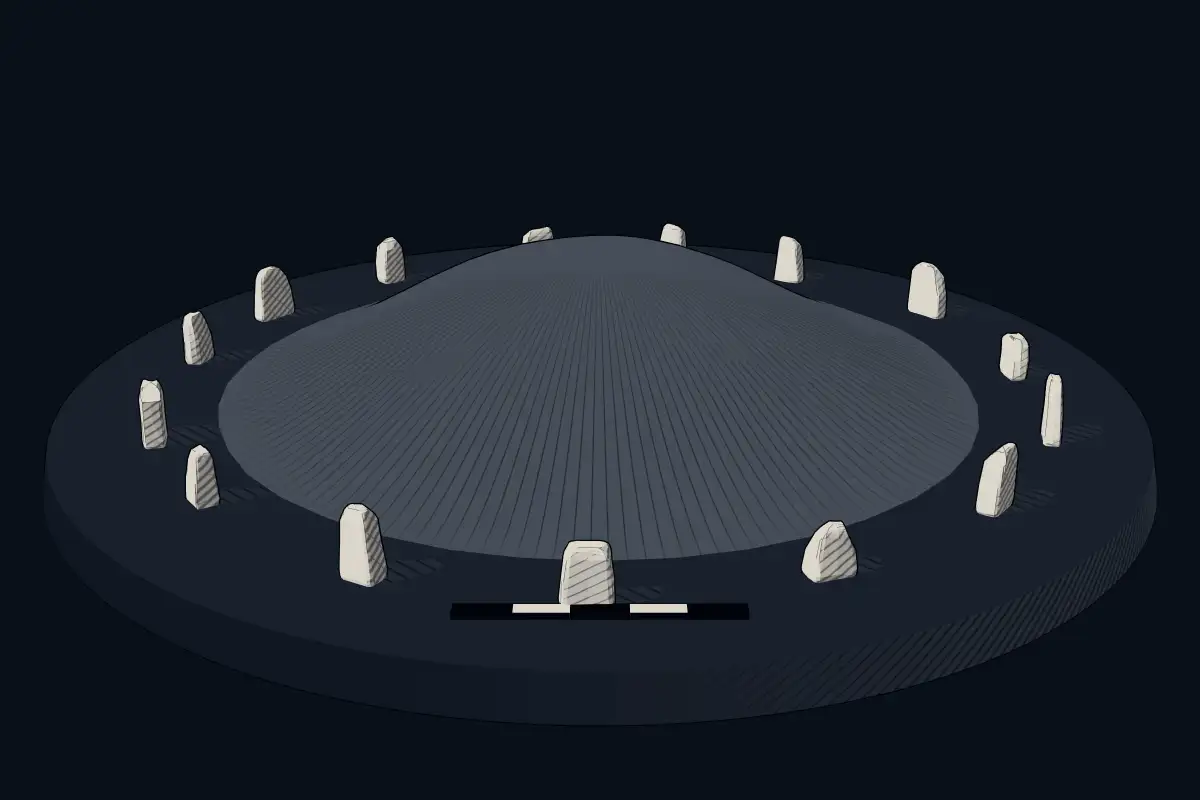
The reconstruction is ours, not a survey: it shows what a monument of this type looks like, at the size the record gives for this one.
Photographs
4 photographs, each with its author and licence
More photographs


Lore
Evidence & Lore
What the sources actually support — and, kept apart, what has been claimed.
What the evidence supports
Dates
Est. 2000–500 BCEHow this date was established: Type comparisonTypical range for megalithic mounds in Finland; this site has not been dated itself. Finnish burial mounds belong to the Bronze Age of the Nordic sphere (c. 2000-500 BC); the Battle Axe culture flourished in south-west Finland c. 2800-2300 BC.Source for this date
Where it stands
Finland
The pin marks the monument itself — its exact point.
- Coordinates
- 61°06′47″ N, 22°08′46″ EFor a GPS or map app: 61.11295, 22.14616
Access is as our sources describe it; we have not visited the site to check.
Nearby
The closest sites in the Atlas, by straight line.
- Megalithic mound (tumulus with integral stones)Vanha kansakoulu (Kaunismäki)2000–500 BCE
- Megalithic mound (tumulus with integral stones)Keittiömäki2000–500 BCE
- Megalithic mound (tumulus with integral stones)Harola2000–500 BCE
- Megalithic mound (tumulus with integral stones)Solbringen2000–500 BCE
- Megalithic mound (tumulus with integral stones)Mikola2000–500 BCE
- Megalithic mound (tumulus with integral stones)Pienisuo2000–500 BCE
- Megalithic mound (tumulus with integral stones)Heikkilä2000–500 BCE
- Megalithic mound (tumulus with integral stones)Simulan metsä2000–500 BCE
Sources
Every record behind this page, with the link it came from.
2 sources behind this page
- 01Wikidata Q11879756wikidata.org
- 02Source for this dateen.wikipedia.org
Image files
Report a correctionWrong date, name, photograph or source? Tell us and it will be put right.
Around this place
The ten nearest sites, by compass
Credit
Text, licence and sources
Text from the Wikipedia article "Luistari" (Finnish), licensed CC BY-SA 4.0; authors are listed in the page history. Reused under CC BY-SA 4.0. Read on Wikipedia · Edit history and authors
- Wikipedia (Finnish): LuistariCC BY-SA 4.0
- Wikidata Q11879756CC0