
SteleFringe site
Obelisk of Axum
Also known asAxum Stele · Obelisk of Axum (Axum Stele) · Stele of Axum
Datedc. 300 CE
Photo Tesfawel · CC BY-SA 4.0Source file on Wikimedia Commons
Overview
About this site
Overview
The Obelisk of Axum is a 4th-century CE phonolite stele, 24-metre (79 ft) tall and weighing 160 tonnes (160 long tons; 180 short tons), in the city of Axum, Ethiopia. It is ornamented with two false doors at the base and has decorations resembling windows on all sides.
The monument is also known as the Axum Stele or the Stele of Axum. It was taken to Rome in 1937, returned to Ethiopia in 2005 and re-erected in 2008.
Read on Wikipedia4 min readCC BY-SA 4.0
Where it sits in time
The site's dated range, placed against world reference points.
The scale is logarithmic: each step to the left is about ten times older than the last.
Article
Obelisk of Axum
The stele is ornamented with two false doors at the base and carries decorations resembling windows on all sides.
DescriptionSources for this section
- Wikipedia (English): Obelisk of AxumCC BY-SA 4.0
Sources for this section
- Wikipedia (English): Obelisk of AxumCC BY-SA 4.0
The stele is ornamented with two false doors at the base and carries decorations resembling windows on all sides. It ends in a semi-circular top, which used to be enclosed by metal frames.
HistorySources for this section
- Wikipedia (English): Obelisk of AxumCC BY-SA 4.0
Sources for this section
- Wikipedia (English): Obelisk of AxumCC BY-SA 4.0
Properly termed a stele or, in the local languages, hawelti, the so-called obelisk stands with many other steles in Axum. The steles were probably carved and erected during the 4th century CE by subjects of the Kingdom of Aksum. Their function is supposed to have been to mark underground burial chambers. The largest were for royal burial chambers and were decorated with multi-storey false windows and false doors, while lesser nobility had smaller, less decorated ones. Only a few large steles stand, but there are hundreds of smaller ones in various stele fields. The last stele erected in Axum was probably King Ezana's Stele, in the 4th century.
King Ezana (c. 321 - c. 360), influenced by his childhood tutor Frumentius, introduced Christianity to Axum, ending the pagan practice of erecting burial steles. Many steles later fell, from structural collapse (as probably in the case of the Great Stele, measuring 33 m, possibly immediately after its erection), from earthquakes, or during the military incursions of the Imam Ahmad Ibrahim in the Ethiopian-Adal War from 1529 to 1543. In the 19th century, of the three major royal steles only King Ezana's Stele remained erect.
Later historySources for this section
- Wikipedia (English): Obelisk of AxumCC BY-SA 4.0
Sources for this section
- Wikipedia (English): Obelisk of AxumCC BY-SA 4.0
The Italian occupation of Ethiopia ended in 1937 with looting, in which the Obelisk of Axum was taken to Italy as war spoil. The monolith was cut into three pieces and transported by truck from Axum to the port of Massawa, in five trips over two months. It travelled by the ship Adwa, arriving in Naples on 27 March 1937. It was restored, reassembled and erected in Rome on Porta Capena square, in front of the Ministry for Italian Africa, and was unveiled on 28 October 1937. The operation was coordinated by Ugo Monneret de Villard.
In a 1947 UN agreement Italy agreed to return the stele to Ethiopia, together with the Monument to the Lion of Judah, which was returned in 1967. Little action was taken on the stele for more than 50 years, partly because of the technical difficulties of transporting it. After the fall of the Mengistu regime the Ethiopian government again asked for its return and received a positive answer in April 1997 from the Italian president Oscar Luigi Scalfaro. Dismantling began in November 2003 under Giorgio Croci of Sapienza University of Rome. Obstacles included the length of the runway at Axum Airport and the state of the roads and bridges. The runway was upgraded, and the three pieces were flown to Ethiopia on an Antonov An-124 between 19 April 2005 and 25 April 2005, at a cost to Italy of $7.7 million.
ConservationSources for this section
- Wikipedia (English): Obelisk of AxumCC BY-SA 4.0
Sources for this section
- Wikipedia (English): Obelisk of AxumCC BY-SA 4.0
The stele was hit by lightning over Rome on 27 May 2002, which caused considerable damage. In the new reconstruction the three sections are fixed together by a total of eight aramid fiber (Kevlar) bars, four between the first and second sections and four between the second and third, which avoids the use of steel. Reassembly began in June 2008 with a team chosen by UNESCO and led by Giorgio Croci, and the monument was re-erected near King Ezana's Stele and unveiled on 4 September 2008.
Research historySources for this section
- Wikipedia (English): Obelisk of AxumCC BY-SA 4.0
Sources for this section
- Wikipedia (English): Obelisk of AxumCC BY-SA 4.0
The Zamani Project documents cultural heritage sites in 3D by terrestrial laser scanning. The documentation of parts of the Axum Stelae Field was carried out in 2006.
Tradition and region
About this kind of monument
Steles in Europe and elsewhere
A stele (or stela) is a stone or wooden slab, generally taller than it is wide, erected in the ancient world as a monument. The Greek and Roman use is well known. Its surface often has text, ornament, or both, inscribed, carved in relief or painted. Steles were created for many reasons: grave steles served funerary or commemorative purposes, slabs of stone were used as Greek and Roman government notices or as boundary markers, and steles were occasionally erected as memorials to battles.
The Atlas applies the heading to a very mixed group of monuments: carved standing stones of the Bronze Age and Iron Age, funerary steles of the classical and medieval periods, Roman milestones and cippi, medieval cross-stones, wayside crosses, and modern memorials. A reader should treat the type "stele" as a form and not as a date. Prehistoric steles, such as the statue menhirs of the Copper Age, are usually carved with a human figure and sometimes with weapons.
Because many steles carry a date or the name of a ruler, they are among the best dated stone monuments; for those that do not, the Atlas gives a broad range based on style.
The best-known examples show the range. The Gwanggaeto Stele in China, erected in 414 CE, is the largest engraved stele in the world; Maya stelae of the Classic Period (about 250 to 900 CE) are tall sculpted shafts paired with low circular altars; the first Armenian khachkars date from the ninth century; and the Grave Stele of Hegeso in Athens was carved about 410 to 400 BCE.
When visiting, read the inscription and note the carved figure or symbol.
Paraphrased from Wikipedia: Stele, Wikipedia: Statue menhir, Wikipedia: Menhir, Wikipedia: Wayside cross, Wikipedia: Grave Stele of Hegeso, Wikipedia: Gwanggaeto Stele · CC BY-SA 4.0
From the article
Dated moments in the story
- 1937
The Italian occupation of Ethiopia ended in 1937 with looting, in which the Obelisk of Axum was taken to Italy as war spoil.
Source - 1937
It travelled by the ship, Adwa, arriving in Naples on March 27, 1937. It was then transported to Rome, where it was restored, reassembled and erected on Porta Capena square in front of the Ministry for Italian Africa (later the headquarters of the United Nations's Food and Agriculture Organization) and the Circus...
Source - 1937
The obelisk was officially unveiled on October 28, 1937 to commemorate the fifteenth anniversary of the March on Rome.
Source - 1947
A bronze statue of the Lion of Judah, symbol of the Ethiopian monarchy, was taken along with the obelisk and displayed in front of Termini railway station. In a 1947 UN agreement, Italy agreed to return the stele to Ethiopia, along with the other looted piece, the Monument to the Lion of Judah.
Source - 1967
While the latter was returned in 1967 following the 1961 visit of emperor Haile Selassie to Italy, little action was taken to return the stele for more than 50 years, partly as a consequence of the considerable technical difficulties related to its transportation.
Source - 1974
Colonel Mengistu Haile Mariam, who overthrew the emperor in 1974, asked the Italian government to return the stele to Ethiopia.
Source - 2002
When the obelisk was hit by lightning during a violent thunderstorm over Rome on 27 May 2002, this caused "considerable" damage.
Source - 2005
The dismantled stele remained sitting in a warehouse near Rome's Leonardo Da Vinci International Airport, until 19 April 2005 when the middle piece was repatriated by use of an Antonov An-124, amidst much local celebration.
Source - 2005
The second piece was returned on 22 April 2005, with the final piece returned on 25 April 2005. The operation cost Italy $7.7 million.
Source - 2006
The 3D documentation of parts of the Axum Stelae Field was carried out in 2006.
Source - 2007
By March 2007 the foundation had been poured for the re-erection of the stele near King Ezana's Stele, structurally consolidated in this occasion.
Source - 2008
Reassembly began in June 2008, with a team chosen by UNESCO and led by Giorgio Croci, and the monument was re-erected in its original home and unveiled on 4 September 2008. When it was reassembled in Rome in 1937, three steel bars were inserted per section.
Source
See it in 3D
An interpretive reconstruction of the monument, standing on the real ground at its exact point, under the sun for that place and season. Drag to look around it.
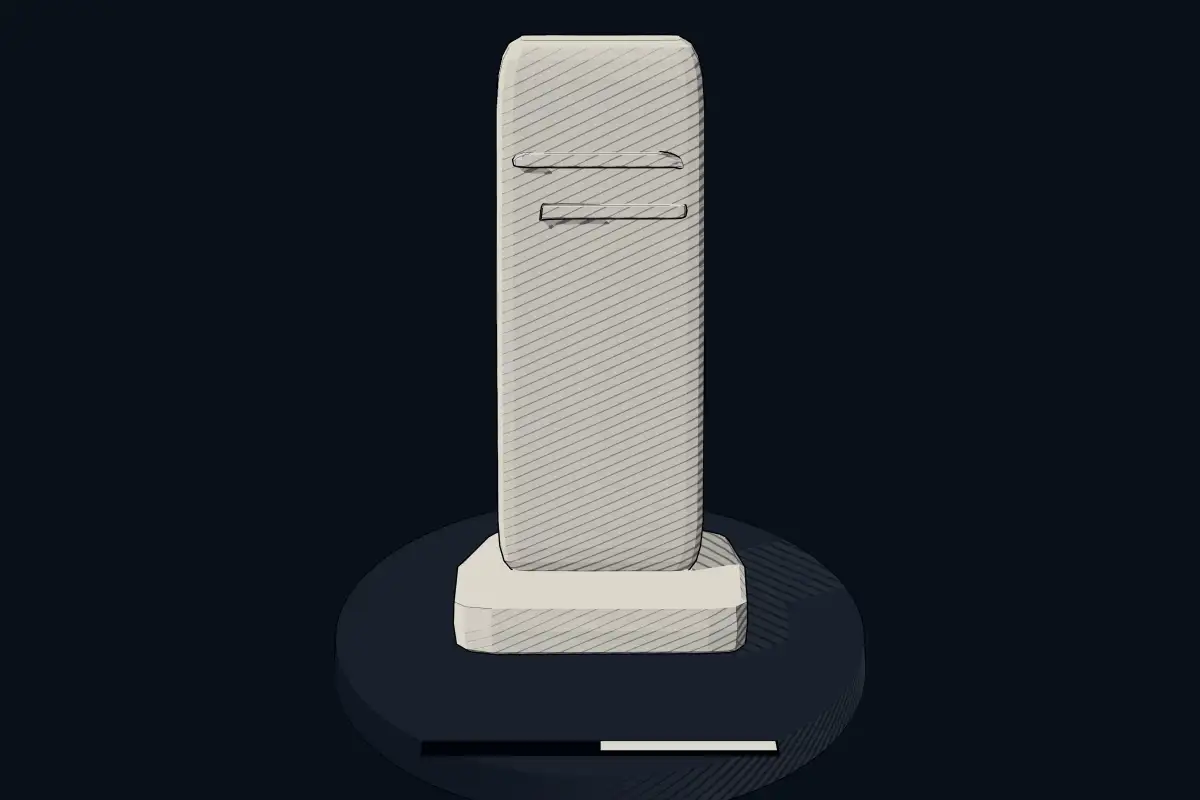
The reconstruction is ours, not a survey: it shows what a monument of this type looks like, at the size the record gives for this one.
Photographs
8 photographs, each with its author and licence
More photographs
Lore
Evidence & Lore
What the sources actually support — and, kept apart, what has been claimed.
What the evidence supports
Dates
Est. 3000 BCE–900 CEHow this date was established: Type comparisonTypological estimate, not a date for this site: a stele in East Africa and the Horn is normally dated between 3000 BCE and 900 CE (Atlas typological table).Source for this date
Measured facts
- Location
- Axum, EthiopiaSource: Location
- Material
- phonoliteSource: Material
- Height
- 24 metres (79 ft)Source: Height
- Weight
- 160 tonnesSource: Weight
- Decoration
- two false doors at the base and window-like designs on all sidesSource: Decoration
- Former feature
- metal frames around the semi-circular topSource: Former feature
- Inception
- 300s CESource: Inception
Where it stands
Ethiopia
The pin marks the monument itself — its exact point.
- Coordinates
- 14°07′56″ N, 38°43′11″ EFor a GPS or map app: 14.13217, 38.71967
Access is as our sources describe it; we have not visited the site to check.
Nearby
The closest sites in the Atlas, by straight line.


Sources
Every record behind this page, with the link it came from.
2 sources behind this page
- 01Wikidata Q2308606wikidata.org
- 02Fringe claim sourceen.wikipedia.org
Image files
- Aksum obelisk.jpgTesfawelCC BY-SA 4.0
- Rome Stele.jpgOndřej ŽváčekCC BY 2.5
- Obelisk of Aksum Remains.jpgAllamiroCC BY-SA 4.0
- Obelisk of Aksum Remains4.jpgAllamiroCC BY-SA 4.0
- AxumObelisk4.jpgO.MustafinCC0
- Aksum-107559.jpgMichel RavassardCC BY-SA 3.0 igo
- Aksum-107549.jpgMichel RavassardCC BY-SA 3.0 igo
- AxumObelisk1.jpgO.MustafinCC0
Report a correctionWrong date, name, photograph or source? Tell us and it will be put right.
Around this place
The ten nearest sites, by compass
Credit
Text, licence and sources
Adapted from the Wikipedia article "Obelisk of Axum" (English), licensed CC BY-SA 4.0; authors are listed in the page history. Reused under CC BY-SA 4.0. Read on Wikipedia · Edit history and authors
- Wikipedia (English): Obelisk of AxumCC BY-SA 4.0
- Wikidata Q2308606CC0