Dolmen de Coma de Gall
DatedEst. 4000–3000 BCE
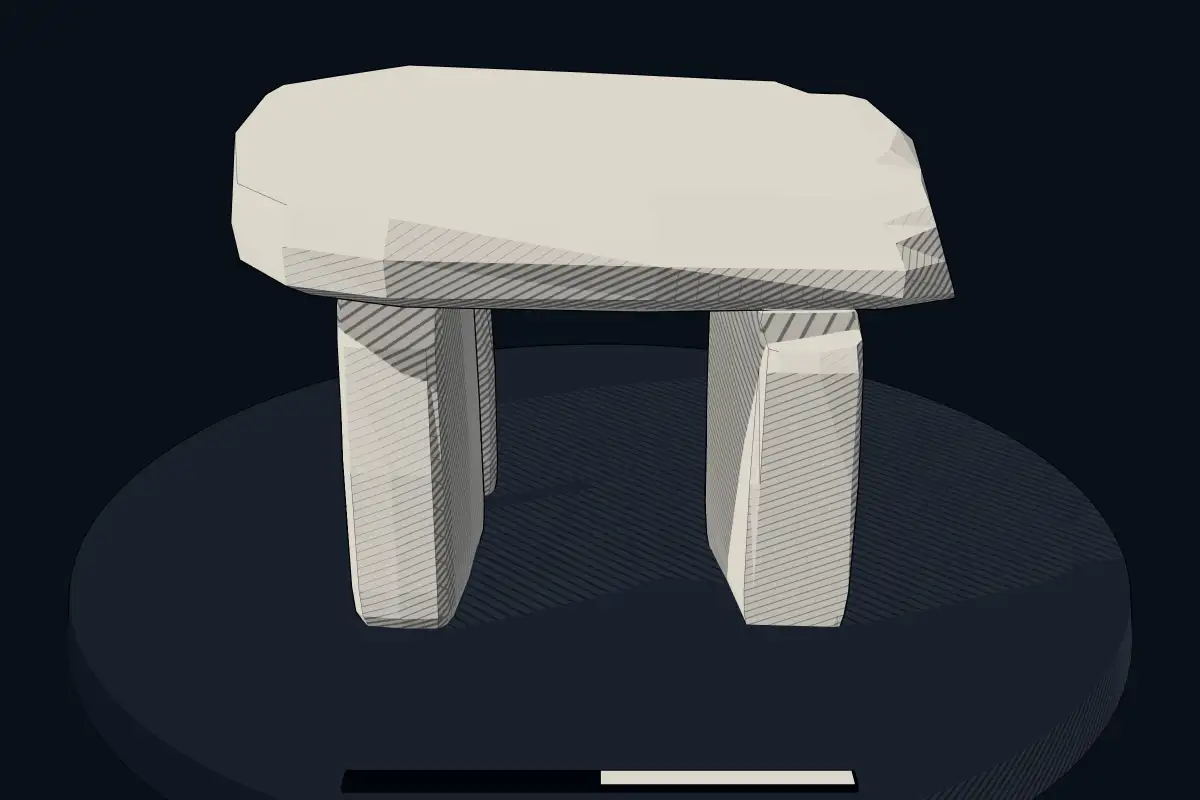
No licensed photograph yetWe have no photograph we may publish for this site, so the interpretive 3D view leads instead.
Overview
About this site
What the sources say
Dolmen de Coma de Gall is a dolmen in Cantallops, Spain. In open records it appears as Wikidata item Q56197025, mapped at 42.4267° N, 2.9485° E.
Built from structured records, not from an articleSources and licences
Where it sits in time
The site's dated range, placed against world reference points.
The scale is logarithmic: each step to the left is about ten times older than the last.
The full article
About Dolmen de Coma de Gall
This kind of monument hereSources for this section
- en.wikipedia.orgCC BY-SA 4.0
- en.wikipedia.orgCC BY-SA 4.0
- en.wikipedia.orgCC BY-SA 4.0
- en.wikipedia.orgCC BY-SA 4.0
- en.wikipedia.orgCC BY-SA 4.0
Sources for this section
- en.wikipedia.orgCC BY-SA 4.0
- en.wikipedia.orgCC BY-SA 4.0
- en.wikipedia.orgCC BY-SA 4.0
- en.wikipedia.orgCC BY-SA 4.0
- en.wikipedia.orgCC BY-SA 4.0
Spain has a great many megalithic tombs, and the Atlas's Spanish dolmens run from Andalusia in the south to Galicia in the north-west. The finest are at Antequera in Andalusia, where the Dolmen of Menga, dated to about 3750 to 3650 BCE, is among the largest ancient megalithic structures in Europe. It is 27.5 metres long, 6 metres wide and 3.5 metres high, built with thirty-two megaliths, the largest weighing about 180 tonnes. After the chamber was finished it was covered with soil and built up into the hill seen today; when it was opened in the nineteenth century archaeologists found the skeletons of several hundred people. The Dolmen of Viera stands 70 metres away, and the tholos of El Romeral lies about 4 kilometres off; the three were inscribed as the Antequera Dolmens Site, a UNESCO World Heritage Site, in 2016. The full article, “Dolmens of Andalusia, Extremadura and Galicia”, follows below under About this kind of monument.
DatingSources for this section
- en.wikipedia.orgCC BY-SA 4.0
Sources for this section
- en.wikipedia.orgCC BY-SA 4.0
Typological estimate, not a date for this site: monuments of this kind in this region are normally dated 4000 BCE to 3000 BCE. The range comes from what is known about dolmen monuments in Spain; nothing measured on this site itself is on record, so it may be younger or older than the range suggests.
The range rests on this regional background (source: the Wikipedia article “Dolmen”): Most dolmens date from the Late Neolithic period (4000-3000 BCE); the Dolmen of Menga in Andalusia dates to about 3750-3650 BCE.
Landscape and neighbours
Within 10 km lie 64 other catalogued sites (5 within 1 km, 33 within 5 km); 46 of them are also classed as dolmen. That puts it inside a dense cluster of monuments. It is one of 6 dolmen records among the 7 sites catalogued in Cantallops, Spain.
Nearest to it are Dolmen del Gorg Negre (0.5 km north-east, dolmen); Dolmen del Coll de Medàs II (0.7 km north-west, dolmen); Dolmen del Coll de Medàs IV (0.8 km north-west, dolmen); Dolmen del Coll de Medàs I (0.8 km north-west, dolmen). The catalogue is assembled from open records and is not complete, so unrecorded monuments may lie closer.
Records and protectionSources for this section
Sources for this section
The open records used here carry no heritage designation for the site, which says nothing either way about its legal status. The open records for it are Wikidata (Q56197025), where corrections and further identifiers can be added. Sites of this kind often lie on farmland or other private ground, so check local access rules before visiting and leave the monument as you found it.
How this page was madeSources for this section
Sources for this section
Nothing on this page was written by an AI model: it is assembled by program from Wikidata (CC0) and the regional article “Dolmens of Andalusia, Extremadura and Galicia”, written for the Atlas from the Wikipedia articles it cites (CC BY-SA 4.0), with distances and counts calculated from the catalogue coordinates.
Tradition and region
About this kind of monument
Dolmens of Andalusia, Extremadura and Galicia
Spain has a great many megalithic tombs, and the Atlas's Spanish dolmens run from Andalusia in the south to Galicia in the north-west. The finest are at Antequera in Andalusia, where the Dolmen of Menga, dated to about 3750 to 3650 BCE, is among the largest ancient megalithic structures in Europe. It is 27.5 metres long, 6 metres wide and 3.5 metres high, built with thirty-two megaliths, the largest weighing about 180 tonnes. After the chamber was finished it was covered with soil and built up into the hill seen today; when it was opened in the nineteenth century archaeologists found the skeletons of several hundred people. The Dolmen of Viera stands 70 metres away, and the tholos of El Romeral lies about 4 kilometres off; the three were inscribed as the Antequera Dolmens Site, a UNESCO World Heritage Site, in 2016.
In the south-west, the Dolmen de Soto at Trigueros in Huelva province is a Neolithic tomb estimated to date between 3000 and 2500 BCE, one of about 200 Neolithic burial sites in the province. It was found in 1922 when its owner, Armando de Soto Morillas, wanted to build a house; the German archaeologist Hugo Obermaier found eight bodies in a fetal position with artefacts, and its engraved and painted uprights have been studied more recently.
In Galicia and Portugal a dolmen is an anta, and in Catalan-speaking areas dolmens have folk names such as cova (cave), caixa (crate or coffin), taula (table) and arca (chest). These names are tradition: they record what people made of the monuments, not what they were built for.
When visiting Menga, look at the great capstones from inside the corridor, and at the way the mound was built up over the chamber.
Paraphrased from Wikipedia: Dolmen of Menga, Wikipedia: Dolmen of Viera, Wikipedia: Antequera Dolmens Site, Wikipedia: Dolmen de Soto, Wikipedia: Dolmen · CC BY-SA 4.0
See it in 3D
An interpretive reconstruction of the monument, standing on the real ground at its exact point, under the sun for that place and season. Drag to look around it.
The reconstruction is ours, not a survey: it shows what a monument of this type looks like, at the size the record gives for this one.
Lore
Evidence & Lore
What the sources actually support — and, kept apart, what has been claimed.
What the evidence supports
Dates
Est. 4000–3000 BCEHow this date was established: Type comparisonTypical range for dolmens in Spain; this site has not been dated itself. Most dolmens date from the Late Neolithic period (4000-3000 BCE); the Dolmen of Menga in Andalusia dates to about 3750-3650 BCE.Source for this date
Where it stands
Spain
The pin marks the monument itself — its exact point.
- Coordinates
- 42°25′36″ N, 2°56′55″ EFor a GPS or map app: 42.42675, 2.94850
Access is as our sources describe it; we have not visited the site to check.
Nearby
The closest sites in the Atlas, by straight line.
- DolmenDolmen del Gorg Negre4000–3000 BCE
 Dolmen del Coll de Medàs II4000–3000 BCE
- DolmenDolmen del Coll de Medàs IV4000–3000 BCE
 Dolmen del Coll de Medàs I4000–3000 BCE
 Dolmen del Coll de Medàs III4000–3000 BCE
- Dolmendòlmens del Coll del Medàs4000–3000 BCE
- DolmenSalt d'en Peió4000–3000 BCE
 Dolmen de Fontanilles4000–3000 BCE


Sources
Every record behind this page, with the link it came from.
2 sources behind this page
- 01Wikidata Q56197025wikidata.org
- 02Source for this dateen.wikipedia.org
Report a correctionWrong date, name, photograph or source? Tell us and it will be put right.
Around this place
The ten nearest sites, by compass
- Dolmen del Gorg Negre0.5 km NE
- Dolmen del Coll de Medàs II0.7 km NW
- Dolmen del Coll de Medàs IV0.8 km NW
- Dolmen del Coll de Medàs I0.8 km NW
- Dolmen del Coll de Medàs III0.8 km NW
- dòlmens del Coll del Medàs1.1 km NW
- Salt d'en Peió2.1 km SE
- Dolmen de Fontanilles2.4 km SE
- Dolmen de la Font del Roure2.5 km E
- Menhir del Castellà3.0 km SE
Credit
Text, licence and sources
This page is assembled from open records (Wikidata, CC0; OpenStreetMap, ODbL) and a tradition article paraphrasing Wikipedia (CC BY-SA 4.0). No article exists for this site, and nothing here is written by a model.
- Wikidata Q56197025CC0
- en.wikipedia.orgCC BY-SA 4.0
- en.wikipedia.orgCC BY-SA 4.0
- en.wikipedia.orgCC BY-SA 4.0
- en.wikipedia.orgCC BY-SA 4.0
- en.wikipedia.orgCC BY-SA 4.0