
Monumental monolith (other)UNESCO World Heritage
Unfinished Obelisk (Aswan)
Datedc. 1508–1458 BCE
Photo Holger Uwe Schmitt · CC BY-SA 4.0Source file on Wikimedia Commons
Overview
About this site
Overview
The Unfinished Obelisk is an abandoned obelisk of rose granite lying in the northern region of the ancient stone quarries at Aswan, Egypt. Its creation was possibly ordered by Hatshepsut (1508–1458 BC), and it is the largest known ancient obelisk.
The obelisk was carved directly out of bedrock, but cracks appeared in the granite and the project was abandoned. Its underside is still attached to the bedrock.
Read on Wikipedia2 min readCC BY-SA 4.0
Age sources
How old this site is, and who says so.
Range across all claimsc. 1508–1458 BCE
MeasuredWhat this badge means
A physical measurement of this site: a radiocarbon date, a tree-ring count, a luminescence date, or a record that can itself be dated.
- 1508–1458 BCEHistorical recordThe range corresponds to the reign of the person who may have ordered its creation.Source: en.wikipedia.org
- 1500 BCEAtlas research notesc. 1500 BCE (commonly attributed)Source: en.wikipedia.org
Where it sits in time
The site's dated range, placed against world reference points.
The scale is logarithmic: each step to the left is about ten times older than the last.
Article
Unfinished Obelisk (Aswan)
The unfinished obelisk is nearly one-third larger than any ancient Egyptian obelisk ever erected.
DescriptionSources for this section
- Wikipedia (English): Unfinished obeliskCC BY-SA 4.0
Sources for this section
- Wikipedia (English): Unfinished obeliskCC BY-SA 4.0
The unfinished obelisk is nearly one-third larger than any ancient Egyptian obelisk ever erected. If finished it would have measured around 41.75 metres (137.0 ft) and would have weighed nearly 1,090 tonnes (1,200 short tons).
Marks from the workers' tools are still clearly visible, as are ochre-coloured lines marking where they were working. The monument therefore offers unusual insights into ancient Egyptian stone-working techniques.
HistorySources for this section
- Wikipedia (English): Unfinished obeliskCC BY-SA 4.0
Sources for this section
- Wikipedia (English): Unfinished obeliskCC BY-SA 4.0
The obelisk was possibly ordered by Hatshepsut, possibly to complement what would later be known as the Lateran Obelisk, which was originally at Karnak and was later brought to the Lateran Palace in Rome.
Research historySources for this section
- Wikipedia (English): Unfinished obeliskCC BY-SA 4.0
Sources for this section
- Wikipedia (English): Unfinished obeliskCC BY-SA 4.0
The obelisk was studied in detail by Reginald Engelbach in 1922. An unfinished, partly worked obelisk base was discovered in 2005 at the quarries of Aswan, together with some rock carvings and remains that may correspond to the site where most of the famous obelisks were worked.
ConservationSources for this section
- Wikipedia (English): Unfinished obeliskCC BY-SA 4.0
Sources for this section
- Wikipedia (English): Unfinished obeliskCC BY-SA 4.0
The obelisk and the wider quarry were inscribed on the UNESCO World Heritage List in 1979 along with other examples of Upper Egyptian architecture, as part of the "Nubian Monuments from Abu Simbel to Philae". The quarries in Aswan and the unfinished objects form an open-air museum and are officially protected by the Egyptian government as an archaeological site.
Tradition and region
About this kind of monument
Recumbent stone circles and other stone arrangements
A recumbent stone circle is a type of stone circle with a large monolith, the recumbent, lying on its side. They are found in only two regions: Aberdeenshire in north-east Scotland, and the far south-west of Ireland in Cork and Kerry, where they are now more commonly called Cork-Kerry or axial stone circles. More than 70 have been definitively identified in Aberdeenshire, and they are believed to be linked to the Clava cairns of the Inverness area.
The recumbent is always laid horizontally with its long axis generally aligned with the perimeter of the ring, between the south and south-west. A flanker stone stands each side of it and these are typically the tallest stones in the circle, while the smallest is on the north-east side. They were built in the early Bronze Age. Aquhorthies near Portlethen in Aberdeenshire has a ring cairn and a recumbent stone circle which unusually has two rings.
Some archaeologists, such as Aubrey Burl, have associated recumbent circles with rituals in which moonlight played a central part, since they are aligned with the arc of the southern moon. Recent excavations at Tomnaverie stone circle have suggested that no alignment of the circle was intended, so the lunar idea is a hypothesis.
The Atlas also puts here a handful of other stone arrangements and single monoliths that do not fit its other types. Each has its own local meaning that this article cannot cover, and they are undated unless a source gives a date.
When visiting, look for the recumbent between the two tall flankers, and note which way it faces.
Paraphrased from Wikipedia: Recumbent stone circle, Wikipedia: Aquhorthies stone circle, Wikipedia: Stone circle · CC BY-SA 4.0
From the article
Dated moments in the story
- 1458 BCE
Its creation was possibly ordered by Hatshepsut (1508–1458 BC), possibly to complement what would later be known as the Lateran Obelisk (which was originally at Karnak, and was later brought to the Lateran Palace in Rome).
Source - 1922
It was studied in detail by Reginald Engelbach in 1922. The obelisk and wider quarry were inscribed on the UNESCO World Heritage List in 1979 along with other examples of Upper Egyptian architecture, as part of the "Nubian Monuments from Abu Simbel to Philae" (despite the quarry site being neither Nubian, nor...
Source - 2005
Besides the unfinished obelisk, an unfinished, partly worked obelisk base was discovered in 2005 at the quarries of Aswan.
Source
See it in 3D
An interpretive reconstruction of the monument, standing on the real ground at its exact point, under the sun for that place and season. Drag to look around it.
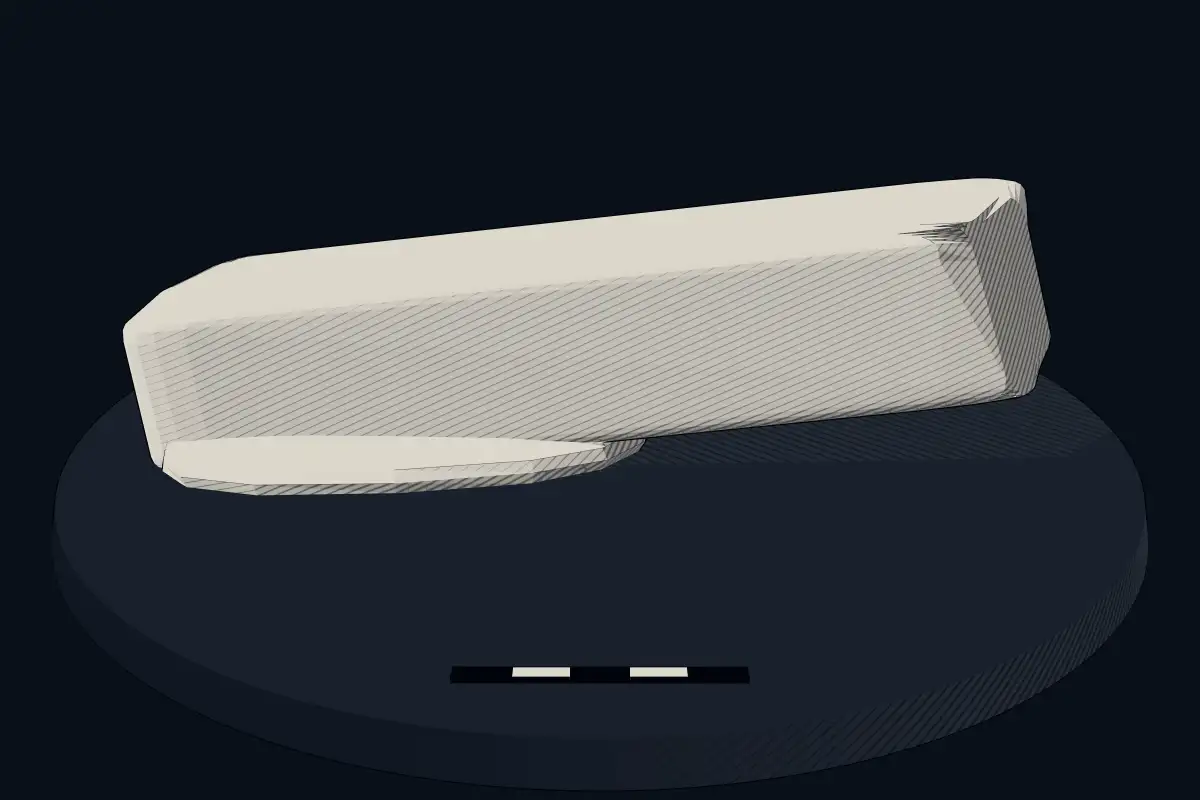
The reconstruction is ours, not a survey: it shows what a monument of this type looks like, at the size the record gives for this one.
Photographs
5 photographs, each with its author and licence
More photographs
Lore
Evidence & Lore
What the sources actually support — and, kept apart, what has been claimed.
What the evidence supports
Dates
1508–1458 BCEHow this date was established: Historical sourcesThe range corresponds to the reign of the person who may have ordered its creation.Source for this date
Measured facts
- Mainstream position
- Its creators began carving the obelisk directly from bedrock, but cracks appeared in the granite and the project was abandoned.Source: Mainstream position
- Location
- northern region of the ancient stone quarries at AswanSource: Location
- Material
- rose graniteSource: Material
- Potential completed length
- around 41.75 metresSource: Potential completed length
- Potential completed weight
- nearly 1,090 tonnesSource: Potential completed weight
- Detailed study
- Reginald Engelbach in 1922Source: Detailed study
- UNESCO inscription
- 1979Source: UNESCO inscription
- Inception
- 1st millennium BCESource: Inception
Alternative claims
Alternative claims about this site, kept in their own block and labelled with where they stand.
The obelisk was ordered by Hatshepsut.
UntestedSource for this claim: The obelisk was ordered by Hatshepsut.
Where it stands
Egypt
The pin marks the monument itself — its exact point.
- Coordinates
- 24°04′37″ N, 32°53′44″ EFor a GPS or map app: 24.07689, 32.89544
Access is as our sources describe it; we have not visited the site to check.
Nearby
The closest sites in the Atlas, by straight line.


Sources
Every record behind this page, with the link it came from.
3 sources behind this page
- 01Q735438wikidata.org
- 02Unfinished_obelisken.wikipedia.org
- 03World Heritage List entry 88whc.unesco.org
Image files
- 41,75 Meter lang ist der unvollendete Obelisk in Assuan. 01.jpgHolger Uwe SchmittCC BY-SA 4.0
- Obelisco inacabado, Asuán, Egipto, 2022-04-01, DD 153.jpgDiego DelsoCC BY-SA 4.0
- Assuan Unvollendeter Obelisk 04.JPGOlaf TauschCC BY 3.0
- Assuan Unvollendeter Obelisk 03.JPGOlaf TauschCC BY 3.0
- 41,75 Meter lang ist der unvollendete Obelisk in Assuan. 02.jpgHolger Uwe SchmittCC BY-SA 4.0
Report a correctionWrong date, name, photograph or source? Tell us and it will be put right.
Lore, kept apart
Legends and claims
These are stories and claims reported by the sources. They are not evidence, and they never stand in for the dating above.
- Tested: not supported
The obelisk was ordered by Hatshepsut.
Source
Around this place
The ten nearest sites, by compass
Credit
Text, licence and sources
Adapted from the Wikipedia article "Unfinished obelisk" (English), licensed CC BY-SA 4.0; authors are listed in the page history. Reused under CC BY-SA 4.0. Read on Wikipedia · Edit history and authors
- Wikipedia (English): Unfinished obeliskCC BY-SA 4.0
- Q735438CC0