_-_crop.jpg/1920px-Stele_Giustiniani_(Berlin_Antikensammlung_Sk_1482)_-_crop.jpg 1920w)

Overview
About this site
Overview
The Stele Giustiniani, also called the Giustiniani Stele, is an ancient Greek grave stele with a relief of a young girl. The marble stele was made around 460 BCE, probably on the Greek island of Paros, and is now in the Antikensammlung Berlin, displayed in the Altes Museum.
Because of its good state of preservation and high artistic quality it is counted among the most important works in the Berlin collection of antiquities.
Read on Wikipedia3 min readCC BY-SA 4.0
Article
Stele Giustiniani
It is crowned by a large volute palmette, a form usual for Greek grave stelae since the late 6th century BCE.
DescriptionSources for this section
- Wikipedia (German): Stele GiustinianiCC BY-SA 4.0
Sources for this section
- Wikipedia (German): Stele GiustinianiCC BY-SA 4.0
The stele is flat and upright-rectangular, 1.43 metres high. It tapers slightly from bottom to top, its width changing from 46 cm to 40 cm. It is crowned by a large volute palmette, a form usual for Greek grave stelae since the late 6th century BCE. Although the relief is not deeply worked, the heavy folds of the garment suggest greater spatial depth.
The girl is shown in profile with her head lowered. Her gaze is directed at a box, a pyxis, in her left hand. Between the thumb and forefinger of her raised right hand she holds something, probably grains of incense. The cylindrical lid lying on the ground, which could be placed over the box, suggests a volatile fragrant substance as its content, which the girl lets fall as an offering towards the lid. She wears an ungirdled peplos. The movement of the body shows only slightly beneath the heavy woollen cloth. The peplos is open at the side and shows an overfold falling to the hips. The open peplos is typical in Greek art of unmarried girls (parthenos), as is the hairstyle, in which the hair is tied up with a band wound several times around the head. The garment was held at the shoulder with a pin, and a drill hole at that place shows that a metal pin was fixed there. Metal jewellery was likewise inserted at the earlobe. On her feet she wears sandals, of which only the soles are visible. The lacing was probably painted on in colour.
DatingSources for this section
- Wikipedia (German): Stele GiustinianiCC BY-SA 4.0
Sources for this section
- Wikipedia (German): Stele GiustinianiCC BY-SA 4.0
The treatment of the peplos corresponds to the figures on the metopes of the Temple of Zeus at Olympia, which can be dated to around 460 BCE by means other than style. The stance, with the left leg slightly advanced and relaxed, also points to this time, and the design of the volute palmette fits the middle of the 5th century BCE. The stele therefore belongs to the Severe Style of classical Greek art, which placed great value on contrapposto (body movement, free leg and standing leg). The pensive inclination of the head is characteristic of the art of the Greek classical period and is regarded as a pictorial formula for inner movement.
HistorySources for this section
- Wikipedia (German): Stele GiustinianiCC BY-SA 4.0
Sources for this section
- Wikipedia (German): Stele GiustinianiCC BY-SA 4.0
The stele is named after its former owners, the Venetian Giustiniani family. A large part of the pieces in the collection was acquired in Greece. Parts of the collection, and with them the stele, came to the Antikensammlung in Berlin in 1897. The findspot of the stele is unknown. It was probably made on Paros, a supposition supported by the material, since the grey-white, large-crystalled marble is regarded by archaeologists as typical of the Cycladic island of Paros.
InterpretationSources for this section
- Wikipedia (German): Stele GiustinianiCC BY-SA 4.0
Sources for this section
- Wikipedia (German): Stele GiustinianiCC BY-SA 4.0
Girls who had outgrown childhood but were not yet married, like the one depicted, were mourned with particular intensity, as inscriptions and epigrams handed down show. The beauty of the girl can accordingly be understood symbolically, as standing for a life that had just blossomed and was ended early.
Tradition and region
About this kind of monument
Modern commemorative steles
The Atlas's German and American "steles" are mostly modern memorials, and have nothing to do with prehistoric stone monuments. A stele is a stone or wooden slab, generally taller than it is wide, erected as a monument, and its surface often carries text, ornament, or both. Steles are made for many reasons: as grave markers, as boundary markers and government notices, and as memorials, including to battles.
The tradition of the commemorative stele is old and has never stopped. The Gwanggaeto Stele in China, erected in 414 CE by Jangsu in honour of his father Gwanggaeto the Great of Goguryeo, is the largest engraved stele in the world, and is one of the major sources for the history of Goguryeo. The Armenian khachkar, a carved memorial cross-stone of medieval Christian Armenian art, is a related tradition.
The German records are steles that commemorate historical events or the victims of war. The Atlas keeps them because the registers list them as stone monuments, but it marks them as modern.
For such monuments the date on the stone is easy to read, and they say nothing about prehistory. Stelae were also used by the Greeks and Romans as government notices and as boundary markers, and khachkars, with their symbolism and craftsmanship, were inscribed in 2010 on the UNESCO list of Intangible Cultural Heritage, which shows that the carving of memorial stones is a living craft.
When visiting, read the inscription, which tells you in a sentence why the monument was raised.
Paraphrased from Wikipedia: Stele, Wikipedia: Khachkar, Wikipedia: Gwanggaeto Stele · CC BY-SA 4.0
From the article
Dated moments in the story
- 460 BCE
Die Marmorstele wurde um 460 v. Chr. vermutlich auf der griechischen Insel Paros gefertigt und befindet sich heute in der Antikensammlung Berlin in der Aufstellung im Alten Museum.
Source - 460 BCE
Die Art, wie der Peplos gestaltet ist, entspricht der Darstellung auf den Metopen des Zeustempels von Olympia, der außerstilistisch um 460 v. Chr. datiert werden kann.
Source - 1897
Teile der Sammlung und damit auch die 1,43 Meter hohe Stele kamen 1897 nach Berlin in die Antikensammlung.
Source
Photographs
5 photographs, each with its author and licence
More photographs


Where it stands
Germany
The pin marks the monument itself — its exact point.
- Coordinates
- 52°31′15″ N, 13°23′47″ EFor a GPS or map app: 52.52080, 13.39640
Access is as our sources describe it; we have not visited the site to check.
Nearby
The closest sites in the Atlas, by straight line.
- Megalithic tombGroßsteingrab Altranft3500–2800 BCE
 Steinkiste im Tempelberger Forst3500–2800 BCE
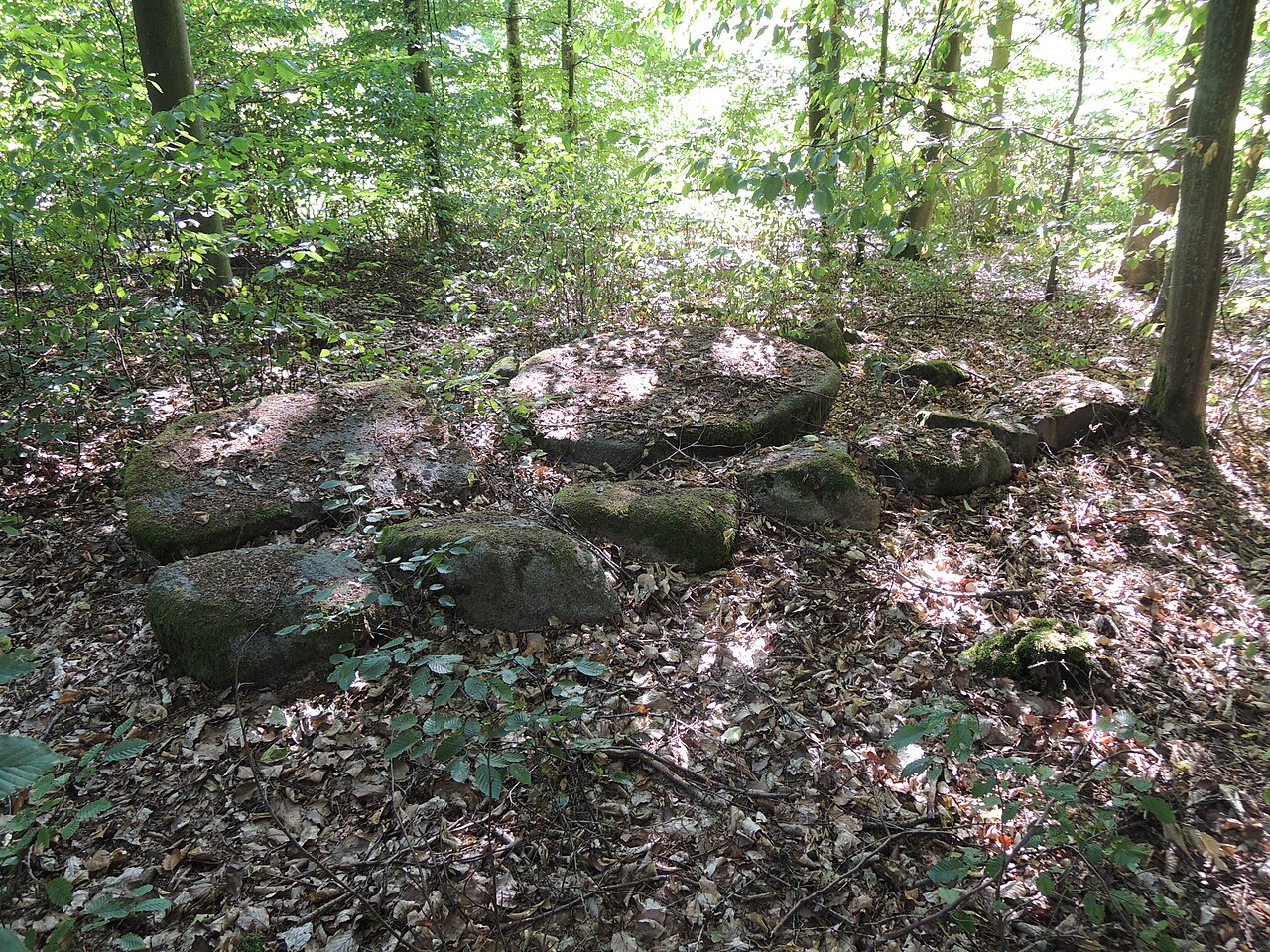 Großsteingrab Mehlsens Ruh3500–2800 BCE
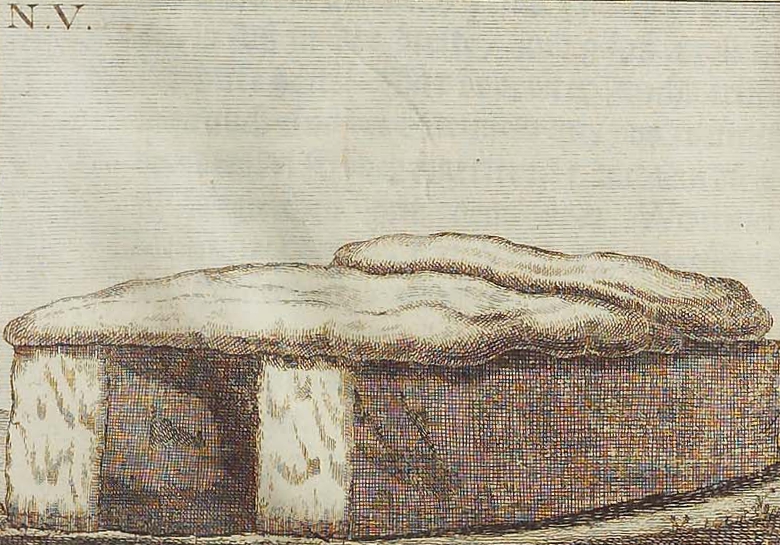 Großsteingrab Golice3500–2800 BCE
Photo: Johann Christoph Bekmann, Bernhard Ludwig Bekmann · Public domain
- Megalithic tombGroßsteingrab Menz3500–2800 BCE
- Megalithic tombGroßsteingräber bei Hessenhagen3500–2800 BCE
 Großsteingrab Stegelitz 23500–2800 BCE
 Großsteingrab Stegelitz 13500–2800 BCE


Sources
Every record behind this page, with the link it came from.
1 source behind this page
- 01Wikidata Q2342006wikidata.org
Image files
- Stele Giustiniani (Berlin Antikensammlung Sk 1482) - crop.jpgIngrid GeskeCC BY-SA 4.0
- Marble Funerary Relief of a Girl - The So-called Stele Giustiniani (39879557301).jpgDavid Merrett from Daventry, EnglandCC BY 2.0
- Greek Marble Funerary Relief of Girl from Island of Paros, c. 460 BC (28123298793).jpgGary Todd from Xinzheng, ChinaCC0
- Stele Giustiniani (Berlin Antikensammlung Sk 1482).jpgIngrid GeskeCC BY-SA 4.0
- Stele giustiniani con rilievo funebre di una fanciulla, forse da paro, 460 ac ca.JPGSailkoCC BY 3.0
Report a correctionWrong date, name, photograph or source? Tell us and it will be put right.
Around this place
The ten nearest sites, by compass
- Großsteingrab Altranft53 km NE
- Steinkiste im Tempelberger Forst53 km E
- Großsteingrab Mehlsens Ruh62 km N
- Großsteingrab Golice70 km NE
- Großsteingrab Menz70 km N
- Großsteingräber bei Hessenhagen71 km NE
- Großsteingrab Stegelitz 273 km NE
- Großsteingrab Stegelitz 173 km NE
- Großsteingräber bei Stegelitz73 km NE
- Menhire und Steinkreis von Feldberg92 km N
Credit
Text, licence and sources
Adapted from the Wikipedia article "Stele Giustiniani" (German), licensed CC BY-SA 4.0; authors are listed in the page history. Reused under CC BY-SA 4.0. Read on Wikipedia · Edit history and authors
- Wikipedia (German): Stele GiustinianiCC BY-SA 4.0
- Wikidata Q2342006CC0