
Hauszeichenstele
Photo Olaf2 · CC BY-SA 4.0Source file on Wikimedia Commons

Overview
About this site
Overview
The Hauszeichenstele is a stele in the Altstadt (old town) of Magdeburg, Saxony-Anhalt, Germany. It commemorates the long tradition of house signs in Magdeburg and is a modern monument, built in 1990.
It is made of clinker brick on a rectangular plan and carries eleven ceramic house signs in all, made by the sculptor Wolfgang Roßdeutscher.
Read on Wikipedia2 min readCC BY-SA 4.0
Article
Hauszeichenstele
The stele stands in the Magdeburg Altstadt, south of the point where Himmelreichstraße meets Krügerbrücke.
SettingSources for this section
- Wikipedia (German): HauszeichensteleCC BY-SA 4.0
Sources for this section
- Wikipedia (German): HauszeichensteleCC BY-SA 4.0
The stele stands in the Magdeburg Altstadt, south of the point where Himmelreichstraße meets Krügerbrücke.
DescriptionSources for this section
- Wikipedia (German): HauszeichensteleCC BY-SA 4.0
Sources for this section
- Wikipedia (German): HauszeichensteleCC BY-SA 4.0
The stele is built of clinker brick with a rectangular ground plan and dates from 1990. The ceramic house signs, made by the sculptor Wolfgang Roßdeutscher, are set on all four sides. The eleven signs refer to the practice, maintained in Magdeburg over centuries, of marking houses and their names.
Unlike the house signs on the building at Alter Markt 12, 13, those on the stele are neither original historic signs nor replicas of originals. They are newly created works of art. The house names they show nevertheless go back to designations that once existed: names of houses that originally stood in the vicinity of the stele served as inspiration for the new designs, some of which are marked by coarse humour.
ContextSources for this section
- Wikipedia (German): HauszeichensteleCC BY-SA 4.0
Sources for this section
- Wikipedia (German): HauszeichensteleCC BY-SA 4.0
Steles in Germany and the United States recorded in the Atlas are mostly modern memorials and have no connection with prehistoric stone monuments. A stele is generally a stone or wooden slab, taller than it is wide, erected as a monument, and its surface often carries text, ornament, or both. Steles have been made as grave markers, as boundary markers and government notices, and as memorials.
Tradition and region
About this kind of monument
Modern commemorative steles
The Atlas's German and American "steles" are mostly modern memorials, and have nothing to do with prehistoric stone monuments. A stele is a stone or wooden slab, generally taller than it is wide, erected as a monument, and its surface often carries text, ornament, or both. Steles are made for many reasons: as grave markers, as boundary markers and government notices, and as memorials, including to battles.
The tradition of the commemorative stele is old and has never stopped. The Gwanggaeto Stele in China, erected in 414 CE by Jangsu in honour of his father Gwanggaeto the Great of Goguryeo, is the largest engraved stele in the world, and is one of the major sources for the history of Goguryeo. The Armenian khachkar, a carved memorial cross-stone of medieval Christian Armenian art, is a related tradition.
The German records are steles that commemorate historical events or the victims of war. The Atlas keeps them because the registers list them as stone monuments, but it marks them as modern.
For such monuments the date on the stone is easy to read, and they say nothing about prehistory. Stelae were also used by the Greeks and Romans as government notices and as boundary markers, and khachkars, with their symbolism and craftsmanship, were inscribed in 2010 on the UNESCO list of Intangible Cultural Heritage, which shows that the carving of memorial stones is a living craft.
When visiting, read the inscription, which tells you in a sentence why the monument was raised.
Paraphrased from Wikipedia: Stele, Wikipedia: Khachkar, Wikipedia: Gwanggaeto Stele · CC BY-SA 4.0
From the article
Dated moments in the story
- 1990
Die aus Klinkern gemauerte Stele mit rechteckigem Grundriss entstand im Jahr 1990. Sie trägt auf allen vier Seiten vom Bildhauer Wolfgang Roßdeutscher aus Keramik geschaffene Hauszeichen.
Source
Photographs
5 photographs, each with its author and licence
More photographs


Where it stands
Germany
The pin marks the monument itself — its exact point.
- Coordinates
- 52°07′45″ N, 11°38′00″ EFor a GPS or map app: 52.12908, 11.63346
Access is as our sources describe it; we have not visited the site to check.
Nearby
The closest sites in the Atlas, by straight line.
- Megalithic tombGroßsteingrab Ebendorf3500–2800 BCE
- Chambered cairnFürstengrab von Gommern
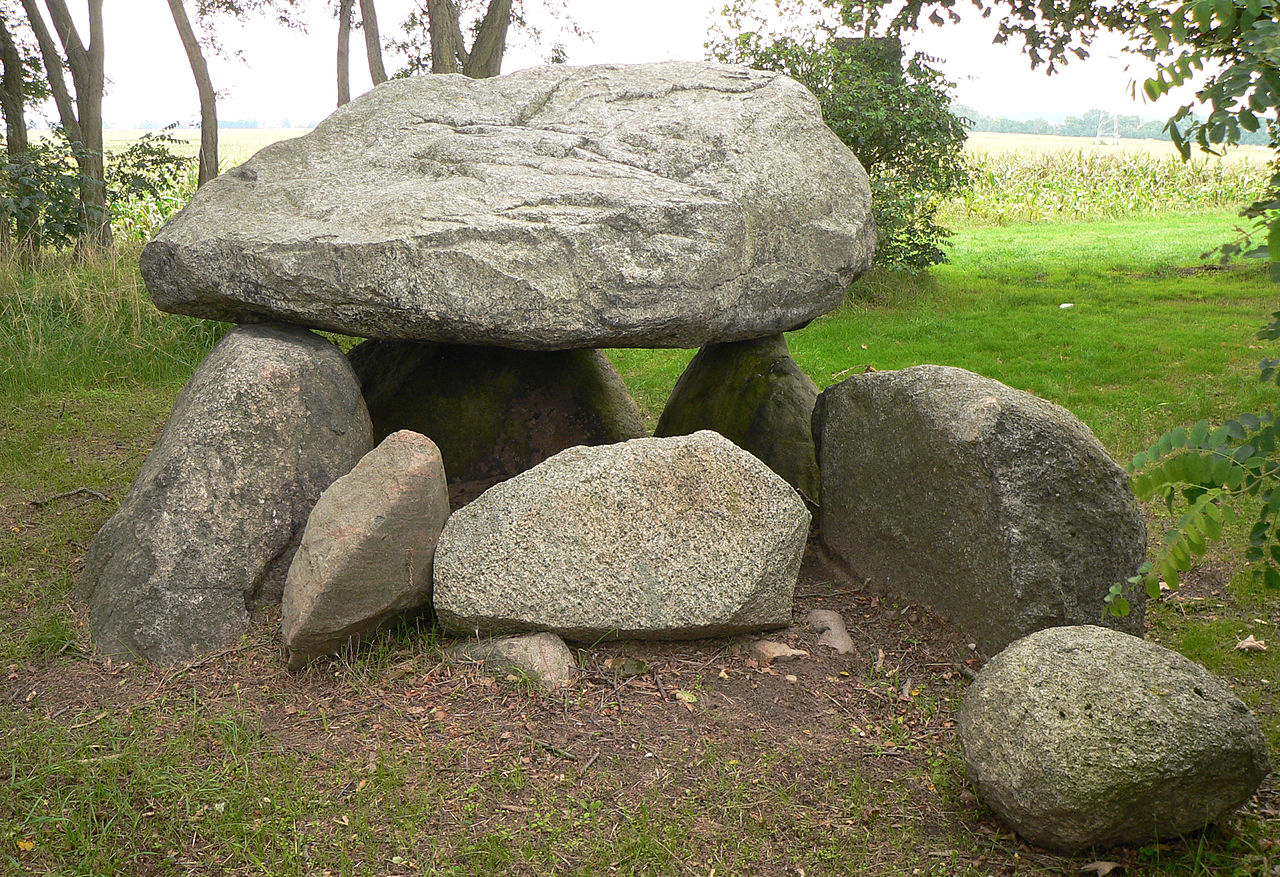 Großsteingrab Körbelitz 13500–2800 BCE
- Megalithic Tombs of Körbelitz3500–2800 BCE
- Megalithic tombGroßsteingrab Schönebeck-Salzelmen3500–2800 BCE
- Megalithic tombGroßsteingrab Lütnitz3500–2800 BCE
 Großsteingrab Hundisburg 1233500–2800 BCE
 Großsteingrab AHA 343500–2800 BCE


Sources
Every record behind this page, with the link it came from.
1 source behind this page
- 01Wikidata Q125973239wikidata.org
Image files
- Hauszeichenstele in der Himmelreichstraße in Magdeburg 04.jpgOlaf2CC BY-SA 4.0
- Himmelreichstraße 22.jpgOlaf2CC BY-SA 4.0
- Hauszeichen an der Hauszeichenstele 02.jpgOlaf2CC BY-SA 4.0
- Hauszeichen an der Hauszeichenstele 11.jpgOlaf2CC BY-SA 4.0
- Hauszeichenstele in der Himmelreichstraße in Magdeburg 05.jpgOlaf2CC BY-SA 4.0
Report a correctionWrong date, name, photograph or source? Tell us and it will be put right.
Around this place
The ten nearest sites, by compass
- Großsteingrab Ebendorf6.6 km NW
- Fürstengrab von Gommern10 km SE
- Megalithic Tombs of Körbelitz12 km NE
- Großsteingrab Körbelitz 112 km NE
- Großsteingrab Schönebeck-Salzelmen15 km S
- Großsteingrab Lütnitz21 km E
- Großsteingrab Hundisburg 12321 km NW
- Großsteingrab AHA 3421 km NW
- Großsteingrab AHA 3221 km NW
- Großsteingrab AHA 3321 km NW
Credit
Text, licence and sources
Adapted from the Wikipedia article "Hauszeichenstele" (German), licensed CC BY-SA 4.0; authors are listed in the page history. Reused under CC BY-SA 4.0. Read on Wikipedia · Edit history and authors
- Wikipedia (German): HauszeichensteleCC BY-SA 4.0
- Wikidata Q125973239CC0