Majorville Cairn and Medicine Wheel
Also known asMajorville Medicine Wheel
Datedc. 3250–3150 BCE
No licensed photograph yetWe have no photograph we may publish for this site, so the interpretive 3D view leads instead.
Overview
About this site
What the sources say
The Majorville Cairn and Medicine Wheel (Iniskim Umaapi) is an archaeological site of the Blackfoot Nation located south of Bassano, Alberta. The medicine wheel has been dated to 3200 BCE (5200 years ago) by careful stratification of known artifact types.
The medicine wheel sits on top of a grassy hill at an elevation of 918 m overlooking a large area of undisturbed prairie around the Bow River. The structure consists of a round stone cairn, 9 m in diameter, surrounded by a 27 m wide cobble circle connected to the cairn by 28 stone spokes. This arrangement is categorized as Subgroup 6 and of the total 67 known medicine wheels only 3 belong to this category, the other two being the Jennings site in South Dakota and Bighorn in Wyoming.
The southern half of the cairn has been excavated and the projectile points found indicate it was in use since the Oxbow/McKean Phase for the last 4500 years. The site was built in layers, with the earliest C14 date from the cairn determined at 3845 ± 85 radiocarbon years before present. Calibrated to calendar years this is 2384 ± 124 years before 1950, although this sample doesn't come from the earliest construction period. The sequence of construction is uncertain and it is not clear that spokes and wheel were built at the same time. Rocks and arrowheads were added to it until contact with Europeans, although there was a gap in its use between 3000 and 2000 years ago. Because of its use over such a long time and the changes in its construction, archaeologists believe that its function may have changed at times.
Among the stones, other findings included offerings in the form of sweet grass, willow, cloth, and tobacco. The site further yielded iniskim stones ("buffalo calling stones"), fragments of ammonite fossils that can be found in the bedrock exposed by the Bow River to the east of the site. Iniskim are small natural stones that resemble the shoulders and hump of a bison. In this case the petrified coils of ammonite shells that broke along the septa into small figurines with four prongs on one side resembling legs. These have been used in the Blackfoot Nation folklore to secure the return of the migrating bison.
Read on Wikipedia4 min readCC BY-SA 4.0
Age sources
How old this site is, and who says so.
Range across all claimsc. 3250–3150 BCE
MeasuredWhat this badge means
A physical measurement of this site: a radiocarbon date, a tree-ring count, a luminescence date, or a record that can itself be dated.
- 3250–3150 BCERadiocarbon datingThe medicine wheel's date was determined through stratigraphic analysis of known artifact types. The source gives one year, so it is shown as a 100-year windowSource: en.wikipedia.org
- 3200 BCEAtlas research notesDated to 3200 BCE per WikipediaSource: en.wikipedia.org
- 3174 BCEWikipedia: Majorville Cairn and Medicine Wheel siteSource: en.wikipedia.org
Where it sits in time
The site's dated range, placed against world reference points.
The scale is logarithmic: each step to the left is about ten times older than the last.
The full article
Majorville Cairn and Medicine Wheel: the whole story
In briefSources for this section
Sources for this section
The Majorville Cairn and Medicine Wheel, also known as the Majorville Medicine Wheel, is an archaeological site of the Blackfoot Nation located south of Bassano, Alberta, Canada. It stands on a grassy hill at an elevation of 918 m overlooking undisturbed prairie around the Bow River.
The structure consists of a round stone cairn, 9 m in diameter, surrounded by a 27 m wide cobble circle. Twenty-eight stone spokes connect the circle to the cairn. Archaeologists classify this arrangement as Subgroup 6; only 3 of the 67 known medicine wheels belong to this category.
The medicine wheel was dated to 3200 BCE by careful stratification of known artifact types. The southern half of the cairn has been excavated, and projectile points indicate use since the Oxbow/McKean Phase for the last 4500 years. An earliest C14 date from the cairn was 3845 ± 85 radiocarbon years before present, calibrated to 2384 ± 124 years before 1950, but the sample did not come from the earliest construction period.
The sequence of construction is uncertain, and it is unclear whether the spokes and wheel were built at the same time. Rocks and arrowheads were added until contact with Europeans, although there was a gap in use between 3000 and 2000 years ago. Findings included sweet grass, willow, cloth, tobacco, and iniskim stones, or “buffalo calling stones.” In Blackfoot Nation folklore, these stones were used to secure the return of migrating bison.
How this page was madeSources for this section
Sources for this section
The summary at the top of this page was written by MiniMax-M3 (2026-11-07) from the cited Wikipedia article “Majorville Cairn and Medicine Wheel site”. The numbers in it were checked automatically against the source text. The rest of the page is the article itself, the structured records and computed distances.
Tradition and region
About this kind of monument
Medicine wheels of North America
Medicine wheels are petroforms, or circular formations of rocks laid on the land. Historically most followed a similar pattern: a central circle or cluster of stones surrounded by an outer ring, with spokes radiating from the centre to the ring. The spokes are often, but not always, aligned to the cardinal directions, and in other cases some stones may be aligned with astronomical phenomena. They may be called medicine wheels by the Indigenous nation that built them, or by more specific names in that nation's language.
Stone medicine wheels were built by many Indigenous cultures in North America, notably many of the Plains nations. The best known is the Medicine Wheel on Medicine Mountain in the Bighorn Mountains of Wyoming, a National Historic Landmark, which is still used for ceremonies by Indigenous peoples.
The term "medicine wheel" was first applied to the Big Horn Medicine Wheel in Wyoming, the southernmost archaeological wheel still extant. "Medicine" does not necessarily refer to healing; it denotes the importance of the sacred site and rock formations, and their religious, hallowed and spiritual significance. The Atlas gives each wheel a broad range.
Stone medicine wheels are found across the northern United States and southern Canada, in South Dakota, Wyoming, Montana, Alberta and Saskatchewan, and most of the roughly 70 documented structures still standing are in Alberta. The Bighorn wheel is 23 metres (75 feet) across and has 28 spokes. Scattered across the Alberta plains are tens of thousands of stone structures, most of them simple circles of cobbles that once held down the edges of tipis, known as tipi rings, and medicine wheels are a more esoteric kind.
Medicine wheels are sacred places. Visit respectfully, follow posted rules, and do not move stones or leave objects.
Paraphrased from Wikipedia: Medicine wheel, Wikipedia: Medicine Wheel/Medicine Mountain National Historic Landmark · CC BY-SA 4.0
From the article
Dated moments in the story
Lore
Evidence & Lore
What the sources actually support — and, kept apart, what has been claimed.
What the evidence supports
Dates
3250–3150 BCEHow this date was established: Radiocarbon datingThe medicine wheel's date was determined through stratigraphic analysis of known artifact types. The source gives one year, so it is shown as a 100-year window (D-08).Source for this date
Measured facts
- Location
- south of Bassano, Alberta, CanadaSource: Location
- Cairn diameter
- 9 mSource: Cairn diameter
- Cobble circle
- 27 m wideSource: Cobble circle
- Stone spokes
- 28Source: Stone spokes
- Elevation
- 918 mSource: Elevation
- Iniskim stones
- small stones used in Blackfoot folklore to secure the return of migrating bisonSource: Iniskim stones
- Heritage designation
- provincial historic resourceSource: Heritage designation
Where it stands
Canada
The pin marks the monument itself — its exact point.
- Coordinates
- 50°35′24″ N, 112°24′36″ WFor a GPS or map app: 50.59000, -112.41000
Access is as our sources describe it; we have not visited the site to check.
Nearby
The closest sites in the Atlas, by straight line.
- Megalithic mound (tumulus with integral stones)St. Joseph's (Dunbow) Industrial School
- Megalithic mound (tumulus with integral stones)Shaw Woollen Mill
- Megalithic mound (tumulus with integral stones)Our Lady of Peace R. C. Mission
 Medicine Wheel/Medicine Mountain National Historic Landmark
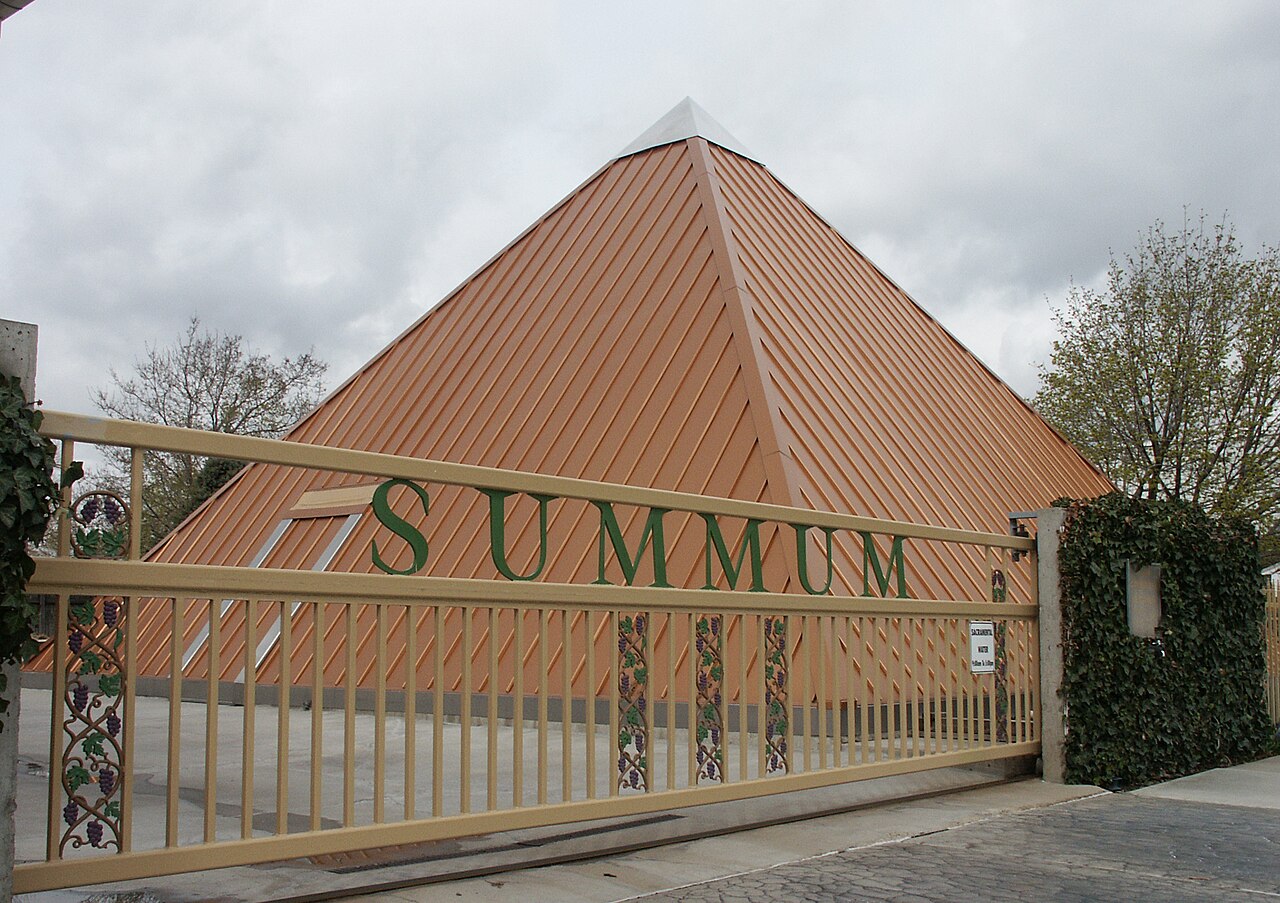 Summum Pyramid
 Ninemile Canyon950–1250 CE
- Megalithic mound (tumulus with integral stones)Kay-Nah-Chi-Wah-Nung4000–1200 BCE
 Mesa Verde National Park7500 BCE–1285 CE


Sources
Every record behind this page, with the link it came from.
2 sources behind this page
- 01Q38528585wikidata.org
- 02Majorville_Cairn_and_Medicine_Wheel_siteen.wikipedia.org
Report a correctionWrong date, name, photograph or source? Tell us and it will be put right.
Lore, kept apart
Legends and claims
These are stories and claims reported by the sources. They are not evidence, and they never stand in for the dating above.
- Tradition
The sequence of construction is uncertain, and it is unclear whether the spokes and wheel were built at the same time.
The sequence of construction is uncertain, and it is unclear whether the spokes and wheel were built at the same time. Rocks and arrowheads were added until contact with Europeans, although there was a gap in use between 3000 and 2000 years ago. Findings included sweet grass, willow, cloth, tobacco, and iniskim stones, or “buffalo calling stones.” In Blackfoot Nation folklore, these stones were used to secure the return of migrating bison.
Source - Tradition
The Majorville Cairn and Medicine Wheel (Iniskim Umaapi) is an archaeological site of the Blackfoot Nation located south of Bassano, Alberta.
The Majorville Cairn and Medicine Wheel (Iniskim Umaapi) is an archaeological site of the Blackfoot Nation located south of Bassano, Alberta. The medicine wheel has been dated to 3200 BCE (5200 years ago) by careful stratification of known artifact types. The medicine wheel sits on top of a grassy hill at an elevation of 918 m overlooking a large area of undisturbed prairie around the Bow River. The structure consists of a round stone cairn, 9 m in diameter, surrounded by a 27 m wide cobble circle connected to the cairn by 28 stone spokes. This arrangement is categorized as Subgroup 6 and of the total 67 known medicine wheels only 3 belong to this category, the other two being the Jennings site in South Dakota and Bighorn in Wyoming. The southern half of the cairn has been excavated and the projectile points found indicate it was in use since the Oxbow/McKean Phase for the last 4500 years. The site was built in layers, with the earliest C14 date from the cairn determined at 3845 ± 85 radiocarbon years before present. Calibrated to calendar years this is 2384 ± 124 years before 1950, although this sample doesn't come from the earliest construction period. The sequence of construction is uncertain and it is not clear that spokes and wheel were built at the same time. Rocks and arrowheads were added to it until contact with Europeans, although there was a gap in its use between 3000 and 2000 years ago. Because of its use over such a long time and the changes in its construction, archaeologists believe that its function may have changed at times. Among the stones, other findings included offerings in the form of sweet grass, willow, cloth, and tobacco. The site further yielded iniskim stones ("buffalo calling stones"), fragments of ammonite fossils that can be found in the bedrock exposed by the Bow River to the east of the site. Iniskim are small natural stones that resemble the shoulders and hump of a bison. In this case the petrified coils of ammonite shells that broke along the septa into small figurines with four prongs on one side resembling legs. These have been used in the Blackfoot Nation folklore to secure the return of the migrating bison.
Source
Credit
Text, licence and sources
Text from the Wikipedia article "Majorville Cairn and Medicine Wheel site" (English), licensed CC BY-SA 4.0; authors are listed in the page history. Reused under CC BY-SA 4.0. Read on Wikipedia · Edit history and authors