
Menhirs Near Pliska
Photo Izvora · CC BY-SA 3.0Source file on Wikimedia Commons
Overview
About this site
What the sources say
43.353333, 27.146944
Девташларите край Плиска представляват големи необработени изправени каменни блокове, подредени на групи в полето край Плиска извън границите на дворцовия комплекс. Намират се в полето на няколко големи групи в югоизточна, южна и най-вече в югозападна посока достигащи до древното селище Кабиюк. По-голямата част от каменните блокове са преместени и унищожени, а земята освободена за селскостопанска обработка.
Article in BulgarianRead on Wikipedia5 min readCC BY-SA 4.0
The full article
Menhirs Near Pliska: the whole story
In briefSources for this section
- Wikipedia (Bulgarian): Девташлари край ПлискаCC BY-SA 4.0
Sources for this section
- Wikipedia (Bulgarian): Девташлари край ПлискаCC BY-SA 4.0
The Menhirs Near Pliska are groups of large, unworked upright stone blocks in fields near Pliska, Bulgaria, outside the bounds of the palace complex. They extend mainly toward the southwest, toward the ancient settlement of Kabiyuk, with additional groups to the southeast and south. No stone blocks have been found north of the palace. Thirty-three groups are known, including 8 to the east, 7 to the south and 18 to the west.
The stones reach 1,5 m in height and have varied geometric forms and orientations aligned with the four directions. Some bear carved runic signs, especially on their buried portions. Excavations found animal bones, bells, a knife and a horseshoe. The blocks form rectangles with an odd number of stones in each row—5, 7 or 9. Most have been moved or destroyed for farmland, and none remains standing in its original position; no human burials were found beneath them.
The site was described by Konstantin Jireček in 1884, studied by Karel Škorpil in 1905, and mentioned by Géza Fehér in 1929 under the name Aboba. Later research was conducted by Stacho Vaklinov and Rasо Rashev. The western groups stand along the road from Pliska toward the western earthwork camp of the mound of Kabiyuk. Scholars have interpreted them as Proto-Bulgarian memorials or as stones associated with commemorative practices, but no supporting human graves have been discovered.
A group east of s. Tsarev brod survived in the form photographed by Karel Škorpil in 1905, unlike many stones broken up for roads or railway rails. Some blocks show attempts to cut them lengthwise for reuse in construction, although these efforts were abandoned. Reusing old buildings as building material was common during the Middle Ages and in the Ottoman Empire. As a general context, monuments of this kind are usually called menhirs, or standing stones, and their purpose often remains uncertain.
No English Wikipedia article exists for it; the full text below is the Bulgarian article "Девташлари край Плиска", shown in the original language.
Summary in EnglishSources for this section
- Wikipedia (Bulgarian): Девташлари край ПлискаCC BY-SA 4.0
Sources for this section
- Wikipedia (Bulgarian): Девташлари край ПлискаCC BY-SA 4.0
Menhirs Near Pliska is a menhir (standing stone) in Zlatna niva, Bulgaria. No English Wikipedia article exists for it; the full text below is the Bulgarian article "Девташлари край Плиска", shown in the original language.
История на откриването и проучванетоSources for this section
- Wikipedia (Bulgarian): Девташлари край ПлискаCC BY-SA 4.0
Sources for this section
- Wikipedia (Bulgarian): Девташлари край ПлискаCC BY-SA 4.0
През 1884 г. Константин Иречек описва две групи девташлари край Плиска. През 1905 г. те са проучени и описани от Карел Шкорпил. През 1929 г. Геза Фехер пише за „огромните каменни групи“ при външния окоп на Плиска, тогава все още наричана Абоба. По-късни проучвания тук са провеждани от Станчо Ваклинов и Рашо Рашев.
ОписаниеSources for this section
- Wikipedia (Bulgarian): Девташлари край ПлискаCC BY-SA 4.0
Sources for this section
- Wikipedia (Bulgarian): Девташлари край ПлискаCC BY-SA 4.0
Девташларите представляват неодялани каменни блокове с височина до 1,5 m., формирани са в различни геометрични форми и са ориентирани спрямо четирите посоки на света. Върху някои от тях, предимно върху вкопаната в земята част, са изрязани рунически знаци. При разкопки най-често откъм източната им страна са открити кости от кон, говедо, овца и дива свиня, звънчета, нож, токи. Камъните са подредени в редове и във всеки ред има по толкова камъни, колкото са редовете, но винаги нечетен брой – 5, 7 или 9. Така каменните блокове образуват правоъгълник, чиито страни са ориентирани към посоките на света. Разпръснатостта им е до голяма степен случайност. В миналото вероятно те са опасвали равномерно Плиска, но поради това, че част от полето се е ползвало за обработваема земя, девташларите са били изровени, а до днес са останали само тези, които са били побити в земи, които не са използвани за обработка. Известни са 33 групи като от тях 8 се намират на изток от двореца, 7 са на юг от него, а на запад са най-много – 18. На север от двореца не са открити каменни блокове.
Под девташларите не са открити следи от погребения на хора.
ПредназначениеSources for this section
- Wikipedia (Bulgarian): Девташлари край ПлискаCC BY-SA 4.0
Sources for this section
- Wikipedia (Bulgarian): Девташлари край ПлискаCC BY-SA 4.0
Според Станчо Ваклинов каменните блокове представляват символични надгробни паметници на загинали прабългарски войни, които не се завръщат по родните си места. Според Рашо Рашев това са прабългарски възпоменателни паметници. Като потвърждение на това твърдение е и факта, че по-голямата част от западната група са подредени край пътя от Плиска към западния землен лагер на могилата Кабиюк.
Според Геза Фехер девташларите представляват прабългарски надгробни паметници като подкрепя твърдението си с факта, че тюрките имали обичай да нареждат до гроба на починалия камъни, които символизират убитите от покойника неприятели. Смятало се, че убитите неприятели ще бъдат слуги на войните в задгробния живот. Твърдението му обаче не е подкрепено с открити погребения под или около девташларите.
Според Веселин Бешевлиев този обичай е пренесен от прабългарите от тяхната прародина в Централна Азия, където са разпространени подобни практики свързани с каменни блокове. Павел Георгиев ги сравнява с известните каменни баби или балбали издигнати при тюркските възпоменателни комплекси.
Опазване и консервацияSources for this section
- Wikipedia (Bulgarian): Девташлари край ПлискаCC BY-SA 4.0
Sources for this section
- Wikipedia (Bulgarian): Девташлари край ПлискаCC BY-SA 4.0
Групата менхири разположена източно от с. Царев брод е оцеляла до наши дни във вида фотодокументиран от Карел Шкорпил през 1905 г. в документалното приложение към сборника „Абоба-Плиска“. Менхирите са избегнали съдбата на много други, които са били натрошавани за нуждите на строящи се пътища или за поставянето на железопътни релси.
Нито един от тези мегалитни обекти не е запазен изправен в оригинално положение. Някои са цели, а други носят белезите на отчаяни опити да бъдат разрязани на няколко части по дължина, вероятно за да бъдат по-лесно пренесени за използване при други нови градежи, но очевидно тази идея е била изоставена впоследствие. Практиката да се ползват стари градежи за строителен материал е била много популярна в Османската империя, както и през Средновековието. Следите от опитите да бъдат разрязвани личат на фотографиите на Шкорпил, което означава, че тези действия са били осъществени преди 1905 г.
ИзточнициSources for this section
- Wikipedia (Bulgarian): Девташлари край ПлискаCC BY-SA 4.0
Sources for this section
- Wikipedia (Bulgarian): Девташлари край ПлискаCC BY-SA 4.0
Скитското съвещалище край Плиска, Девташларите и Русалииските езически игри на Българите запазени от средновековието до днес Архив на оригинала от 2012-02-18 в Wayback Machine.
Биография на д-р Рашо Рашев Архив на оригинала от 2011-11-25 в Wayback Machine.
Станчо Ваклинов, Формиране на старобългарската култура VI-XI век
Анчо Калоянов, Девташларите и русалийските гробища
Даниел Илиев, Девташларите – Прабългарски шахматни тренировъчни бази
How this page was madeSources for this section
- Wikipedia (Bulgarian): Девташлари край ПлискаCC BY-SA 4.0
Sources for this section
- Wikipedia (Bulgarian): Девташлари край ПлискаCC BY-SA 4.0
The summary at the top of this page was written by MiniMax-M3 (2026-11-07) from the cited Wikipedia article “Девташлари край Плиска”, translated from Bulgarian. The numbers in it were checked automatically against the source text. The rest of the page is the article itself, the structured records and computed distances.
Tradition and region
About this kind of monument
Menhirs
A menhir, also called a standing stone, orthostat or lith, is a large upright stone placed by humans, typically dating from the European middle Bronze Age, although many are far older. They stand singly or in groups, vary greatly in size, and often taper toward the top. Menhirs are found across Europe, Africa and Asia, with a concentration in Western Europe, notably in Ireland, Great Britain and Brittany. Theories about their purpose remain speculative and include rituals, territorial markers and elements of an ideological system. Some bear engravings, including human figures and symbols, and are often associated with ancient religious ceremonies and burial chambers. Because the great majority are on coasts, islands and peninsulas, it is believed that practitioners of megalithic religions travelled by sea.
Armenia has numerous menhirs known as vishapakar, "dragon stones", which are cigar-shaped, typically 3 to 6 metres tall and often found in the mountains near the sources of rivers or lakes. Many are carved in the shape of a fish. An inscription in Urartian cuneiform on one at the temple of Garni shows that they were made before the Urartian kingdom, before the eighth century BCE, and the earliest are thought to date to the eighteenth to sixteenth centuries BCE.
In Bulgaria several menhirs are known in villages such as Ovcharovo and Pethocladentsi. Standing stones in Indonesia and India are described in their own articles.
Dating is a standing difficulty: standing stones are usually hard to date, since they were raised during many different periods of prehistory. The Atlas gives a broad range and marks it as an estimate.
When visiting, look for the shape and surface of the stone, its setting on a rise or by water, and any carving.
Paraphrased from Wikipedia: Menhir, Wikipedia: List of menhirs, Wikipedia: Statue menhir · CC BY-SA 4.0
From the article
Dated moments in the story
- 1884
През 1884 г. Константин Иречек описва две групи девташлари край Плиска. През 1905 г. те са проучени и описани от Карел Шкорпил. През 1929 г. Геза Фехер пише за „огромните каменни групи“ при външния окоп на Плиска, тогава все още наричана Абоба. По-късни проучвания тук са провеждани от Станчо Ваклинов и Рашо Рашев.
Source
See it in 3D
An interpretive reconstruction of the monument, standing on the real ground at its exact point, under the sun for that place and season. Drag to look around it.
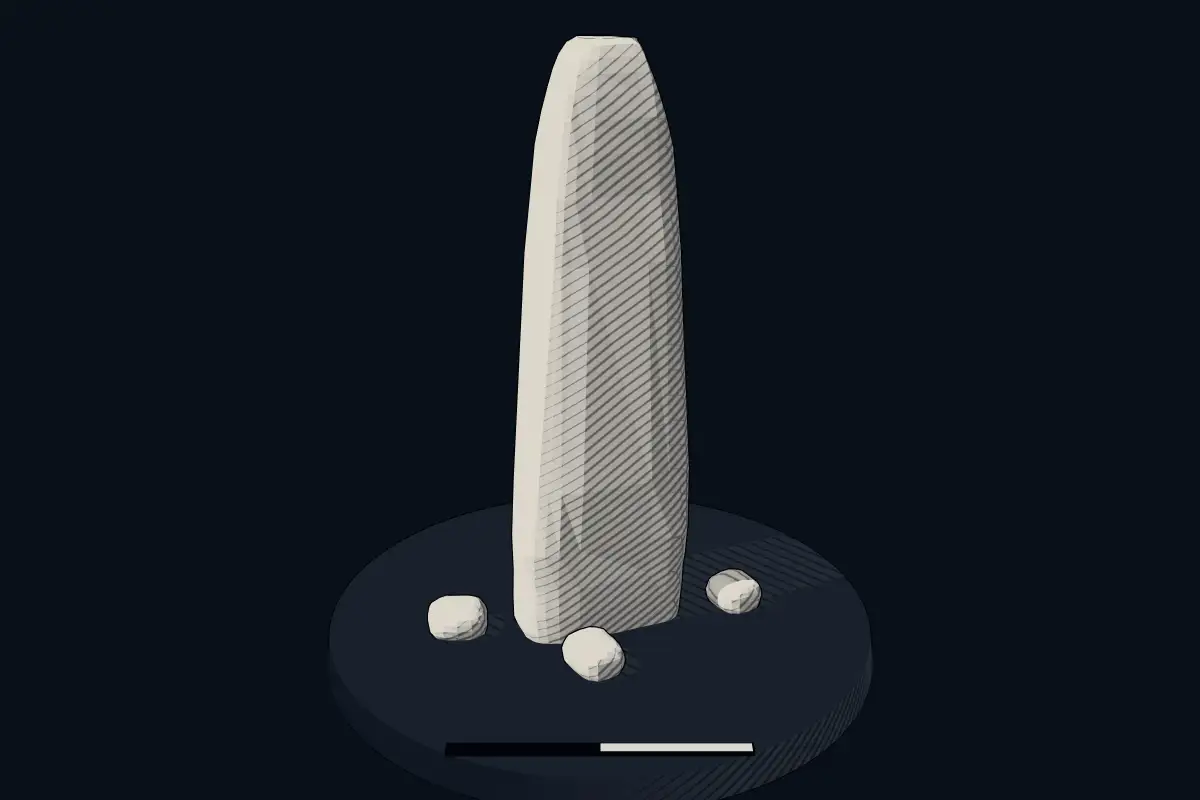
The reconstruction is ours, not a survey: it shows what a monument of this type looks like, at the size the record gives for this one.
Photographs
4 photographs, each with its author and licence
More photographs
Where it stands
Bulgaria
The pin marks the monument itself — its exact point.
- Coordinates
- 43°21′12″ N, 27°08′49″ EFor a GPS or map app: 43.35333, 27.14694
Access is as our sources describe it; we have not visited the site to check.
Nearby
The closest sites in the Atlas, by straight line.


Sources
Every record behind this page, with the link it came from.
1 source behind this page
- 01Wikidata Q12277789wikidata.org
Image files
Report a correctionWrong date, name, photograph or source? Tell us and it will be put right.
Around this place
The ten nearest sites, by compass
Credit
Text, licence and sources
Text from the Wikipedia article "Девташлари край Плиска" (Bulgarian), licensed CC BY-SA 4.0; authors are listed in the page history. Reused under CC BY-SA 4.0. Read on Wikipedia · Edit history and authors